

Creative agencies rely on precision, timing, and execution. But transforming a beautiful design into a physical retail display requires a reliable manufacturing partner—one who can handle engineering, materials, QC, and logistics at scale.
Working with Chinese display manufacturers gives creative teams huge advantages: cost efficiency, advanced fabrication capabilities, and flexible production capacity. But success depends on having the right processes, clear briefs, and strong communication.
This guide breaks down exactly how creative agencies can collaborate smoothly with Chinese factories and ensure every project—POP, POS, display kits, window props, or luxury fixtures—comes out exactly as envisioned.
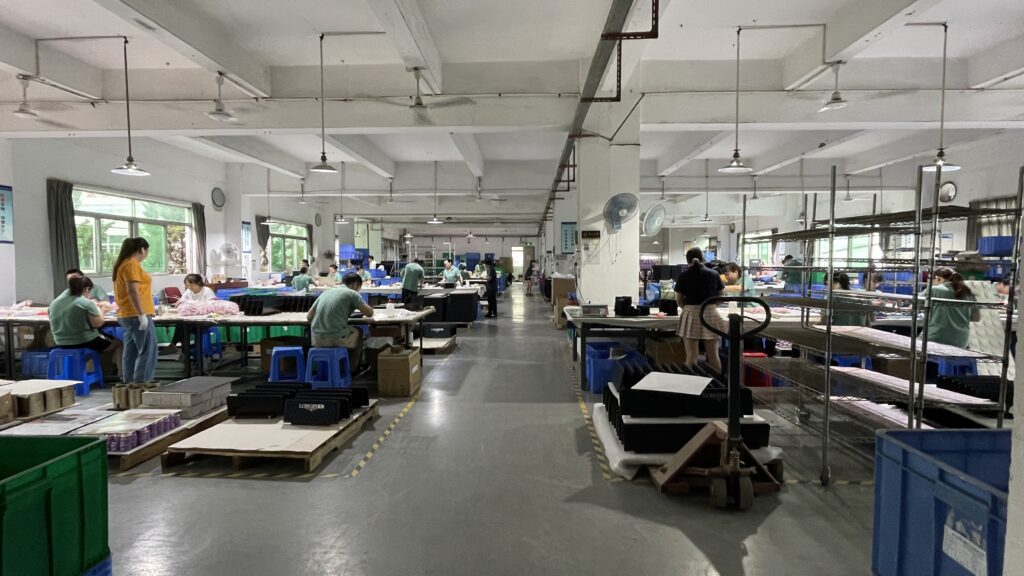
What Makes Chinese Display Manufacturers Ideal Partners for Creative Agencies?
Working with Chinese display manufacturers gives creative teams four major advantages:
1. Lower Production Costs Without Losing Quality
Labor, material sourcing, and fabrication remain more cost-efficient in China, especially for multi-material retail displays.
2. High Technical Capability
Top-tier factories provide:
-
CNC and laser cutting
-
Acrylic fabrication
-
Metal welding & polishing
-
Vacuum forming & thermoforming
-
Injection molding
-
LED integration
-
Water-based paint & sustainable finishing
3. Rapid Prototyping & Short Timelines
In-house sampling labs can develop prototypes in 7–14 days, enabling fast approvals and fast go-to-market.
4. Scalable Production for Global Rollouts
Whether you need 20 units for a test market or 2,000 units for global SIS, Chinese display manufacturers can scale instantly.
How Creative Agencies Should Prepare Before Contacting Chinese Display Manufacturers
Working with a Chinese factory becomes dramatically easier when you prepare the right inputs.
1. Provide a Complete, Engineering-Ready Brief
Include:
-
3D files (STEP / STL / Rhino / SolidWorks)
-
2D dimensions
-
Material guidelines (e.g., acrylic, metal, PU, PET)
-
Pantone colors
-
Finish requirements
-
Load-bearing requirements
-
Lighting specifications
-
Packaging requirements
📌 Pro tip: Avoid creative-only files (like JPG moodboards) as the only reference—manufacturers need engineering files.
2. Clarify the Budget & Priority
Tell your partner your constraints:
-
Is priority premium materials, cost control, or lightweight shipping?
-
Is the display permanent, semi-permanent, or seasonal?
-
Is sustainability required (FSC, water-based paint, recycled acrylic)?
You’ll receive a more relevant solution if the factory knows which trade-offs are acceptable.
3. Align on the Timeline Early
Chinese production typically follows this timeline:
| Stage | Duration |
|---|---|
| Prototype | 7–21 days |
| Mass Production | 20–40 days |
| Packaging + QA | 3–5 days |
| Shipping (Sea) | 20–35 days |
| Shipping (Air) | 5–8 days |
📌 Build buffer time for Golden Week, CNY, and export customs.
How to Work Smoothly with Chinese Display Manufacturers During Production
1. Use Milestone-Based Checkpoints
A well-managed project includes checkpoints for:
✔ Pre-Production Sample (PPS)
Confirm:
-
color
-
finish
-
structure
-
logo placement
-
lighting
✔ Mid-Production QC
Check 5–10% of units for:
-
assembly accuracy
-
surface defects
-
weight-bearing performance
-
logo alignment
✔ Pre-Shipment Inspection
Includes:
-
drop test
-
packaging strength
-
count verification
-
clean photo + video documentation
⭐ Use third-party QC firms (QIMA, SGS) if needed.
2. Establish a Clear Communication System
Chinese display manufacturers work best with defined communication channels.
Recommended setup:
-
WeChat or WhatsApp → Daily messaging & images