
Custom Countertop Displays
for Brands & Agencies
We manufacture custom countertop displays from approved renderings and drawings for branded retail environments.
- Built around the actual product
- Multi-material production
- Sample and finish control
- Made for retail rollout
Custom Countertop Display Manufacturer for Branded Retail
Samtop manufactures custom countertop displays from approved designs for perfume, cosmetics, watches, jewelry and other branded retail products. We produce single-product glorifiers, multi-SKU tester displays and more complex counter units with lighting or moving parts.
Acrylic, metal, glass, printed graphics and high-finish surfaces often need to come together in the same display.
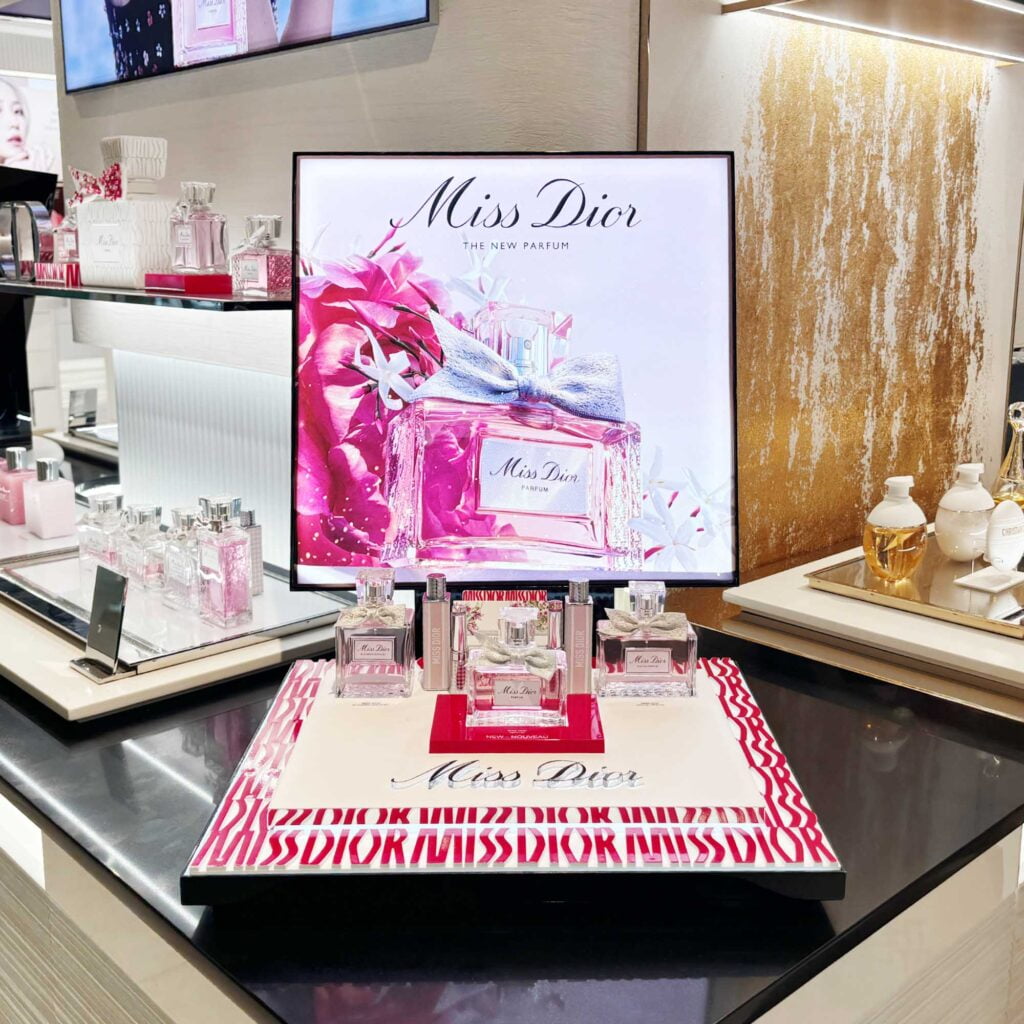
Custom Countertop Displays We Manufacture
We build each one around the approved design and the products it needs to hold.
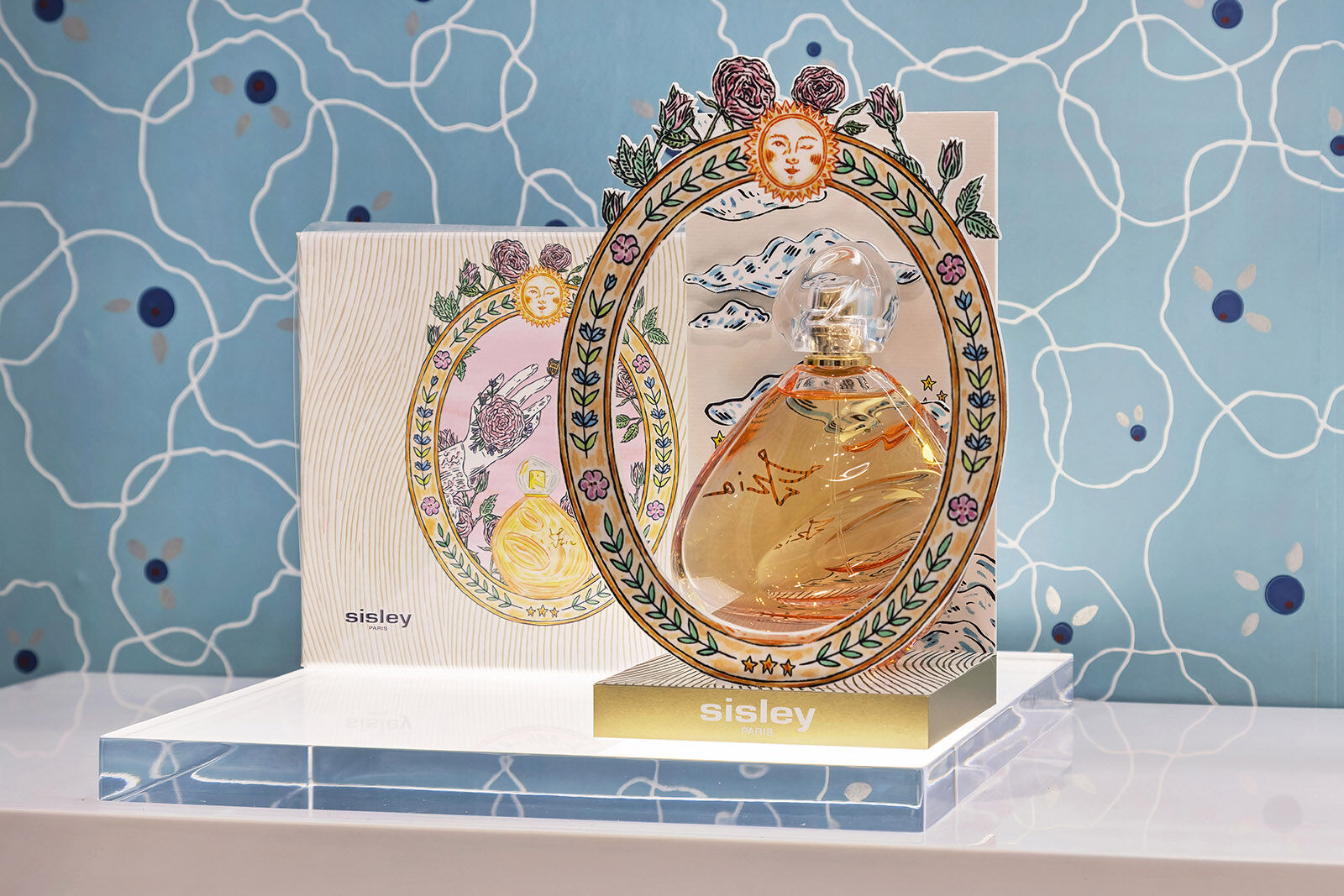
Countertop Product Glorifiers
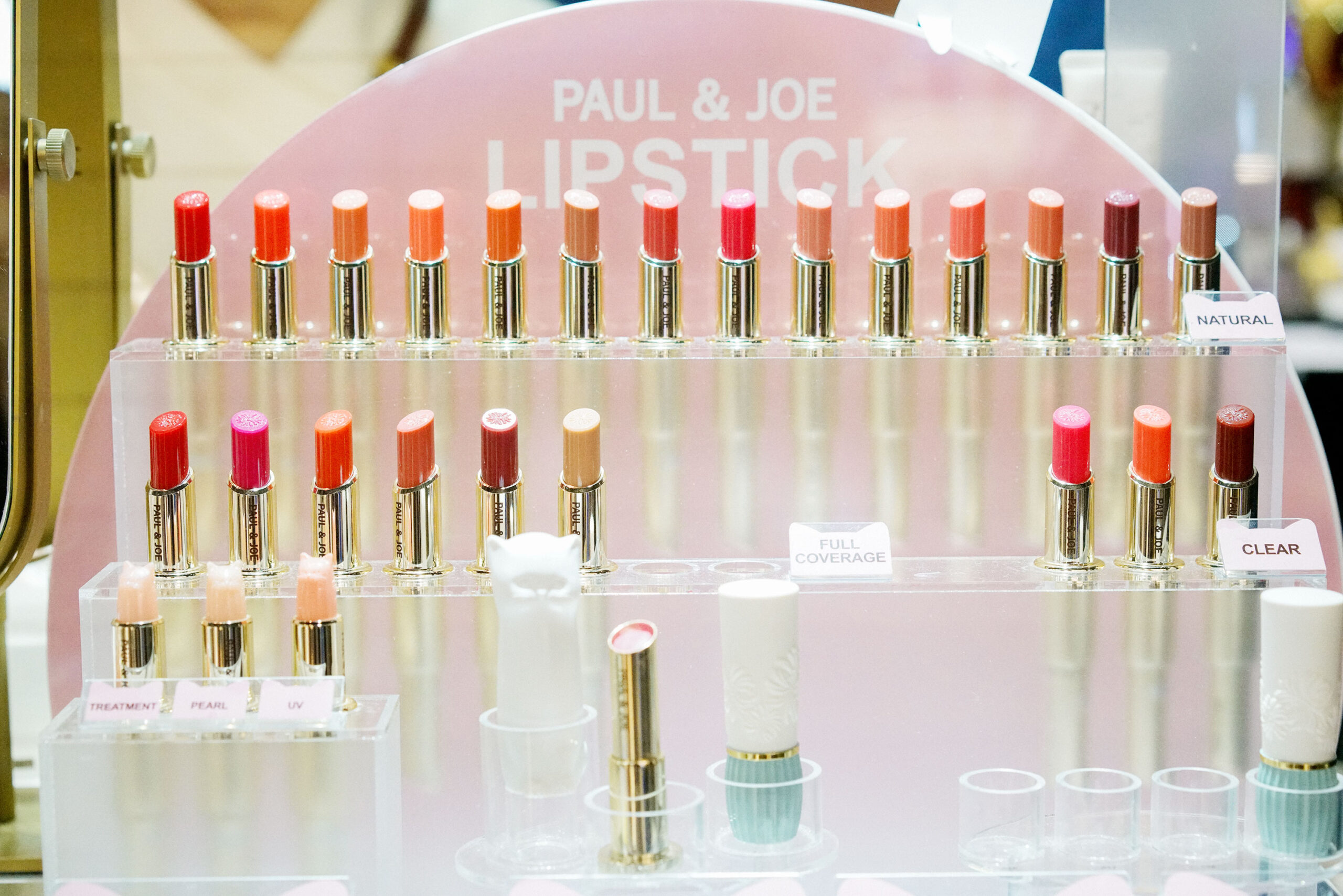
Countertop Tester Stand
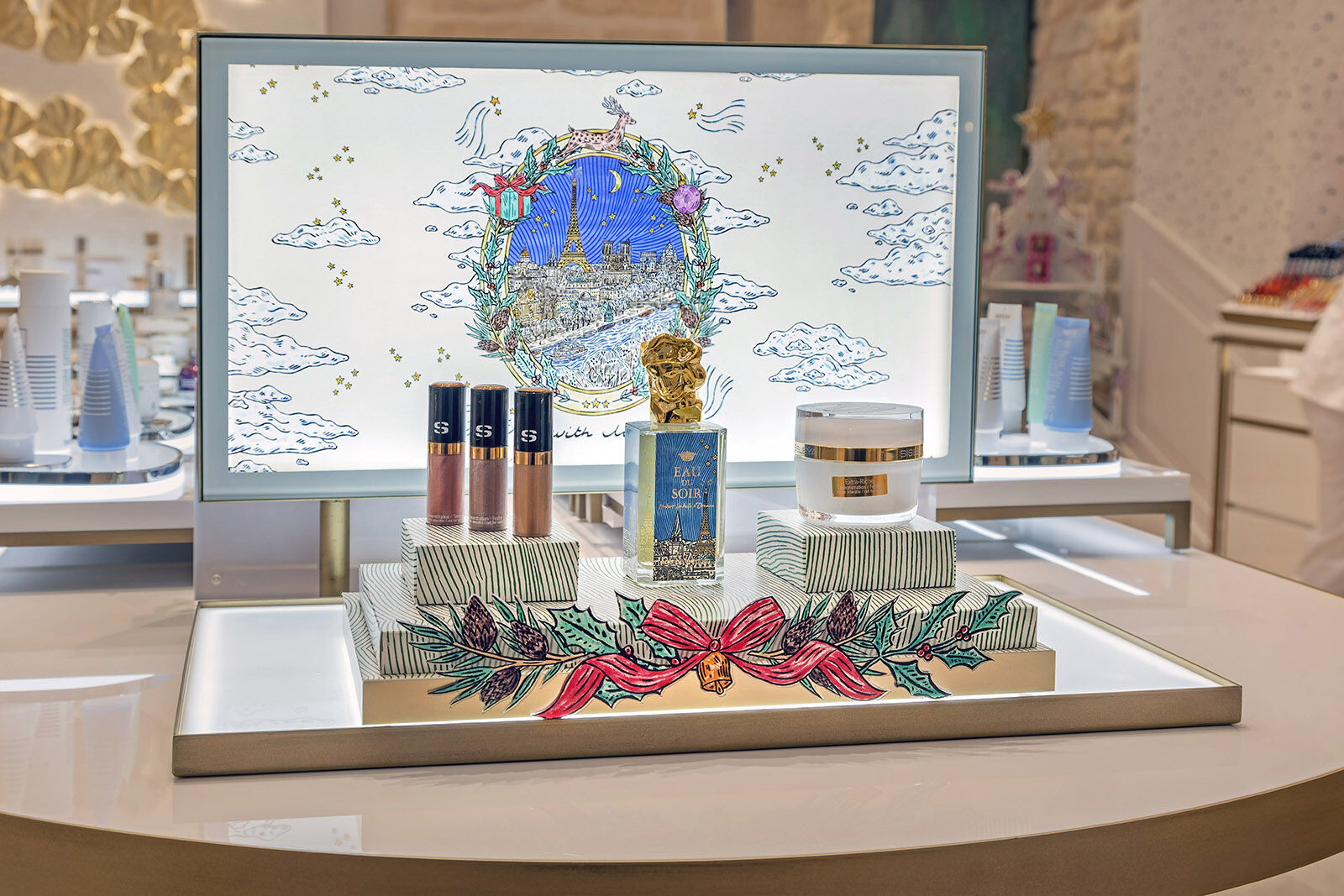
Multi SKU Displays
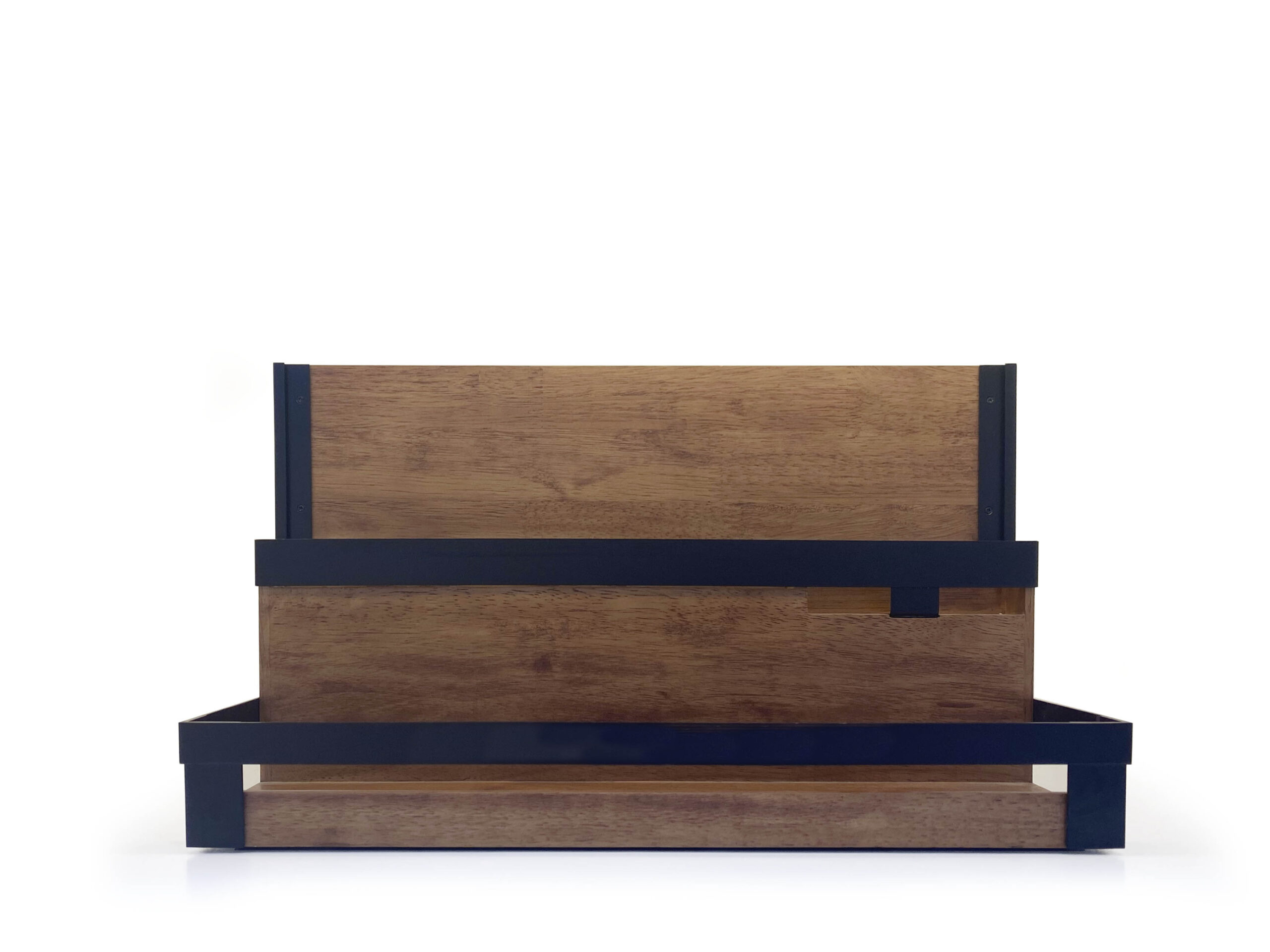
Tiered Stand

Illuminated Displays
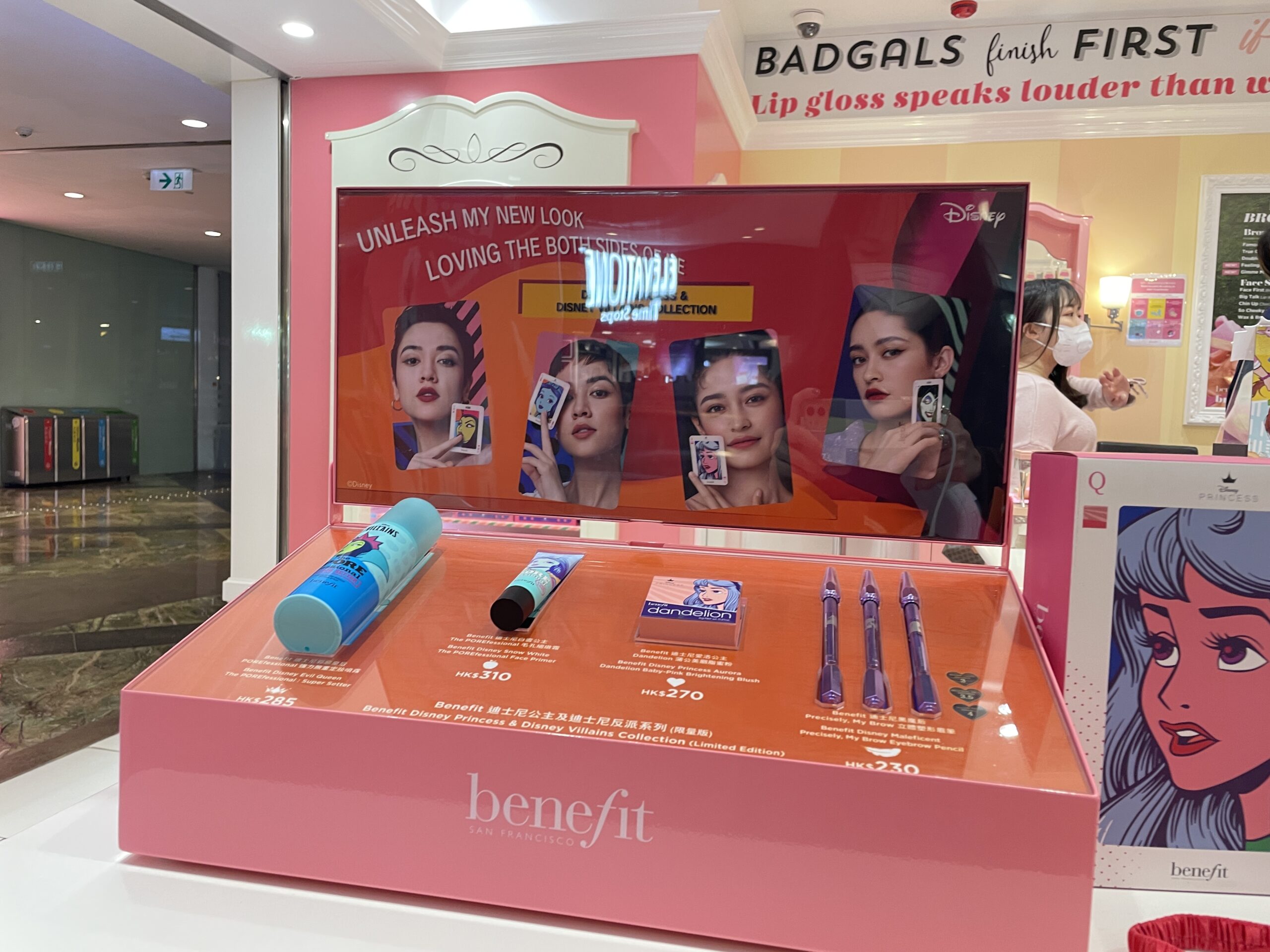
Rotating & Interactive Displays
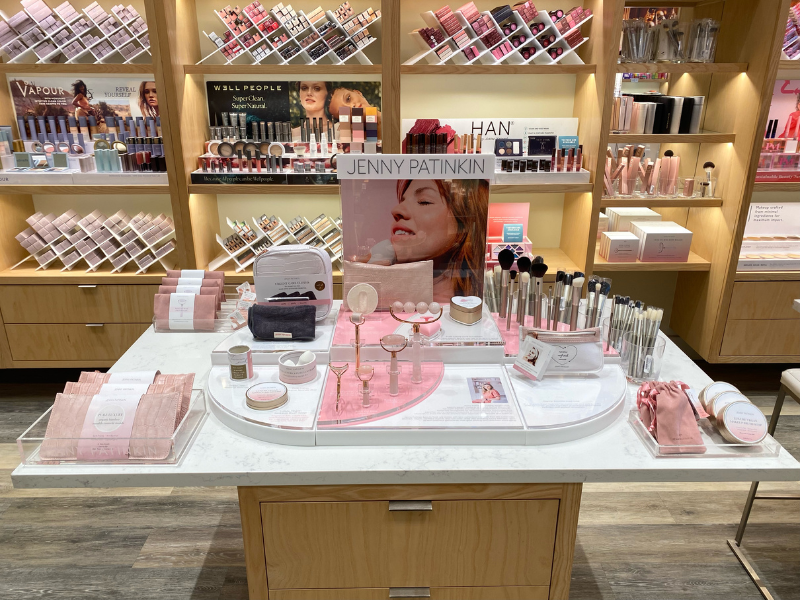
Modular Displays
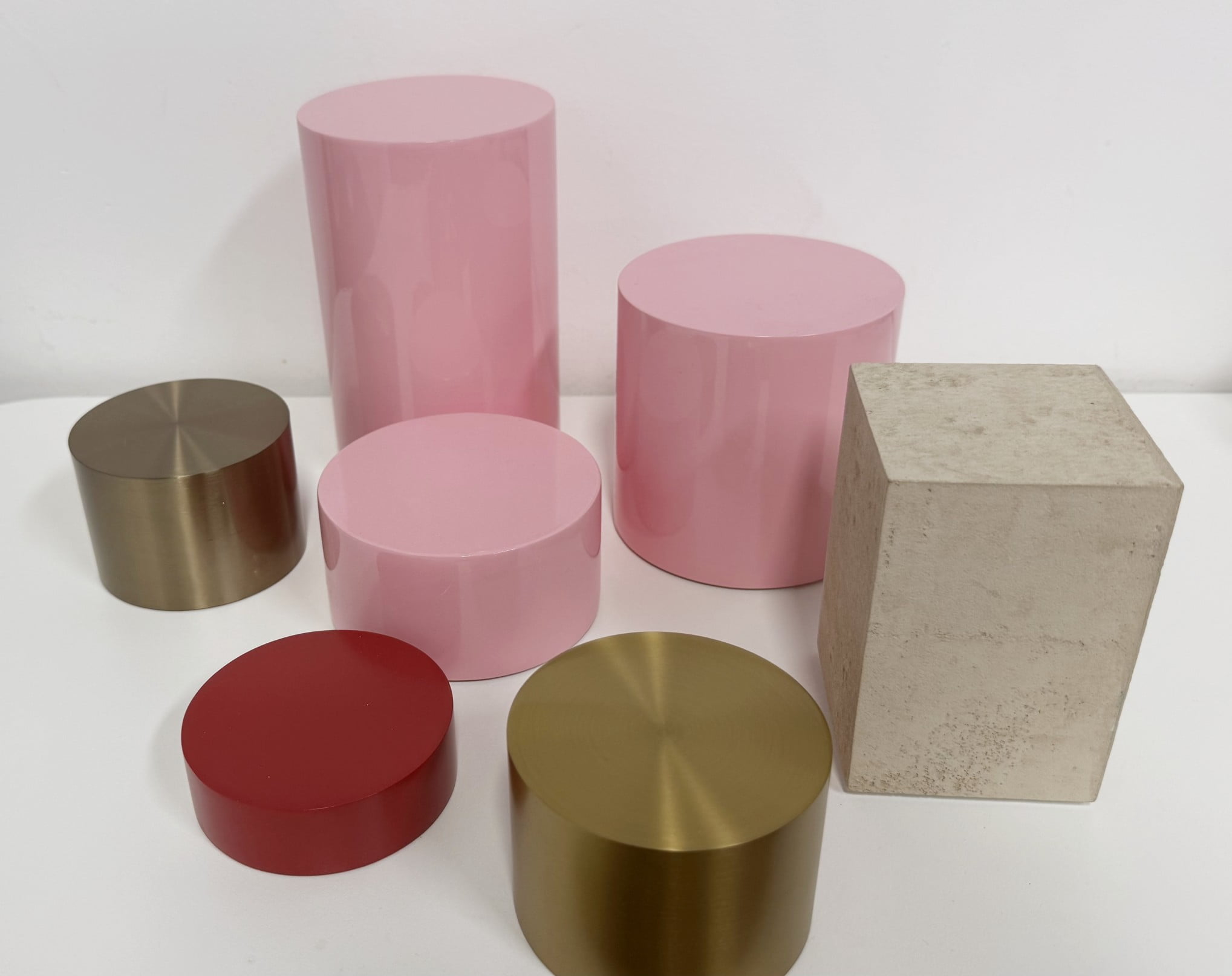
Display Risers & Podiums
Countertop Displays by Retail Category
Bottle weight, tester access, product size and the way customers handle the product can all affect the display structure.
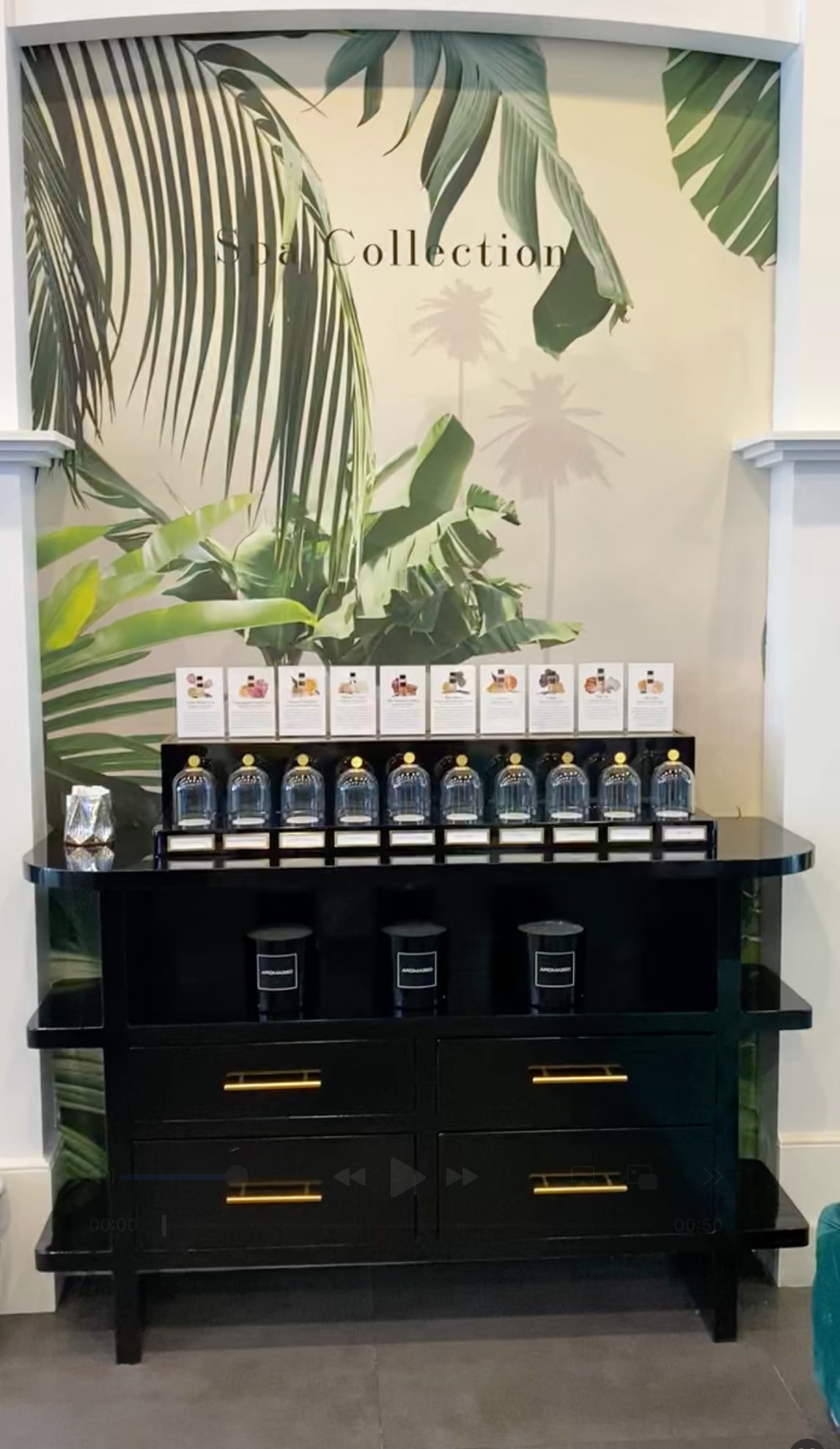
Perfume Countertop Displays
Glass bottles need secure support without making testers awkward to pick up and return. Bottle spacing, fitted openings and spill-prone surfaces deserve particular attention.
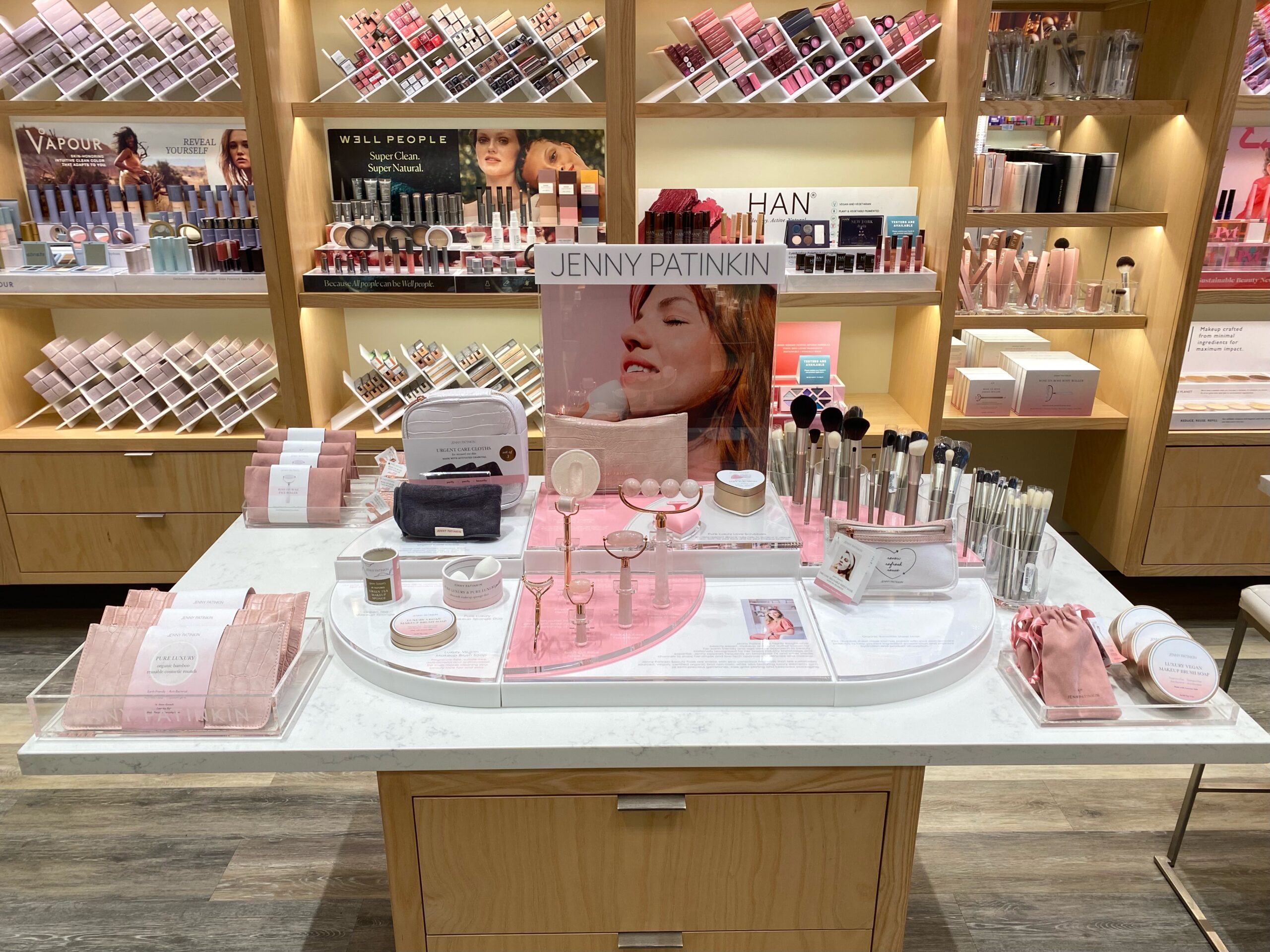
Cosmetic Countertop Displays
Multiple SKUs and testers often need to fit within a limited counter area without making the presentation feel crowded.

Skincare Countertop Displays
Jars, tubes, pumps and bottles can require very different holder shapes. Enough clearance is needed for product access, restocking and cleaning.
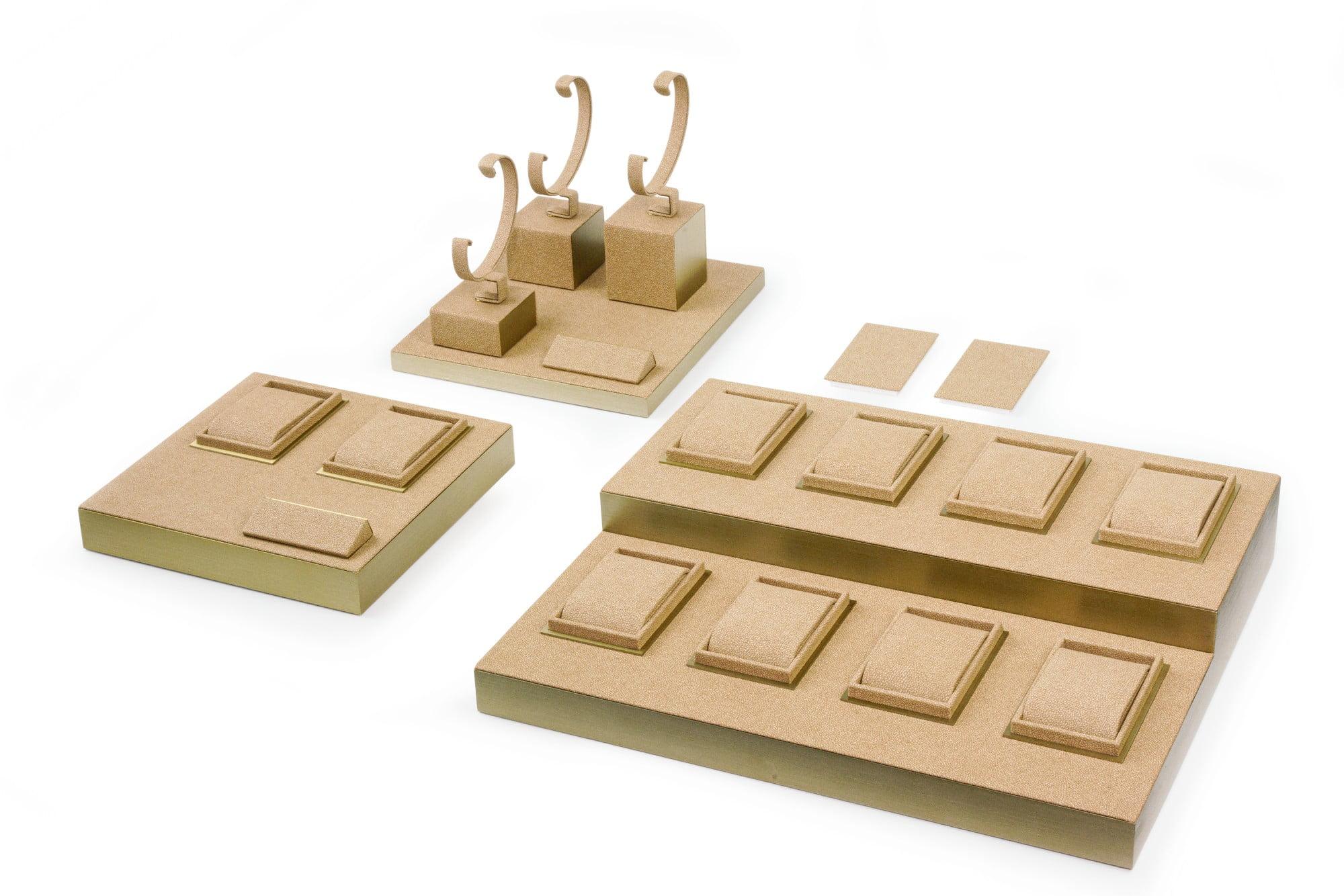
Watch Countertop Displays
Watches are viewed at close range, so product angle, cushion fit, contact surfaces and exposed finish details become more noticeable.

Jewelry Countertop Displays
Small products draw attention to alignment, fine metalwork and exposed joints. Weight also matters when larger decorative structures are part of the display.
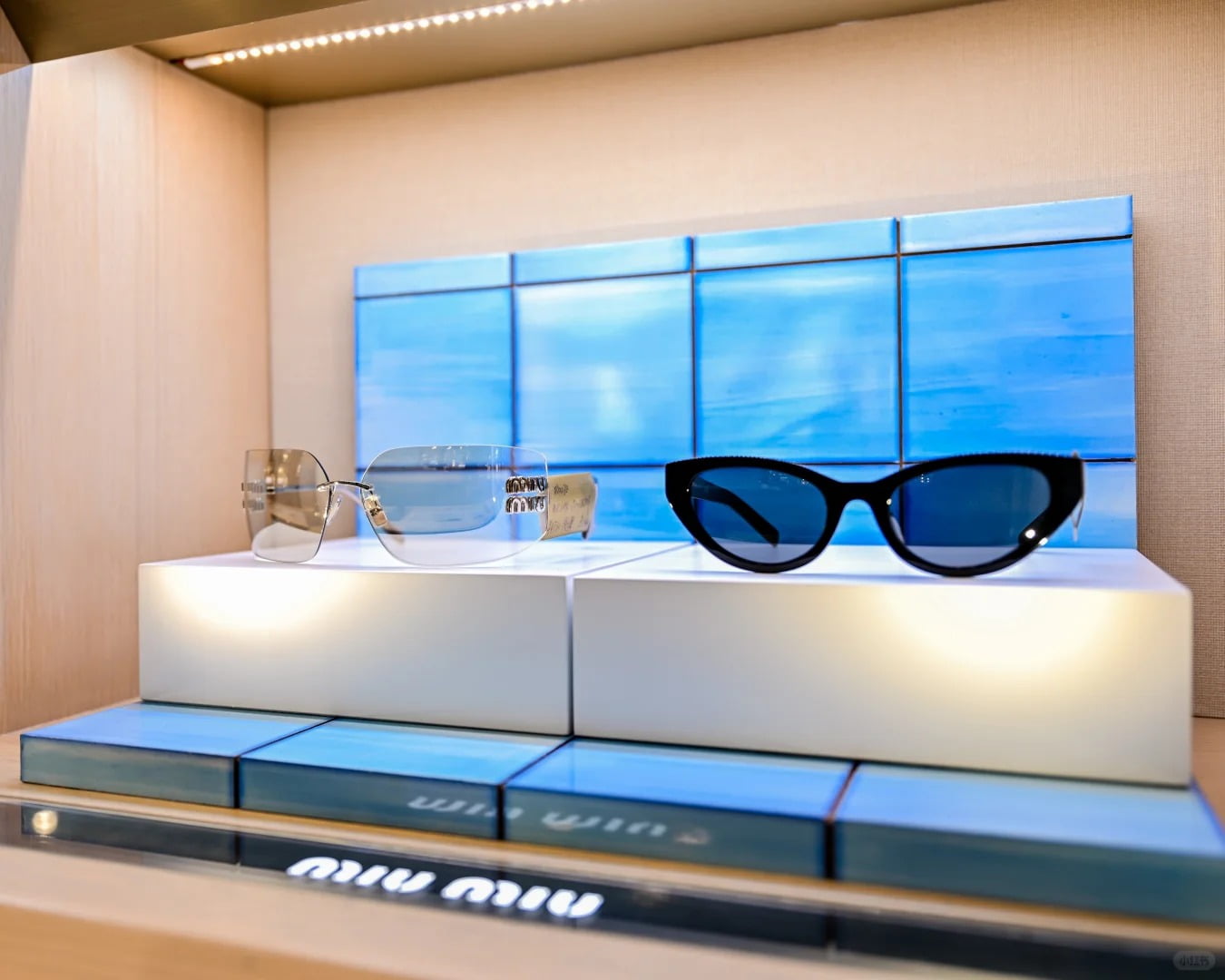
Eyewear Countertop Displays
Frames need secure support while remaining easy for customers to pick up, try on and return.
Built Around the Product, Not Just the Rendering
A rendering defines the look. The actual product determines the fit, access, balance and day-to-day use.
Fit Without Making the Product Hard to Remove
A holder can match the drawing perfectly and still be too tight in use.
When fit is critical, we check the actual bottle, tester or product--not dimensions alone. Pickup clearance, holder tolerance and shaped recesses are checked before the sample is signed off.
We Check the Display With the Product Removed Too
An empty product position can reveal problems that are easy to miss when every holder is filled.
We check whether openings expose the structure, whether smaller items could fall inside, and whether the empty position still looks finished.
The Right Look Does Not Always Need the Heaviest Material
Product weight matters, but so does the weight of the display itself.
When a specified material adds unnecessary weight, we review whether the approved appearance can be achieved with a lighter construction before sampling is finalized.
Tester Access Needs Space for a Hand
Spacing that looks balanced in a rendering may leave too little room to pick up a tester.
We physically check pickup and return. Bottle shoulders, caps, graphics and adjacent products can all reduce usable hand clearance.
Interactive Parts Have to Work After Full Assembly
A moving part can work on its own and still rub or catch after assembly.
Rotating and interactive components are checked with surrounding graphics, covers and decorative layers installed--not only as individual parts.
Real Countertop Display Production Experience
Multi-Material Fragrance Countertop Display
This 1.2-meter retail countertop display combined acrylic, glass, brass, fabricated metal, MDF, marble-effect details and printed artwork.
Preventing Smaller Products from Falling Inside
Circular product positions left open cavities below. Concealed thermoformed inserts were added underneath so smaller candles could not fall inside after a product was removed.
Fitting Brass Closely to the Curved Glass
The brass top piece had to sit closely against the half-round glass cover. Its contact surface was CNC-machined to follow the glass curve and avoid a visible gap.
Matching Gold Finishes Across Different Metal Parts
The logo frame and card holders were made using different processes, so the finished gold could appear different between components. The colors were checked together against the approved sample before production.
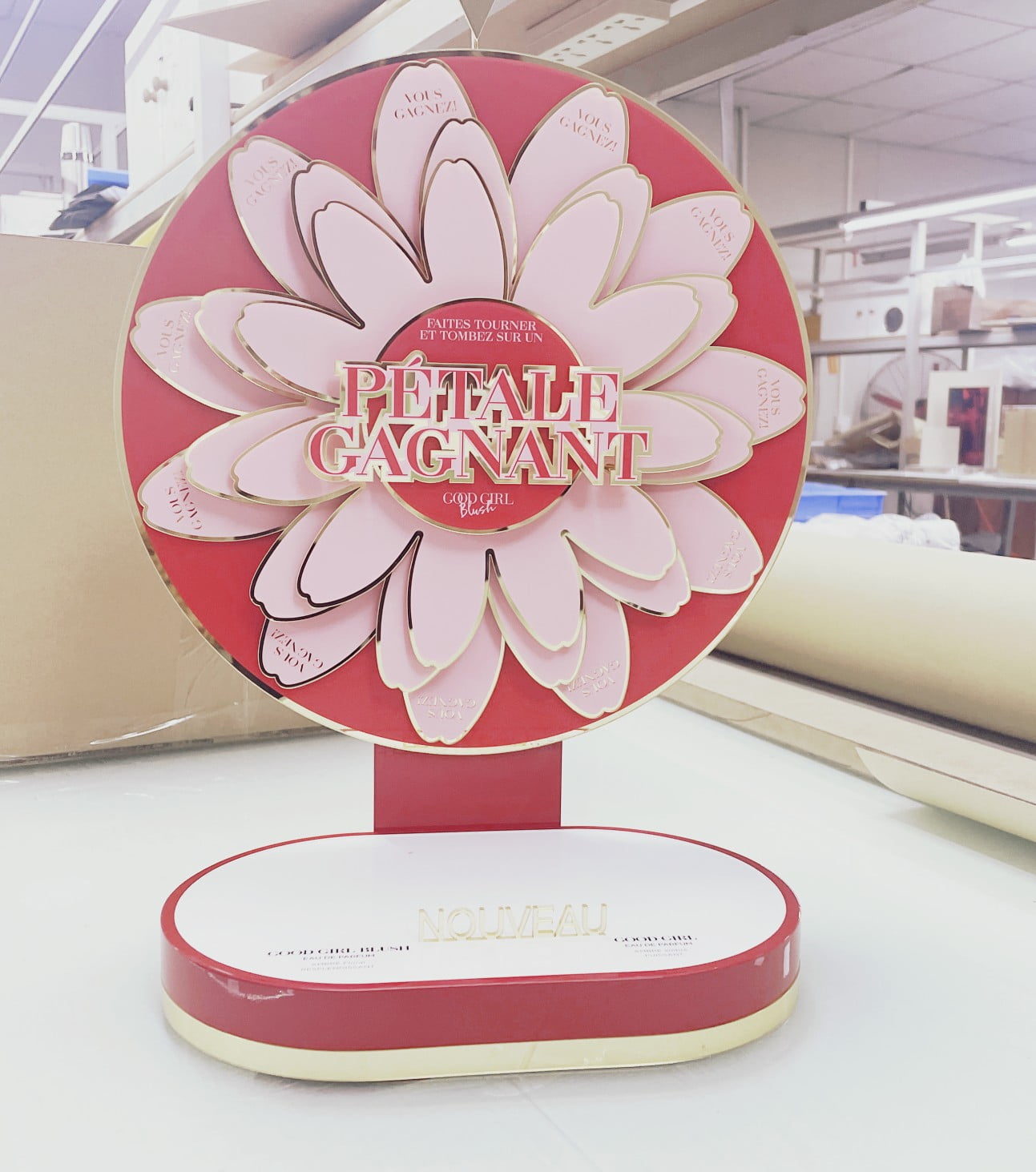
Rotating Perfume Countertop Display
This custom perfume countertop display used layered acrylic petals, mirror-gold details, double-sided screen printing and a rotating flower structure.
Keeping the Printed Layers Aligned
The graphics had to line up from the front and back, while the petal outlines also had to follow the printed artwork closely. Small shifts became obvious along the gold edges, so printing position and laser cutting were checked together rather than as separate steps.
Getting the Color Right on Mirror-Gold Acrylic
The reflective gold surface changed how the printed color appeared. The screen-printing color was therefore judged on the actual mirror acrylic and adjusted against the approved reference, rather than from the artwork file alone.
Keeping the Flower Turning Smoothly
The rotating mechanism worked together with several layered decorative parts. We checked the movement after full assembly, when rubbing between layers or a small alignment change was easier to detect.
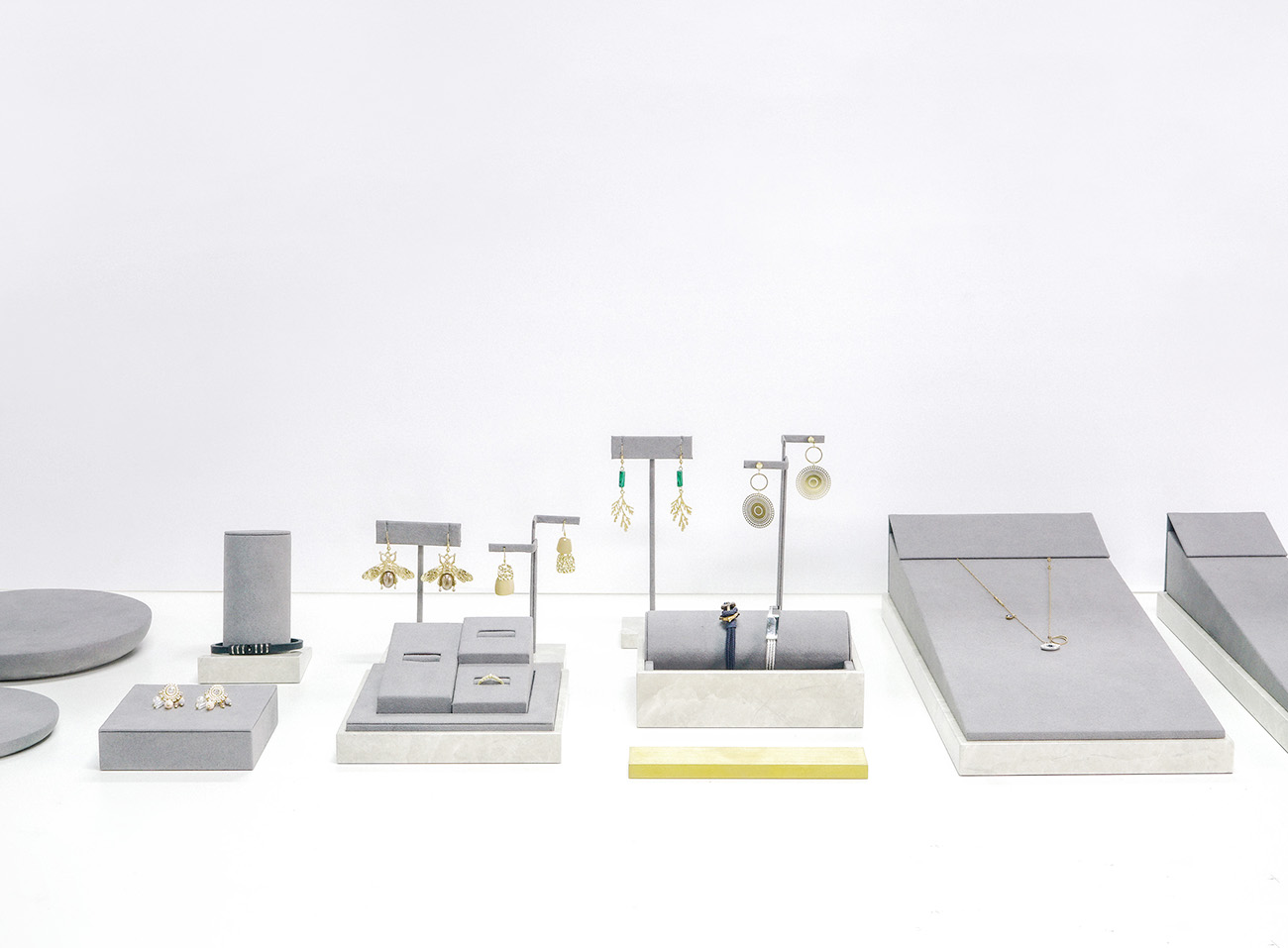
Jewelry Countertop Display with Metal and Wood Finish
This custom jewelry countertop display combined thin circular metal frames with a wood-look base.
Reducing Weight Without Losing the Wood Appearance
Solid wood made the structure heavier than necessary. A lighter substrate with wood veneer was used instead, keeping the approved wood appearance while reducing the weight of the finished display.
Keeping the Ring-to-Base Joint Less Visible
The circular metal frame needed a stable connection to the base, but the joint sat in a highly visible area. The weld therefore had to provide enough support without leaving a large, obvious weld mark when viewed from the front.
From Approved Design to Production
Samtop works from approved renderings, drawings and retail concepts. We develop the production details through engineering review and sampling, then manufacture against the signed-off sample.
Engineering Review
Product fit, structure, component interfaces and visible details are checked before sampling.
Sample Development
Materials, finishes, graphics, product fit and functional details are built and adjusted in the physical sample.
Sample Approval
The approved sample becomes the reference for appearance, fit and production details.
Production & QC
Mass production is checked against the signed-off sample, followed by assembly checks and export packing as required.
Is Samtop the Right Fit for Your Countertop Display Project?
Samtop is a good fit when you already have a developed retail concept and need a production partner to turn it into a finished custom display.
Start a ConversationYou already have a design direction
A rendering, drawing, campaign brief or developed concept gives us the starting point for engineering and sampling.
The display needs more than standard fabrication
Product fit, customer handling, mixed materials, visible joints, graphics, lighting or moving parts need to work together in the finished display.
The sample needs to become the production reference
We develop and adjust the physical sample first. Once signed off, it becomes the reference for finish, fit and key production details.
The project needs controlled production and delivery
For repeat quantities or retail rollout, appearance, assembly, QC and export packing need to remain consistent from sample through production.
Custom Countertop Display FAQs
There is no single MOQ for every design. The practical quantity depends on the structure, materials, finish and production method. Fabricated acrylic or metal displays, for example, have different production requirements from molded plastic components.
Yes. The holder layout can be developed around several SKUs when their dimensions are available. Depending on the product range, the display may use different recess sizes, interchangeable holders or a shared presentation area. For repeat programs, it is worth deciding early whether future SKU changes need to be accommodated.
They can be when replacement is considered in the display construction. Magnetic panels, removable graphic plates, card holders and replaceable printed components are possible options. The appropriate method depends on where the graphic sits and how often it is expected to change.
Yes. LED lighting, illuminated logos, rotating elements and other interactive features can be incorporated where the approved design requires them. Wiring, power access and service access need to be considered for lighting, while moving parts are checked after full assembly for clearance and smooth operation.
The same color or metallic finish can look different on acrylic, fabricated metal, cast metal or painted surfaces. For finish-sensitive projects, we compare physical samples and assembled components rather than judging each part independently. The signed-off sample then becomes the production reference.
For components designed to be removable, replacement graphics, holders or selected display parts can be produced separately. It helps to identify likely replacement items during development so they can be fixed mechanically rather than permanently bonded where practical.
Packing depends on the structure and finish. Mirror, clear acrylic, plated metal and high-gloss surfaces need protection from rubbing as well as impact. Complex displays may also be separated into components when this provides safer or more practical transport. Where local assembly is required, parts can be identified and trial assembled before shipment.
Yes, when the differences are defined before production. A display family can share the same visual language while changing overall size, SKU capacity, graphic language, electrical specification or certain components for different retail locations.
Yes. For multi-store rollout projects, we can work with confirmed display variants, packing requirements and destination-specific details while keeping the signed-off sample as the production reference.
Yes. Once the sample is approved and signed off, it becomes the reference for mass production and QC. Key details such as color, gloss, surface finish, graphics, product fit and visible assembly are checked against the approved sample during production.
Have a Countertop Display Ready for Production?
Send us your approved rendering or drawing, quantity and required delivery date. We'll review the project for production and come back with any technical questions before quotation.
Send Your Countertop Display Project
Approved rendering · Quantity · Required delivery date