

Designing window display fixtures vs in-store furniture may look similar on a moodboard—but they live in completely different realities. What survives ten hours of direct sun through glass is not the same as what survives fingerprints, spills, and thousands of daily touches on the sales floor.
If you copy-paste one design logic into both zones, you’ll either overbuild the window (wasting budget) or underbuild the floor (creating a maintenance nightmare).
This guide breaks down the structural, environmental, and experiential differences between window display fixtures and in-store furniture—and shows how to keep them visually aligned under one brand story.
At Samtop Display, we design dual-zone VM systems that look cohesive but are engineered differently for windows and sales floors.
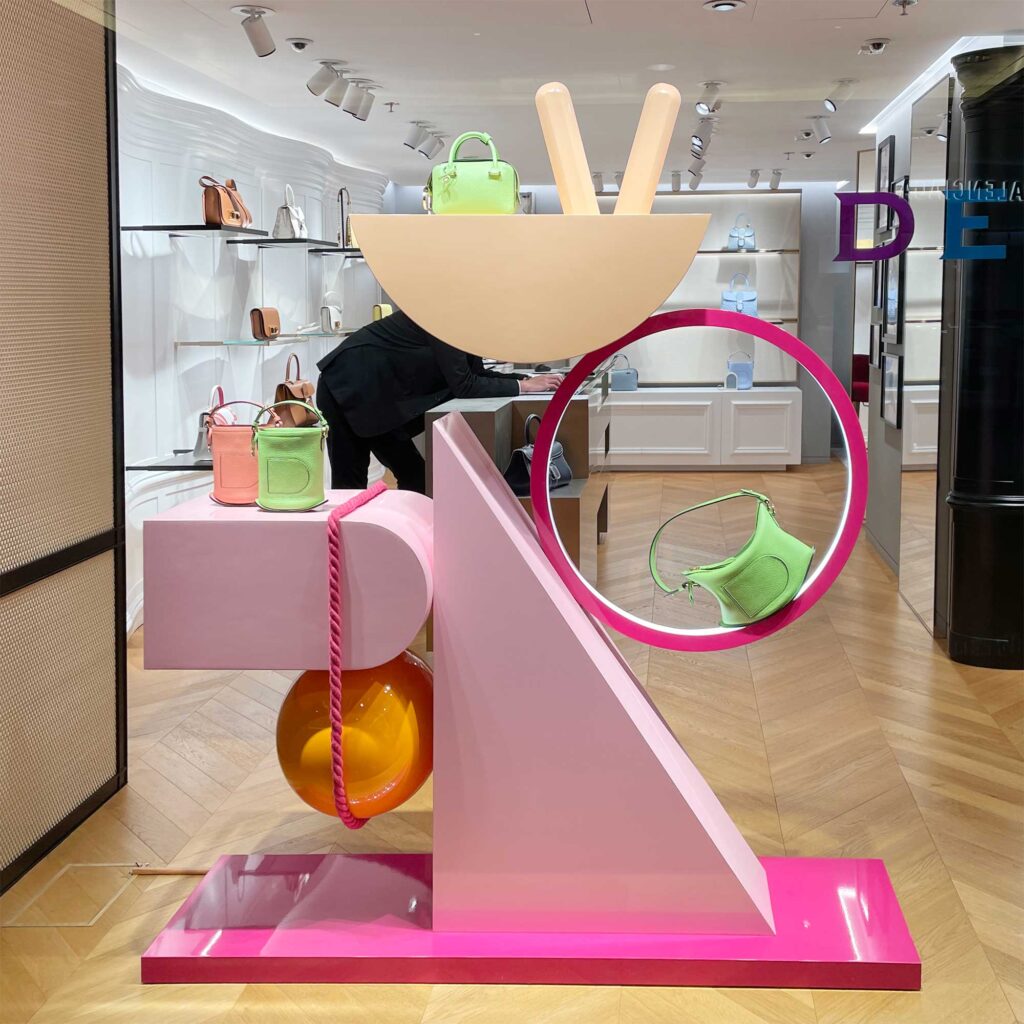
✅TL;DR – Two Zones, Two Purposes, One Brand Language
-
Window display fixtures → lightweight, scenic, storytelling props designed for drama and visibility behind glass.
-
In-store furniture → durable, ergonomic fixtures built for product access, shopper flow, and safety.
-
Both should share color, finish, lighting tone, and logo logic—but the engineering and material specs must diverge.
Who Needs This Guide?
You’ll find this useful if you are:
-
A VM lead responsible for seasonal windows and permanent shop fixtures
-
A store design director trying to unify materials across zones
-
A global brand team rolling out campaigns in markets with different climates and regulations
Think of this as your playbook for planning window display fixtures vs in-store furniture in one integrated system.
🧱 1. Structural Logic: “Set Design” vs “Furniture Design”
Window props behave more like stage scenery; in-store fixtures behave like industrial products.
Side-by-Side Structural Comparison
| Feature | Window Display Fixtures | In-Store Furniture |
|---|---|---|
| Core structure | EPS, PVC / PET foam, light MDF frames | MDF, plywood, powder-coated steel |
| Joinery | Slot-fit, magnets, tool-free connectors | Cam locks, brackets, dowels, screws |
| Anchoring | Sandbags, wire, hidden ballast | Bolted to floor/wall, anti-tip base |
| Rear view | Visible from inside store—must be finished | Often back-of-house side, less decorative |
| Certifications | Temporary scenic grade | Fire rating, load testing, safety compliance |
Design rule:
Treat window fixtures like temporary set pieces. Treat in-store furniture like long-term equipment.
🌤️ 2. Environmental Performance: Sun vs Shoppers
Windows and interiors live in different climates—even in the same store.
Environmental Differences
| Factor | Window Zone | In-Store Zone |
|---|---|---|
| UV exposure | Direct sunlight for hours | Controlled, artificial lighting |
| Finish requirements | Anti-yellowing, fade-resistant, anti-warp | Fingerprint-resistant, alcohol-proof |
| Visibility | Every dust particle shows behind glass | Focused on tops and tester areas |
| Cleaning frequency | Weekly or campaign-based | Daily wipe-down, often with alcohol |
| Climate factors | Window fog, condensation, temperature swings | Stable HVAC conditions |
For windows:
Use UV-stable PET films, anti-static coatings, and low-glare paints.
For in-store:
Use HPL, matte PU, or soft-touch films that tolerate alcohol cleaning and constant touch.
🎨 3. Visual Expression: Drama vs Everyday UX
Both zones should speak the same brand language—but at different volumes.
Design Language by Zone
| Element | Window Display Fixtures | In-Store Furniture |
|---|---|---|
| Form | Oversized, symbolic, floating elements | Structured, ergonomic, product-first |
| Lighting | Backlights, halos, theatrical gradients | Shelf LEDs, underglow, warm ambience |
| Logo | Hanging, glowing, or framed centerpiece | Fixed acrylic / metal faceplates |
| Narrative | Campaign and theme focused | Category organization, navigation UX |
| Viewpoint | Mostly front/¾ view through glass | 360° or multi-angle in-store |
Windows: one strong story, photogenic from outside.
Floor: clear navigation, comfortable reach, intuitive product access.
🔁 4. Reusability & Maintenance: Different Lifecycles
Window props and furniture play different roles in your lifecycle plan.
Lifecycle Comparison
| Attribute | Window Fixtures | In-Store Furniture |
|---|---|---|
| Typical reuse | 1–3 campaigns | 12–36 months |
| Storage | Stackable, collapsible, boxable | Often fixed or semi-fixed |
| Swappable parts | Paint wraps, foam elements, magnetic fronts | Trays, tiles, logo blocks, header panels |
| Common damage | Sun fade, warping, chipped foam | Chipped laminate, loose hardware, scuffs |
| Cleaning tools | Air gun, microfiber, occasional polish | Daily alcohol wipes, degreasers |
In windows: prioritize lightweight and collapsible for shipping and storage.
On the floor: prioritize repairability and spare parts.
🌱 5. Sustainability: Different Pressure Points
Sustainability expectations also behave differently for window display fixtures vs in-store furniture.
| Concern | Window Display Fixtures | In-Store Furniture |
|---|---|---|
| Recyclability | EPS & foam → limited; PET & cardboard → better | HPL/MDF recyclable if separated from films |
| Carbon footprint | High if one-off and non-flat-packed | Lower when fixtures have long service life |
| Modular reuse | Possible with slot-fit, wraps, and repaint | Excellent with standardized trays/zones |
| Shipping volume | Big if pre-assembled | Big for furniture; mitigate via KD design |
Best practice:
-
Windows: design modular scenic kits that can be recolored or rewrapped for multiple campaigns.