

A Practical Guide Based on Real In-Store Behavior & Manufacturing Experience
By Yan Luo | Samtop Display
Promotions like GWP (Gift-With-Purchase), seasonal bundles, and limited-time offers remain some of the strongest conversion triggers in retail. But in real stores, the success of a promotional campaign depends on far more than the offer itself. It depends on whether the POP display can communicate the promotion clearly and consistently — in every store, under real working conditions.
During years of supporting global beauty, fashion, and FMCG brands, one pattern has appeared again and again:
Promotions fail not because the offer is weak, but because the display wasn’t engineered for promotions in the first place.
Below is what we’ve learned from store audits, prototyping, and global rollouts — and how brands can design POP displays that truly support promotions instead of working against them.
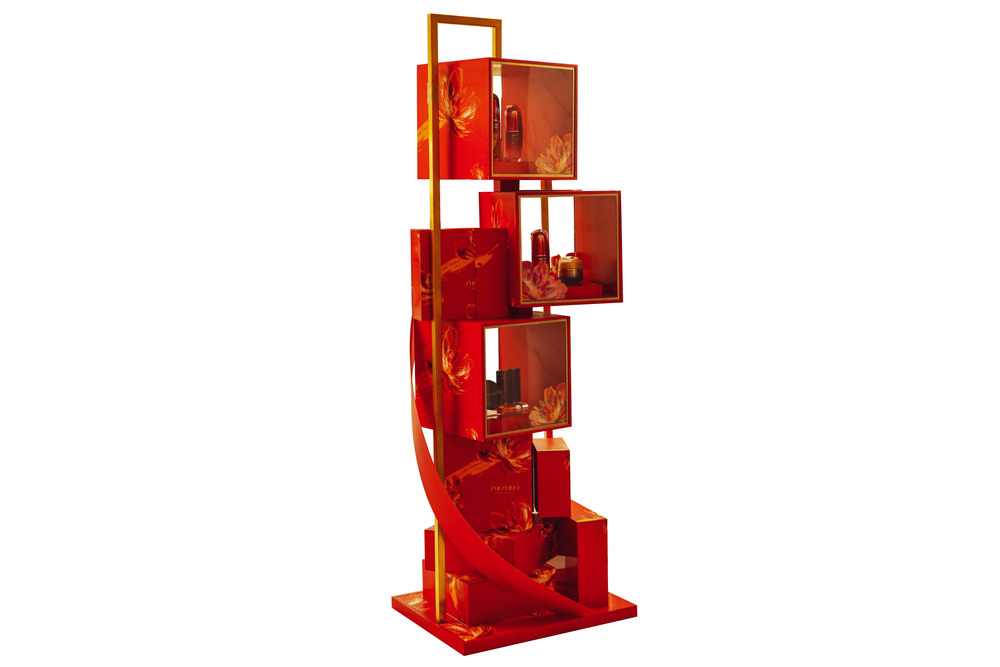
1. Why POP Displays Must Support Promotions by Design
In dozens of VM audits across Asia, Europe, and the Middle East, we repeatedly saw:
-
The GWP gift placed behind counters
-
Staff forgetting to show the gift
-
Expired promotional stickers still attached
-
Regional promotions clashing with global graphics
-
Temporary taped labels that looked unprofessional
-
Displays too small to hold both the SKU and the gift
This is not a store problem.
This is a design problem.
A promotional display must do three things automatically:
-
Show the gift
-
Explain the offer
-
Organize the layout so store staff don’t need to improvise
If the display doesn’t do this, the promotion becomes fragile and unreliable.
2. The Most Important Principle: Promotions Must Be Built Into the Structure
Many brands still attempt to add promotions at the final stage:
❌ sticker on the side
❌ taped note
❌ shelf talker squeezed into a corner
❌ improvised price card
In high-traffic stores, these quickly appear messy — and destroy brand equity.
The correct approach is:
Promotion zones must be engineered during the initial 2D/3D development phase — not added afterward.
What built-in communication looks like:
-
A dedicated zone for promo messages
-
Replaceable graphic sleeves
-
Magnetic or slot-in message panels
-
A header designed to carry seasonal text
These integrate naturally and maintain consistency across markets.
3. Designing GWP Zones That Improve Shopper Visibility
Across every successful promotion we’ve observed, one factor appears consistently:
If the gift has a dedicated spot, the promotion succeeds.
If not, redemption drops dramatically.
Effective GWP display structures include:
-
A tray or pocket that fits a mini product
-
An elevated mini-plinth that gives the gift value
-
A labeled “Your Gift” zone
-
A combined tester + gift layout
-
A multi-SKU holder for bundle offers
When the gift becomes part of the physical layout, shoppers understand the offer instantly — even before reading text.
4. Modular Systems for Fast-Changing Promotions
Promotions change monthly.
Shipping full new displays is expensive and slow.
Stores are understaffed.
The solution is structural modularity:
Modular components that enable fast changeovers:
-
Replaceable headers
-
Slide-in graphic cards
-
Removable or swappable GWP trays
-
Reconfigurable product blocks
-
Universal base structures reused across seasons
This is how the most efficient global VM teams keep promo messages current without increasing cost.
5. Visual Hierarchy for Promotional Clarity
A well-engineered promotional display guides attention in a clear sequence:
-
Brand identity
-
Hero product