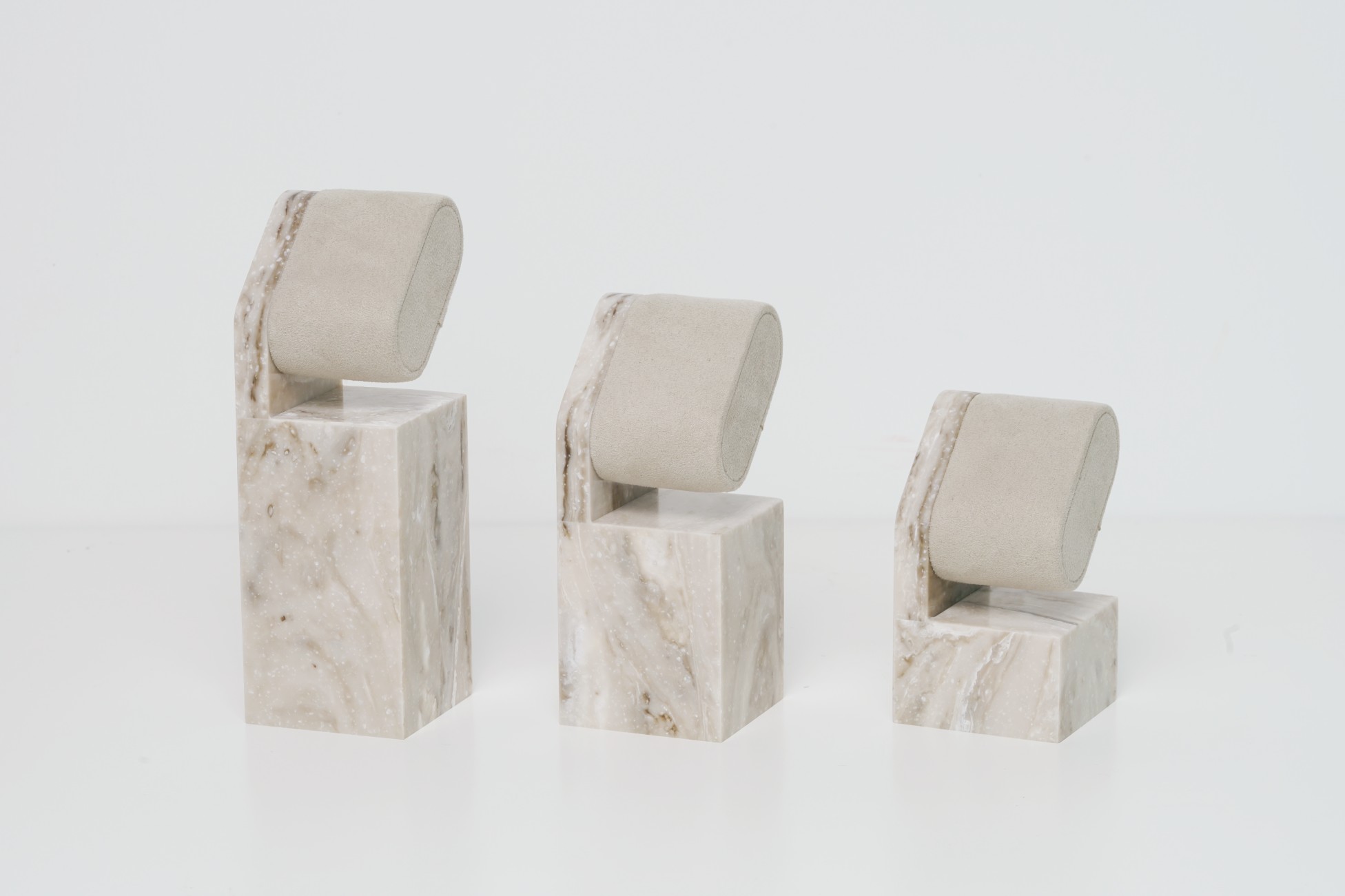

When it comes to creating glorifiers (the elevated mini stages within retail displays), one size does not fit all. Different product categories require tailored design approaches to best highlight their unique attributes. Whether it’s watches, perfumes, or jewelry, each category has specific structural, material, lighting, and branding needs that make the product stand out in-store.
In this article, we’ll explore how to craft glorifiers that meet the emotional, functional, and aesthetic needs of each product type, ensuring maximum impact on the retail floor.
Quick Answer: How Do Glorifiers Differ Across Product Categories?
- Watches: Require precise support, technical symmetry, and a masculine presentation.
- Perfumes: Demand light diffusion, bottle glow, and a focus on mood-driven storytelling.
- Jewelry: Emphasize sparkle, shadow control, and a delicate, premium presentation.

At Samtop, we specialize in engineering glorifiers that enhance the specific attributes of each product type to deliver maximum visual impact and retail performance.
1. Structural Requirements by Category
The structural requirements of a glorifier vary significantly based on the product type. Here’s a look at the key support needs for each category:
| Product Type | Glorifier Structure | Key Support Needs |
|---|---|---|
| Watch | Rigid riser + angled stand | Must support strap + avoid slippage; 15–25° tilt for readability |
| Perfume | Flat or inset base | Ensure stability; must not block label or cap |
| Jewelry | Foam inlay or rod mount | Fit different SKUs (earring, ring, necklace); soft cradle or invisible pin |
✅ Watch glorifiers require the most mechanical tension and balance, while perfume glorifiers focus on symmetry and label exposure. Jewelry often uses multi-SKU trays, requiring modular inserts to hold different pieces.
2. Material & Surface Treatment
Material selection and surface treatment play a critical role in the visual appeal and emotional response a glorifier elicits. Let’s see what works best for each category:
| Feature | Watch | Perfume | Jewelry |
|---|---|---|---|
| Base Material | Brushed metal, PU-wrapped MDF | Acrylic, frosted glass, velvet | Suede, leatherette, acrylic top |
| Color Palette | Black, graphite, silver | Warm beige, gradient, nude | Champagne, ivory, soft pink |
| Texture Logic | Technical, masculine | Radiant, smooth, feminine | Soft-touch, premium, matte |
✅ For watches, use soft-touch PU for supports to avoid scratching. Velvet or suede inlays in jewelry glorifiers absorb light, helping gems sparkle.
3. Lighting Techniques
Lighting plays a crucial role in elevating the product’s visibility and emotional appeal. Each product category requires specific lighting techniques to enhance its features:
| Type | Watch | Perfume | Jewelry |
|---|---|---|---|
| Direction | Side LED + top halo | Underglow or backdrop LED | Spot beam + internal uplight |
| Color Temp | Neutral white (4000–4500K) | Warm white (3000–3500K) | Cool white (5000–5500K) |
| Integration | Minimal & precise | Mood-driven & diffused | Sparkle-maximizing, angle-heavy |
✅ For watches, light the dial — not the strap. Perfumes require lighting to enhance the juice color and glass, while jewelry needs lighting that maximizes brilliance from every angle.
📌 Always test lighting with real SKUs — gloss, color, and reflection behavior can vary.
4. Branding & Messaging Zone
The branding on a glorifier should always be proportional to the product’s visual importance. Here’s the best way to execute branding for each product type: