

Gloss vs. Matte Finishes for POP Displays: Material Science, Brand Perception & Engineering Guide

Bob Chow Bob
Share:

Article Overview

A Practical Guide Based on Real Manufacturing & In- […]

A Practical Guide Based on Real Manufacturing & In-Store Behavior

By Yan Luo | Samtop Display

Most discussions about gloss and matte finishes stay on the surface — “gloss is shiny, matte is soft.”
But anyone who has managed a real retail campaign knows the decision is far more complex.

Finishes affect how shoppers read your brand, how easily stores maintain the display, and how the product photographs under LED lighting. Over the years working with beauty, fragrance, and luxury fashion brands, we’ve seen displays succeed or fail simply because the surface finish didn’t match the store environment or usage.

This guide explains gloss and matte finishes from a practical, engineering, and brand-experience perspective — not theory — so you can choose the finish that truly supports your brand.
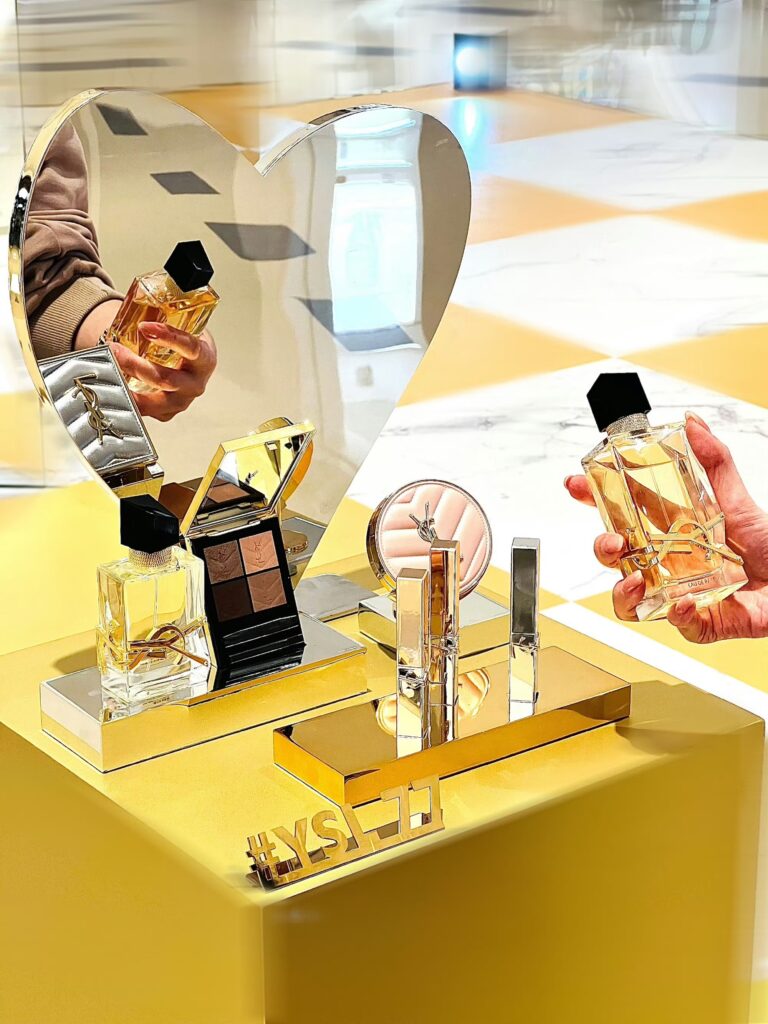
Gloss lacquer fragrance display plinth paired with matte base in retail environment
gloss-fragrance-display-plinth

1. Why Finish Choice Matters More Than Most Brands Realize

A display finish influences:

  • how light behaves on the surface

  • how the product is framed in shoppers’ eyes

  • how quickly the display shows wear

  • whether UGC/social photos look clean or full of glare

In real stores, gloss and matte are not just aesthetic choices — they dictate operational performance.

2. When Gloss Works — And When It Causes Problems

Gloss is often associated with luxury because it amplifies contrast, color depth, and light reflections.

Where Gloss Performs Well

  • Fragrance plinths and elevated hero zones

  • Backlit brand marks

  • Festive or seasonal storytelling

  • Retail lighting that uses soft-edge spots

Common Issues We See in Store Audits

Gloss looks premium in renderings, but in real stores:

  • Strong LED beams create sharp glare

  • Shoppers' fingerprints appear immediately

  • Light reflects the ceiling, not the product

  • Cameras (UGC/KOL) show harsh hotspots

Engineering Adjustments That Solve These Problems

  • Lower gloss from 95% → 70% (semi-gloss)

  • Add anti-fingerprint coating

  • Use radius edges to avoid mirror-hotspots

  • Introduce micro-texture to reduce reflection

Gloss is powerful — but requires careful calibration, not simply “maximum shine.”

3. Matte Finishes: Modern, Clean, and Store-Friendly

Matte finishes diffuse light, which gives the surface a softer, more controlled appearance.

Where Matte Performs Best

  • Tester trays (resists fingerprints)

  • High-touch zones like drawers and shelves

  • Minimalist or skincare-focused brands

  • Environments with strong directional lighting

Why Visual Merchandisers Prefer Matte

  • No glare in window lighting

  • Uniform photography across locations

  • Smudges don’t appear as quickly

  • Brand tone feels calm and architectural

Weaknesses (and Fixes)

Issue: Corners whiten after wear
→ Solution: double-layer PU matte coating

Visual Merchandising Solutions

Transform your retail space with custom POP displays, window decorations, and luxury merchandising solutions. Get expert consultation and premium manufacturing services.

✓ 20+ Years Experience • ✓ Global Shipping • ✓ Custom Manufacturing
Visual Merchandising Solutions

Issue: Dust may be more visible
→ Solution: anti-static matte finish

Matte is not “less premium” — it’s controlled and intentional.

4. The Most Effective Retail Displays Use Both

Rather than choosing one finish, most high-end brands use a hybrid strategy that creates visual rhythm.

Typical High-Performing Combinations

  • Gloss top plinth + matte base

  • Matte tray + gloss brand plate

  • Semi-gloss back panel + matte foreground

  • Matte tester deck + gloss hero frame

Why Hybrid Finishes Work

  • Gloss draws attention

  • Matte supports clarity and touch

  • Together they create depth

It’s the contrast — not the gloss — that feels premium.

5. How Lighting Changes the Entire Finish Decision

Finish choice must match the store’s lighting conditions.

Based on our on-site measurements:

  • 3000K light warms gloss but flattens matte

  • 4000K works well with almost any material

  • 5000K makes gloss highly reflective

If your brand relies heavily on social photos, avoid high-gloss near spotlights.

6. Practical Recommendations for Brands

If your brand is celebratory, festive, bold → choose more gloss

(fragrance, gifting, holiday stories)

If your brand is minimal, skincare-driven, modern → choose more matte

(beauty, tech, clean beauty)

If you need to reduce store maintenance → matte dominates

If you want to elevate just one hero SKU → gloss as an accent

The finish is a storytelling tool — not just decoration.

7. Real Example from Production

A European fragrance client initially requested a full high-gloss plinth.
During prototyping under store lighting, the gloss reflected the ceiling grid and made the bottle hard to see.

We switched to:

  • Matte body

  • Gloss top plate

  • Semi-gloss logo bar

Result:

  • Product visibility increased

  • In-store photography improved

  • Fewer fingerprints

  • The display felt more “luxury architectural”

Finish calibration changed the entire brand presence.

Conclusion

Gloss = spotlight
Matte = control
Luxury = balance

A finish decision should be guided by:
✔ retail lighting
✔ touch requirements
✔ brand identity
✔ photography needs
✔ durability across global stores

At Samtop, we help brands engineer finishes that not only look right — but behave right in real stores, under real lighting, with real shoppers.

📧 Email: yan@samtop.com
🌍 www.samtop.com

Bob

About Bob

Hi, I’m Bob, the funder of SamTop.com, Our company makes visual merchandising props, retail display stands and window display decoration for many years now, and the purpose of this article is to share with you the knowledge related to retail displays from a Chinese supplier’s perspective.

Connect: