

When retail stores sell similar products—beauty, fragrance, jewelry, fashion—why do some feel premium while others feel economical? The answer lies not just in what’s displayed, but how it’s displayed.
If your fixtures feel cheap, your product will, too—no matter its real value. That’s a perception gap. And it costs you sales.
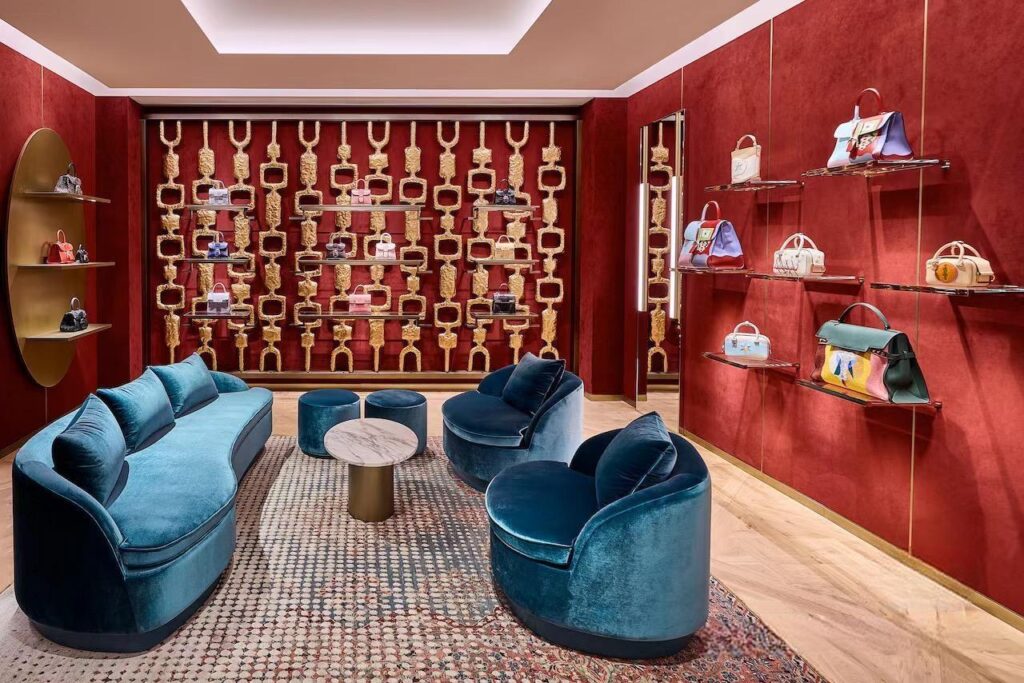
To close that gap, you must align fixture materials, finishes, form language, and lighting with your brand’s price tier. At Samtop Display, we help brands like yours translate perceived value into real retail impact—through physical display systems that visually express “premium” or “accessible,” down to the last bevel and LED reflection.
✅ Featured Snippet Summary: Key Fixture Design Differences
| Aspect | Luxury Fixtures | Mass-Market Fixtures |
|---|---|---|
| Materials | Brushed metal, velvet, fluted acrylic, soft matte PU | Printed MDF, PET, PVC, chrome-effect films |
| Finish | Anti-fingerprint, seamless joinery, mitered edges | Gloss laminate, visible joints, exposed fasteners |
| Lighting | 2700–3500K warm indirect glow, ambient halos | 4000–5000K top-down LED, functional brightness |
| Logo Block | Engraved metal, recessed backlit panels | Printed sticker or magnetic faceplate |
| Form | Monolithic, sculptural, slow geometry | Grid-based, fast-browse layout |
Why Fixtures Are Perceived as “Expensive” or “Cheap” (Even Before Product Is Touched)
Most shoppers won’t consciously analyze the materials or lighting logic of your display—but they will immediately feel the difference.
A satin metal tray suggests weight and permanence. A plastic riser with gloss decal says “promotional.” A soft, low-gloss tester surface invites touch and emotion—while a glossy, fast-dust surface screams high-turnover.
Luxury fixtures are storytellers. Mass fixtures are stock optimizers.
👉 Explore how lighting temperature influences perception
Materials That Signal Price
Luxury Store Materials
- Stone veneers, fluted glass, real veneer MDF
- Ribbed PET, brushed aluminum
- Matte PU coatings (anti-fingerprint)
- Frosted or layered acrylic
Mass-Market Store Materials
- High-gloss PET
- Chrome-effect vinyl
- Printed laminate MDF
- Clear flat-cut acrylic
✅ Tip: Use brushed PET as a high-end alternative to metal in global rollouts.
Form & Structure Language: How Fixtures “Speak”
- Luxury designs use mitered edges, weight, floating bases, recessed lighting.
- Mass-market systems rely on stackable trays, visible hardware, printed logos.
Example:
A fragrance tester tray with 3200K under-glow, engraved logo, and a soft-touch surface elevates price perception instantly—without changing the product.
Lighting = Emotion = Pricing Power
| Factor | Luxury Strategy | Mass-Market Strategy |
|---|---|---|
| Color Temperature | 2700K–3500K warm glow | 4000K–5000K bright white |
| Lighting Style | Indirect, layered, side glow | Top-down strip or spotlight |
| Visual Role | Enhance mood, highlight packaging tone | Maximize shelf readability |
Real Example: Same Product, Two Display Tiers
Fragrance Tester Zone Comparison