

A complete guide to mold ownership, tooling rights, and IP protection for custom POP display production
By Yan Luo | Samtop Display
Mold ownership in POP display manufacturing determines who controls the tooling, the design IP, and future production rights. Usually, the brand owns the mold if they pay 100% of the tooling fee, while factory-owned molds apply when the supplier subsidizes costs. Clear contracts prevent disputes, protect IP, and reduce future tooling expenses.
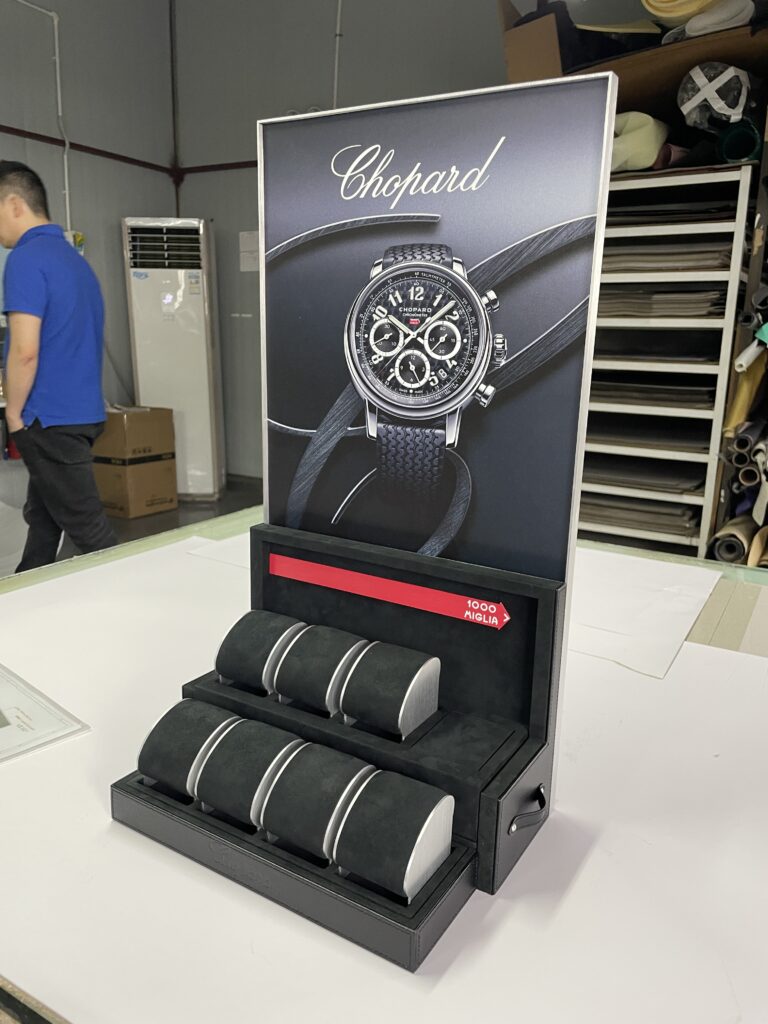
A mold ownership POP display arrangement determines who legally controls the tooling used to create custom retail displays—and who holds the intellectual property (IP) behind the design. If mold ownership and IP rights are not explicitly defined in the contract, brands risk production delays, unexpected fees, and unauthorized reuse of their designs.
Custom toolings (such as injection molds, vacuum molds, resin molds, metal dies, and CNC jigs) require significant investment. Understanding who owns the mold—and who can use it—is essential for cost efficiency, brand safety, and long-term manufacturing flexibility.
🟦 Why Mold Ownership Matters in POP Displays
💡 Key Reasons Ownership Determines Success
1. IP Protection
Your mold may include:
-
custom bottle shapes
-
branded silhouettes
-
proprietary locking structures
-
patented functionality
Without ownership terms, your design could be reused or adapted without permission.
2. Cost Efficiency & Reorder Savings
Brand-owned molds eliminate repeated tooling costs.
Factory-owned molds may lower upfront cost but restrict flexibility.
3. Supplier Freedom
If you own the mold, you can:
-
move it to another factory
-
run multi-region production
-
negotiate better pricing
Without ownership, you're locked into one supplier.
🟦 Mold Ownership Models: Complete Breakdown
| Ownership Type | Who Pays? | Who Owns the IP? | Who Can Use the Mold? | Best For |
|---|---|---|---|---|
| Brand-Owned | Brand pays 100% | Brand | Exclusive to brand | High volume, custom forms |
| Factory-Owned | Factory fully/partially pays | Factory | Supplier may reuse | Budget projects, common shapes |
| Joint Ownership | Both share cost | Shared | Limited shared use | R&D, pilot runs |
🟦 Deep Dive: How Each Ownership Model Works
1. Brand-Owned Molds (Most Secure Model)
If the brand pays the full tooling fee, the mold typically becomes the brand’s asset—even if stored at the factory.
Advantages:
-
Full IP and usage rights
-
No tooling fee for reorders
-
Freedom to transfer mold to other suppliers
-
Ensures brand exclusivity
Best For:
-
Luxury displays
-
Custom housings
-
Multi-country rollouts
-
Proprietary design structures
✔ Engineering Tip
Request CAD + BOM + mold drawings to document IP ownership.
2. Factory-Owned Molds (Low Upfront Cost, Lower Control)
If the factory subsidizes the mold—fully or partially—they usually retain ownership.