
A Manufacturer’s Guide to Perfect Fit & Finish in Mixed-Material Retail Displays
Samtop ensures precision across materials like acrylic, PU, metal, and resin using a 5-step tolerance alignment process — including expansion mapping, offset CAD design, fit testing, and climate-based adjustments — to avoid cracks, misalignment, or assembly errors in retail displays.
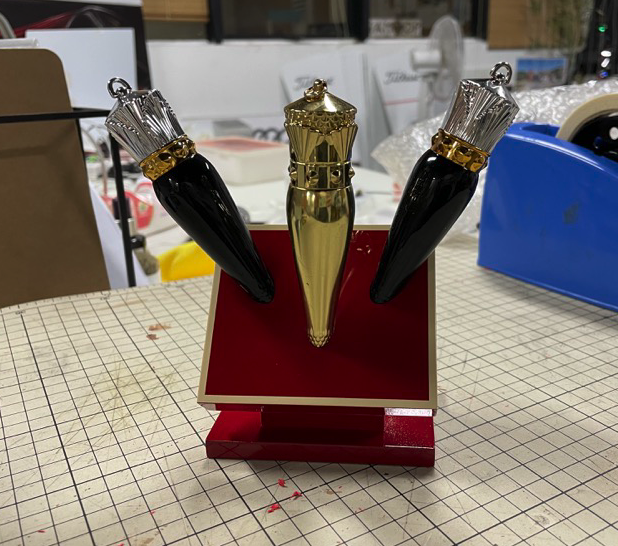
Perfect engineering tolerance for retail displays is not optional — it’s the foundation of luxury visual harmony. You're probably asking
- “Will everything fit perfectly?”
- “Will the acrylic crack during shipping?”
- “What if materials expand differently in different climates?”
Even a 0.5mm misfit can ruin visual alignment, crack your trays, or make store teams struggle during assembly — hurting your brand’s premium impression.
At Samtop, we align tolerances across materials through a proven 5-step engineering process — from CAD to final QC — ensuring every unit fits, installs, and performs flawlessly.
🧠 Why Tolerance Matters in Retail Displays
| Material Used | Without Tolerance Control | Samtop Engineering Result |
|---|---|---|
| Acrylic trays | Cracks due to tight slot or corner pressure | Rounded edge slots + 0.6mm side clearance |
| PU-wrapped MDF | Parts don’t fit due to PU wrap thickness | 0.5mm deducted in cavity design |
| Resin logos | Misalignment, falls off after transport | Magnetic insert with secure snap-fit |
| LED housing zones | Heat warping or circuit damage | Added air gap + thermal buffer design |
🛠️ Samtop’s 5-Step Tolerance Alignment Process
1. Material Expansion Mapping
We test each material’s behavior under heat, humidity, and pressure.
- Acrylic expands in heat → we add 0.5–0.6mm buffer
- PU adds thickness → deducted from internal cavity
- MDF swells in humidity → sealed + spaced
- Resin softens → reinforced zones added
2. 3D CAD With Offset Logic
We engineer every project in SolidWorks/Rhino using:
- ±0.2mm flex margins
- Radius corners for snap-fit trays
- Magnet slot jigs
- LED zones with cable breathing space
3. Golden Sample Fit Testing
Before approval, we test:
- Snap-fit click and pull
- LED temperature impact
- Acrylic insert pressure during pack/unpack
- Removable parts reuse (if modular)
4. Mass Production Spot Checks
- Jigs for logo & tray alignment
- 1/20 batch reassembled on floor
- Operator guide for dry-fit before glue
- QC checks for flush surfaces
5. Region-Based Tolerance Adjustments
We adapt tolerances by shipping destination:
| Region | Adjustment Logic |
|---|---|
| UAE / Mideast | High heat → double PU wrap + open tolerances |
| Europe | Medium humidity → sealed MDF + balanced gaps |
| Japan / Asia | Cold/dry → tighter fit, low-moisture adhesives |
We apply offset logic in CAD to build accurate engineering tolerance for retail displays.
📦 Real Case Study: Fragrance Display Trays
- Client Issue: 11% tray breakage with previous vendor during shipment
- Material: Acrylic tray + PU base + LED riser
- Samtop Fixes:
- +0.6mm edge clearance
- LED housing redesigned with aluminum shell
- Magnetic logo insert (instead of screw)
- Rounded internal slot edges
- Outcome:
✅ 0 broken trays across 400 units
✅ Tray reused for next 2 campaigns
✅ Full EU + MENA rollout with no complaints
💼 Who Needs This?
✅ VM teams creating global campaigns
✅ Retail design agencies using mixed materials
✅ Buyers tired of poor tolerance or cracked trays
✅ Procurement teams requiring batch consistency