

How to Scale One Display Concept Across Multiple Store Sizes?

Bob Chow Bob
Share:

Article Overview

Designing a modular retail display system is the most r […]

Designing a modular retail display system is the most reliable way to scale one visual merchandising concept across different store sizes. Whether you're working with a 10㎡ pop-up, a 50㎡ SIS counter, or a 200㎡ flagship, a properly engineered modular system maintains visual consistency, controls cost, and keeps your rollout predictable across markets.

A glorifier that feels balanced in a flagship may overwhelm a travel kiosk. A tester tray that works in duty-free might look lost in a large SIS. These mismatches affect brand consistency, inflate logistics costs, and slow down global rollouts.

That’s why global brands today don’t design “one display.”
They design modular retail systems that scale up or down—without changing the brand’s visual identity.

This guide breaks down how to build such a system using modular components, standardized finishes, and S/M/L tiered applications.

To scale a display concept across store sizes, create a core VM block that stays identical across all formats, then expand using modular trays, stackable risers, flexible signage, and standardized finishes. Use S/M/L tiering to adapt SKU count, storytelling zones, and fixture width without changing brand identity.
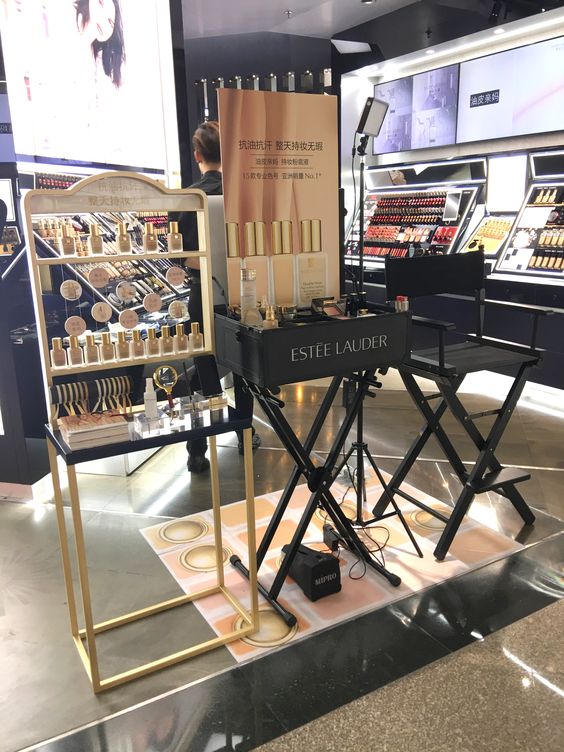
Modular retail display system adapted for pop-up, standard, and flagship stores
CE-certified travel retail display with magnetic signage

1. Why Scaling One Concept Across Store Formats Is Difficult

Retail environments vary dramatically—8㎡ kiosks, 30㎡ SIS units, 100–200㎡ flagships.

The common challenges include:

ChallengeModular Solution
Varying store footprintsScalable zones (S/M/L tiers)
Global install inconsistencyPlug-and-play modules + labels
High logistics costFlat-packable design
SKU variabilityAdjustable trays + inserts
Brand continuityStandardized color, finish, lighting

Brands often fail not because the design is bad, but because the design isn’t built to adapt.

2. Start With the “Core VM Block”

This is the most important idea in scalable retail systems.

A Core VM Block is the display component that appears in every format, unchanged.

Examples:

  • 90 cm glorifier with logo plate

  • LED hero unit

  • Core tester tray

  • Signature riser block

This single block becomes the visual nucleus of the brand.

Every other component scales around it.

Why it works:
When customers recognize the same block in pop-ups, SIS units, and flagships, brand recall skyrockets.

3. How a Modular Retail Display System Scales Across Store Sizes

This is the framework used by global fragrance, skincare, and consumer tech brands.

S — Small Format (Pop-Ups, Travel Retail, 8–15㎡)

Components:

  • 1 core glorifier

  • 1 tester tray

  • Magnetic or slot-in signage

  • Optional LED ring

Focus: hero SKU + high interaction

M — Medium Format (Department Store SIS, 15–50㎡)

Components:

  • 2 tester trays

  • Drawer or storage base

  • Backlit header

  • Side storytelling panels

Focus: product variety + guided testing

L — Large Format (Flagship, >50㎡)

Components:

  • Full wall fixture

  • Storytelling plinths

  • Digital header

  • Modifiable shelf bays

Focus: full brand world-building

Key principle:
You scale the quantity, width, and storytelling depth, not the design language.
Visual Merchandising Solutions

Transform your retail space with custom POP displays, window decorations, and luxury merchandising solutions. Get expert consultation and premium manufacturing services.

✓ 20+ Years Experience • ✓ Global Shipping • ✓ Custom Manufacturing
Visual Merchandising Solutions

4. Standardize Visual Elements Across All Formats

Scaling only works if the visual system is unified.

Standardize:

  • Color palette (e.g., matte ivory, champagne gold)

  • Material family (PU lacquer, PET film, brushed stainless)

  • Lighting temperature (3000–3500K LED globally)

  • Typography + logo zone

  • Edge radius, bevels, proportions

This ensures cohesive photos, consistent perception, and intuitive recognition—even across markets.

5. Build Modularity Into the Engineering

True scalability comes from engineering decisions, not layouts.

FeatureFunction
Removable panelsSwap language or regional branding easily
Adjustable traysHandle SKU variation
Stackable risersAdjust visual height for different formats
Flat-pack structuresLower global freight cost
Plug-and-play lightingUniversal installation

These modular parts reduce installation time and create predictable rollout behavior—even across contractors and countries.

6. Case Study: Scalable Multi-Size Rollout for a Global Fragrance Brand

Objective:

Launch a signature scent across 5 markets, with consistent identity from kiosk to flagship.

Components for Each Tier:

S — Pop-Up (Airport)

  • Hero glorifier

  • LED ring

  • QR storytelling card

M — Department Store SIS

  • Glorifier

  • 2 tester trays

  • Backlit header

L — Flagship

  • Full wall bay

  • Plinths for hero storytelling

  • Integrated shelf lighting

Results:

  • One design adapted into 3 store formats

  • 92% installs completed by local teams using a plug-and-play kit

  • 41% cost reduction across 4 regional campaigns

The entire system worked because the core block stayed the same.

FAQ — Scaling One Retail Display Concept

Q1: Can the same tester tray work in different shelf widths?

Yes. Design in 600 / 900 / 1200 mm modular widths with fixed logo placement.

Q2: What’s the easiest component to scale?

Tester trays, risers, headers, and magnetic wraps—lightweight, flat-pack, and repeatable.

Q3: Can pop-up kits integrate into flagship layouts?

Absolutely. Modular plinths or wall bays can “dock” smaller kits into large environments.

Q4: How do I manage multi-market BOMs?

Use an S/M/L tiered Bill of Materials + rollout matrix.

Conclusion: Think in Systems, Not One-Offs

A scalable display concept is not a single design—
it’s an ecosystem of modular parts that behave consistently across formats.

✔ One concept, many footprints
✔ Modular → flexible, cost-effective, globally consistent
✔ Controlled visuals across markets
✔ Faster rollouts with fewer surprises

At Samtop, we design VM systems that scale from 10㎡ kiosks to 200㎡ flagships—while looking unmistakably on-brand.

📩 Need support developing a scalable VM system?
sales@samtop.com
🌍 www.samtop.com

How to Design Modular Tester Trays for Global Rollouts

VM & Display Magazine – Modular Fixture Trends

Bob

About Bob

Hi, I’m Bob, the funder of SamTop.com, Our company makes visual merchandising props, retail display stands and window display decoration for many years now, and the purpose of this article is to share with you the knowledge related to retail displays from a Chinese supplier’s perspective.

Connect: