Packaging for international shipping requires a balance […]
Packaging for international shipping requires a balance of protection, sustainability, and cost efficiency. Poorly designed packaging can lead to cracked acrylic displays, damaged visual merchandising kits, increased freight costs, and failed global rollouts. In 2025, brands must design packaging that is protective, lightweight, eco-friendly, and optimized for multi-country logistics.
This guide breaks down how to engineer international-ready packaging for fragile retail displays — including shock-proof structures, foam-free solutions, crate recommendations, sustainability options, and global QC workflows.
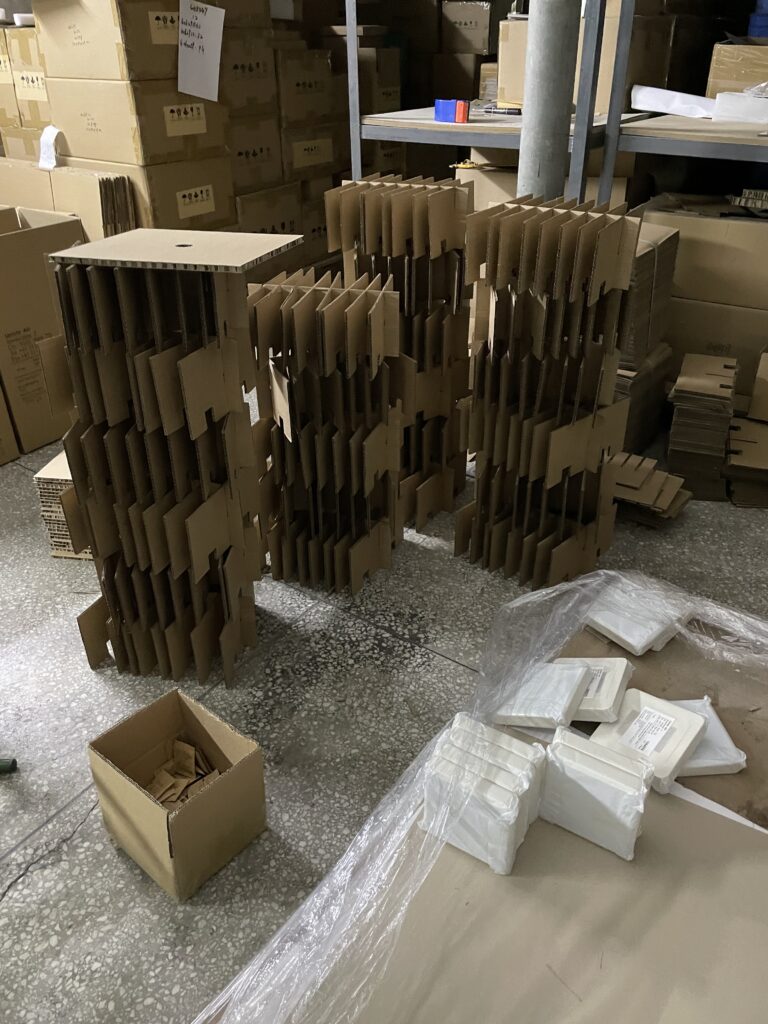
unboxing fragile display with foam-free system
What Is the Best Packaging for International Shipping?
The best packaging for international shipping protects products with a multi-layer system:
Primary protection using die-cut foam or molded pulp,
Secondary containment using reinforced inner structures,
Strong outer cartons (double/triple-wall),
Moisture barriers for sea freight, and
Clear labeling + QC documentation for store-friendly unboxing.
This layered approach prevents breakage, avoids overpackaging, reduces shipping cost, and improves the retailer unboxing experience.
Why Packaging for International Shipping Requires Engineering, Not Guesswork
Shipping retail displays internationally introduces four unavoidable risks:
Transform your retail space with custom POP displays, window decorations, and luxury merchandising solutions. Get expert consultation and premium manufacturing services.
✓ 20+ Years Experience • ✓ Global Shipping • ✓ Custom Manufacturing
Seasonal POP displays
High-volume rollouts
Advantages:
No plastic
EPR-compliant
Fully recyclable
👉 Add QR instructions printed directly on the box to reduce paper waste.
3. Wooden Crate (Best for Floor Displays & Heavy Units)
Ideal for:
Metal gondola units
Luxury floor-standing displays
Window props above 80cm
Advantages:
Maximum protection
Reusable for global events
Ideal for air + sea freight
👉 Use ISPM-15 certified crates for international customs clearance.
4. Pallet + Shrink-Wrap System (Best for Window Props)
Ideal for:
Durable resin props
Oversized decorations
Bulk shipments
Advatages:
Minimal packaging
Fast load/unload
Good for regional shipping
👉 Add “Shockwatch” indicators to track handling damage.
How to Reduce Overpackaging Without Increasing Breakage
H3: 1. Replace PE Foam with Molded Pulp
Reduces plastic use by up to 90%.
H3: 2. Use Die-Cut Corrugated Inserts Instead of Extra Boxes
Same protection, less weight.
H3: 3. Engineer Packaging Based on Drop-Test Data
Reduce foam thickness once specs are proven.
H3: 4. Standardize Carton Sizes for Lower Shipping Costs
Optimizes pallet loads.
H3: 5. Use QR Unboxing Guides Instead of Printed Booklets
Cuts paper waste and improves store staff efficiency.
Case Study: Foam-Free Packaging with 0% Breakage
Client: Luxury fragrance brand Regions: 12 global markets (SEA + EU + Middle East) Display Type: Acrylic riser + LED components
Challenges
Foam not allowed (EPR restrictions)
Must survive long sea freight
Multi-country courier last-mile delivery
Samtop Solution
Custom corrugated insert with Velcro straps
Molded pulp cradle replacing foam
QR install guide printed on inner box
5-ply FSC-certified carton with ECT rating
Results
✔ 0% damage across 12 destinations ✔ Passed all retailer QC checks ✔ 32% weight reduction → lower freight cost ✔ Reordered for next campaign
Frequently Asked Questions
Q1: What is the best packaging for international shipping for fragile displays? → A multi-layer system: foam insert or molded pulp + reinforced carton + moisture barrier.
Q2: Can we remove foam completely? → Yes. Use molded pulp or honeycomb board engineered for your product’s geometry.
Q3: What carton strength is required for sea freight? → Double-wall (5-ply) with ECT or BCT certification.
Q4: Can packaging also serve as an installation guide? → Yes. QR codes and printed diagrams reduce setup errors.
⭐ Conclusion: Smart Packaging Protects Displays, Budgets, and Brand Image
✔ Avoid breakage ✔ Reduce freight cost ✔ Achieve sustainability goals ✔ Improve store unboxing workflow ✔ Create a consistent global rollout
At Samtop, we design packaging for international shipping that protects your displays through every part of the journey — courier → air freight → sea freight → retail installation.
📩 Need a Packaging Plan for Your Next Campaign?
At Samtop, we help global brands design packaging that:
Hi, I’m Bob, the funder of SamTop.com, Our company makes visual merchandising props, retail display stands and window display decoration for many years now, and the purpose of this article is to share with you the knowledge related to retail displays from a Chinese supplier’s perspective.