
[image]
💡 Three-Part Opening (PAS Formula)
In today’s luxury retail world, perfume displays aren’t just about organizing bottles—they’re about telling a story. Brands face a major challenge: how to create display stands that not only reflect their essence but also draw consumers into an immersive sensory experience.
The best materials for custom perfume displays in luxury retail include acrylic for clean visuals, metal for luxury accents, and marble or leather for premium texture. Matching these materials with brand identity, modular design, and lighting creates a stunning, functional retail centerpiece.
Keep reading to discover how top brands like Dior, Chopard, and Givenchy use strategic design and multi-material craftsmanship to elevate their fragrance storytelling in global retail markets.
📚 Table of Contents
- What materials are best for luxury perfume displays?
- How can you align your display design with your brand identity?
- What is the production process for custom perfume displays?
- Why is modular design important in retail perfume displays?
- Conclusion
- Resources & Related Links
[Claim]
Samtop Display helps global luxury brands craft high-end, eco-certified, multi-material perfume displays that deliver fast, flexible, and flawless execution.
What materials are best for luxury perfume displays?
Many brands struggle to balance elegance, durability, and budget when choosing materials for perfume displays.
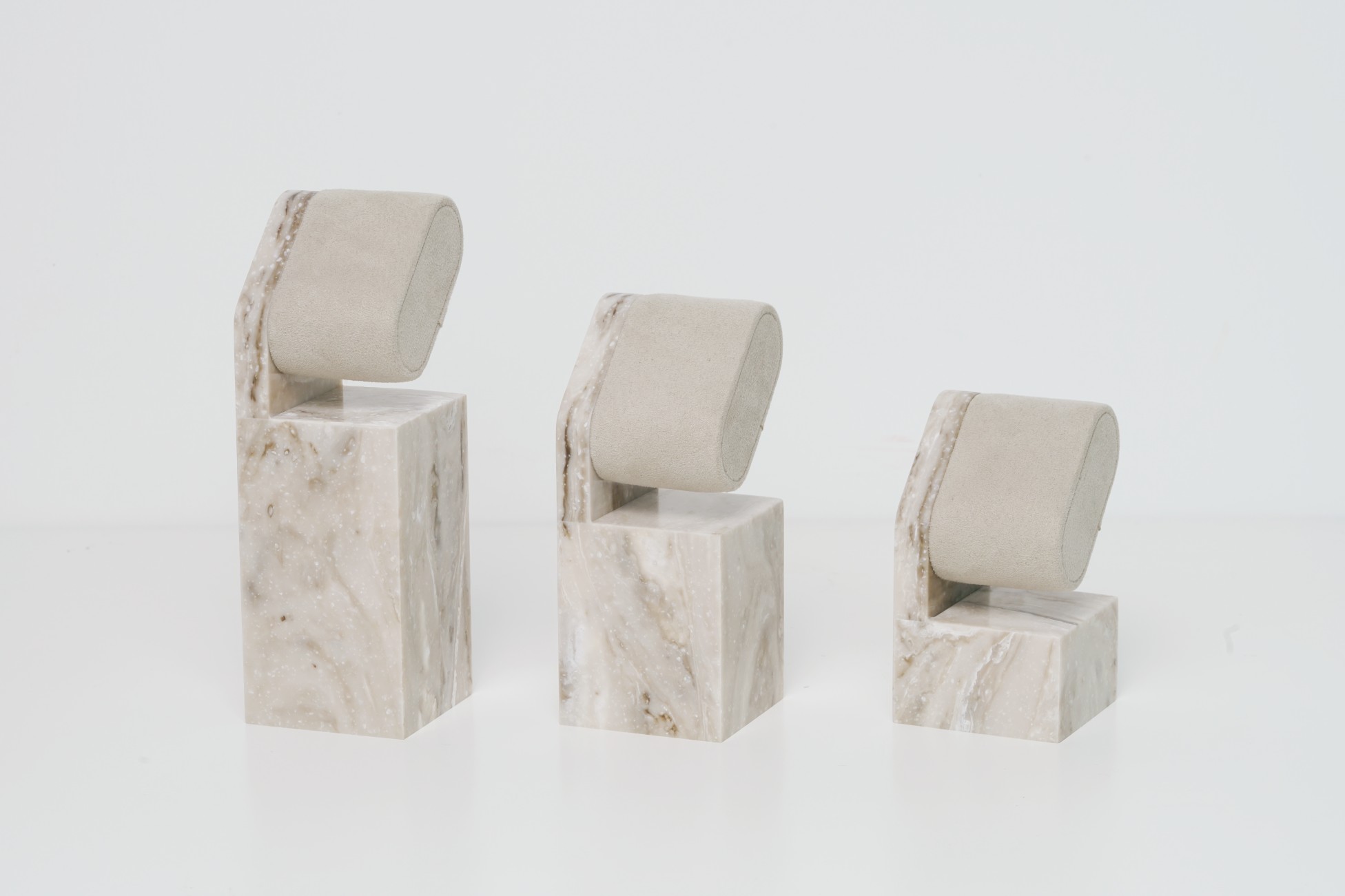
The best materials for high-end perfume displays include acrylic for modern clarity, metal for high-gloss finish, marble for weight and prestige, and velvet or leather for tactile luxury. Each material communicates different brand values.
At Samtop, we often blend materials like clear acrylic + electroplated gold metal + laser-engraved logos, achieving a balance between visual impact and production feasibility.
[image]
How can you align your display design with your brand identity?
Choosing a beautiful material isn't enough—design must reflect the brand's tone, values, and story.
To match your perfume display with brand identity, define the style first—minimalist, luxury, natural—and select materials and finishes accordingly. For example, a sustainable brand might use FSC-certified wood, while a luxury house may opt for marble and gold accents.
We use silk-screening, UV printing, water-based paints, and even embedded logos to maintain brand consistency across global retail executions.
[image]