The overlooked difference between visibility and conversion — and how POP displays close the gap
Creating a great product is just the first step. The real challenge in physical retail is making shoppers notice, engage, and buy at the shelf level. This is where a POP (Point-of-Purchase) display becomes essential — not just a stand, but your silent salesperson. Yet, many brands overspend or underperform with POP setups that don’t match their product goals or store format.
In this guide, you’ll learn what a POP display is, the different types available, cost drivers, and practical tips to help your brand stand out in-store while keeping budgets under control.
What Is a POP Display?
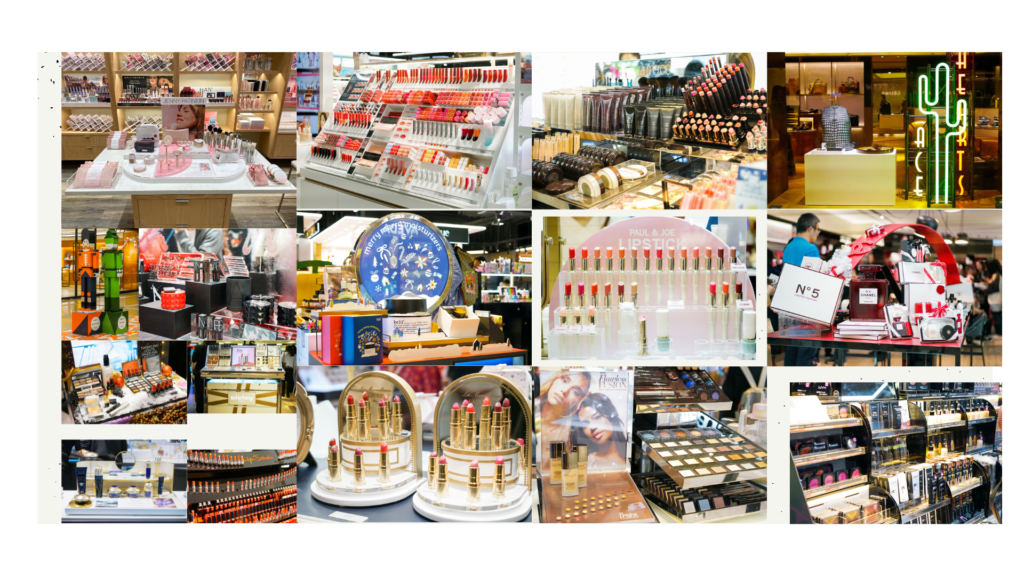
A POP display is a branded structure placed near a product in-store to attract attention, encourage trial, and boost conversion. It may be a countertop unit, a freestanding floor display, or even a glorifier focused on a hero SKU. Done right, it:
- Captures attention at the purchase moment
- Encourages impulse buying or product discovery
- Reinforces visual branding
- Supports new launches or gifting campaigns
Real example: When L’Oréal launched Revitalift in Southeast Asia travel retail, they used modular countertop POP trays with LED-lit risers and QR-code mood cards, driving +37% trial rate over regular shelf placement.
👀 Why Keep Reading?
Because POP displays are often misunderstood. This post will show you:
- The difference between POP and POS
- How to choose materials that match your category
- How to avoid overspending while boosting ROI
- Proven layouts used by brands like Lancôme, Ray-Ban, and Omega
🧠 POP vs. POS Display — What's the Difference?
| Display Type | Full Form | Location | Example |
|---|---|---|---|
| POP | Point of Purchase | Near product shelf or floor zone | Fragrance glorifier, sunglass counter riser |
| POS | Point of Sale | At checkout or cashier area | Cardboard tray with snacks or impulse gift sets |
POP = storytelling + display
POS = conversion at payment zone
🧱 7 Common POP Display Types (With Material Suggestions)
| Type | Description | Common Materials |
|---|---|---|
| Countertop Display | Sits on a table, shelf, or counter | Acrylic, PU-wrapped MDF, metal |
| Floor Display (FSDU) | Freestanding, often in aisle | Corrugated board, powder-coated steel |
| Glorifier Display | Elevated unit for one or few SKUs | Acrylic + LED, brushed aluminum |
| Tester Tray | Holds product testers + scent strips | EVA foam, velvet, custom print panels |
| Endcap Display | At the end of a gondola shelf | MDF, printed backer, modular trays |
| Inline Shelf POP | Hooks or shelf-talkers | PET, vacuum-formed plastic |
| Window Display Prop | Installed in storefront VM zones | Foamboard, PVC, backlit elements |
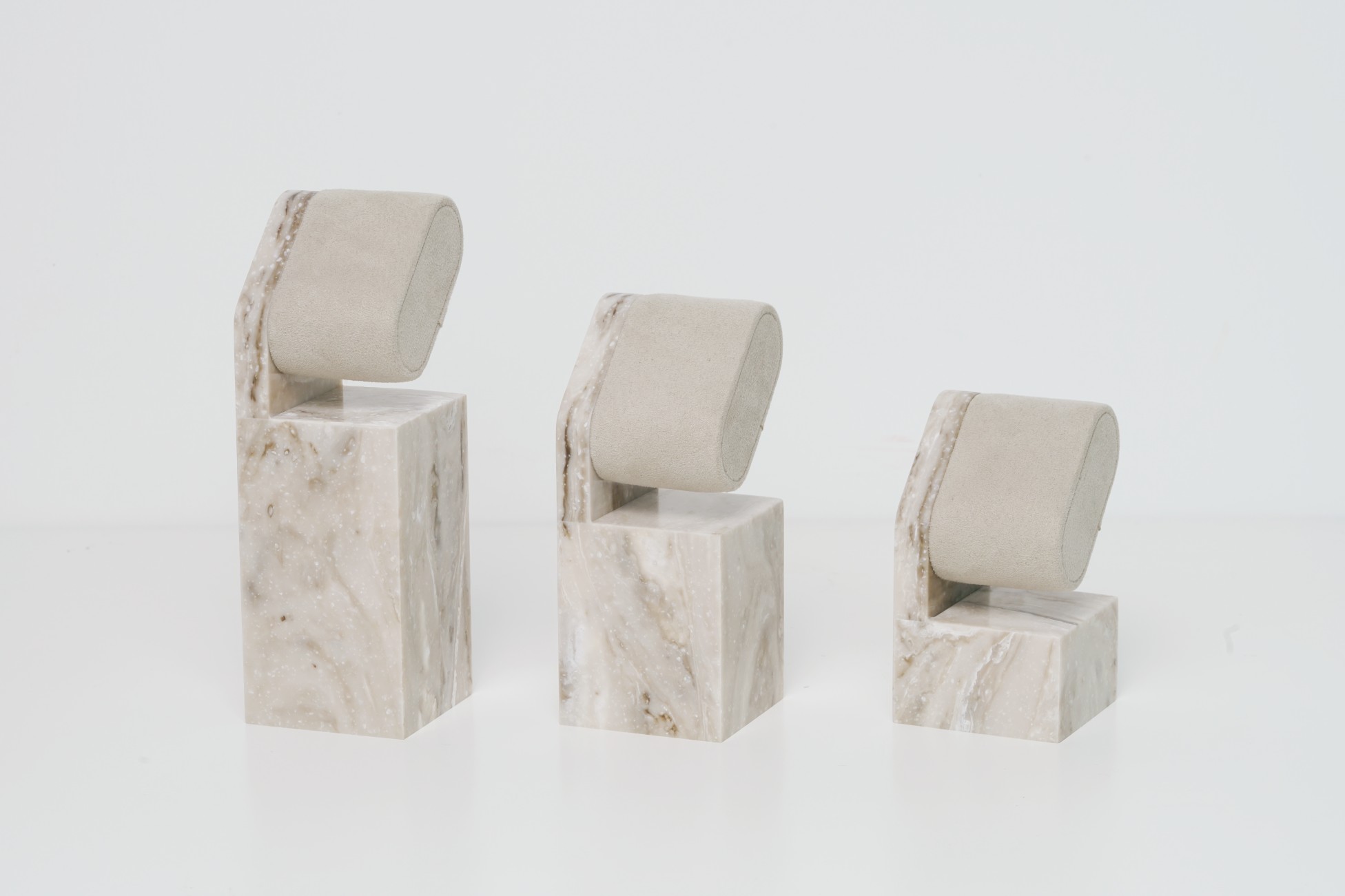
Example: For a Cartier Tank watch campaign in China, the glorifier used a real marble base, with brass inlays and no lighting, relying on boutique ambient light to evoke luxury.
🎯 What Makes a POP Display Effective?
- Focused Messaging – One product = one message
- Customer Interaction – Try me mirror, QR scan, test strip access
- Brand Consistency – Fonts, logo, and tone aligned with brand language
- Structural Stability – Must handle foot traffic and repeated handling
- Easy Setup – Modular design for regional rollouts
Pro Tip: Use contrast materials like matte + gloss, or light diffusion layers to enhance visual depth.
💰 What Impacts the Cost of a POP Display?
| Factor | Description |
|---|---|
| Material | Acrylic & metal are premium; cardboard is budget-friendly |
| Printing Techniques | UV print, foil stamp, or laser engraving affect cost |
| Lighting Integration | LED strips, battery packs, USB modules add 10–30% |
| Packaging Format | Knock-down saves freight but adds setup time |
| Tooling & Mold Costs | For custom vacuum-formed or injection parts |
| Minimum Order Quantity | Usually 50–100 units per design |
Example: A PU-wrapped tester tray for a luxury skincare brand cost $16.50/unit ex-factory with UV print logo, magnetic label inserts, and KD packaging for global rollout.