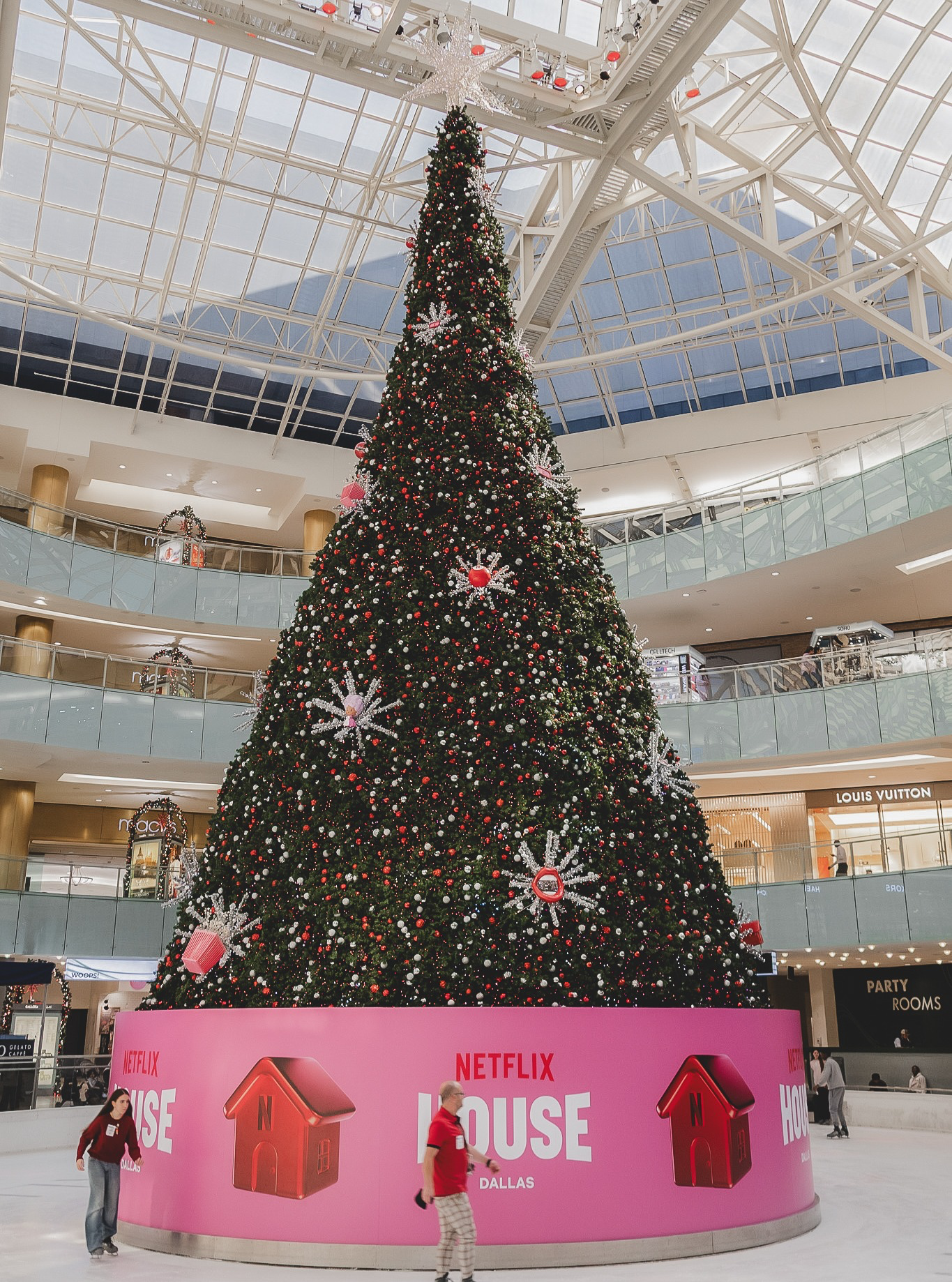
Building a 95ft Christmas tree inside a shopping mall is not just a decoration project. The real challenge starts when hundreds of oversized props need to stay lightweight, pass through standard mall service corridors, assemble quickly during a short overnight window, and still match the brand’s color standard under bright retail lighting.
Custom props produced for a Netflix retail activation, Samtop produced modular decorative elements using foam, fiberglass, resin, acrylic and metal. This project involved much more than fabricating decorative props. Every piece had to be engineered around installation access, hanging safety, assembly speed, and brand color consistency. It was about designing each component around mall access limits, installation sequence, hanging safety and brand color consistency.
The Challenge: Installing a Giant Christmas Display Inside a Shopping Mall
Large mall Christmas installations look effortless to shoppers. But behind the scenes, the hardest part is rarely the decoration itself. Most oversized props look fine in renderings. The real problems usually appear after production.
A prop may become too heavy to hang safely. A module may be too large to pass through the mall service entrance. A decorative element may look perfect in the factory, but show color differences under strong retail lighting.
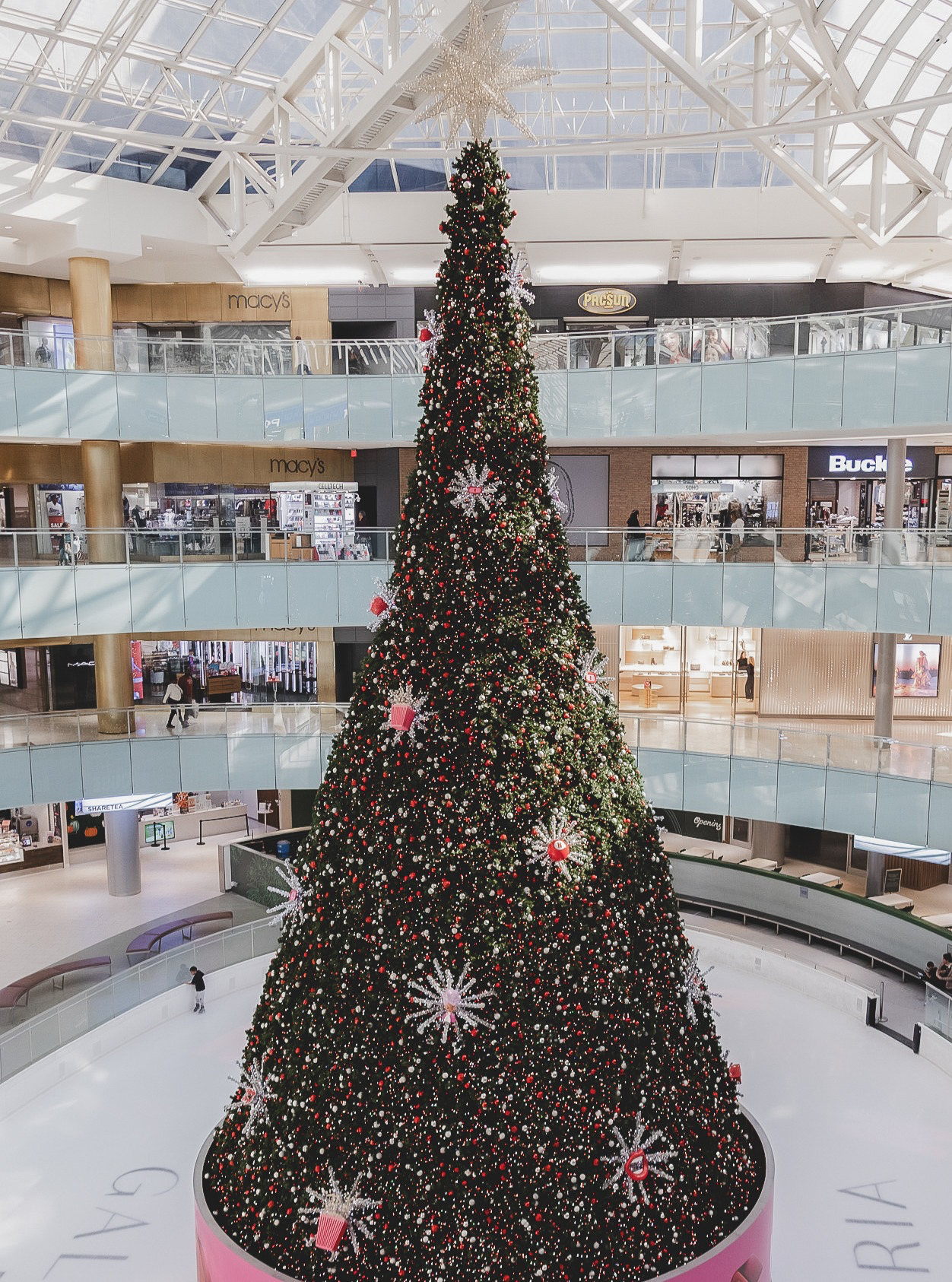
For the Netflix House Dallas project at Galleria Dallas, the installation involved a 95-foot immersive Christmas tree and hundreds of oversized decorative elements. The fabrication work had to solve four practical problems:
- Standard mall service corridors could not accept one-piece oversized structures.
- Installation could only happen during a short overnight window.
- Decorative props had to stay lightweight enough for safe hanging.
- Foam, fiberglass, resin, acrylic, and metal parts all had to match the same brand color standard.
In many large retail installation projects, problems usually appear in four areas: weight, color consistency, unclear connection points, and slow on-site assembly.
That is why Samtop did not treat this as a simple decoration project. Each component was engineered around access size, hanging safety, assembly sequence, and final visual consistency before production started.
Best Materials for Large Holiday Installations: Foam, Fiberglass, Resin, Acrylic, and Metal
One of the most common questions from retail designers and VM directors is: Which material should I use for large Christmas props? The answer depends on prop size, required detail, weight limits, and installation environment. Below is a practical guide based on Samtop’s production experience:
| Material |
Best Use |
Weight |
Detail Level |
Durability |
Typical Application |
| Foam + Fiberglass |
Oversized volume props |
Very Light |
Medium |
Good |
Giant food props, oversized ornaments |
| Fiberglass Shell/Fiberglass Reinforced Structure |
Medium to large custom forms |
Medium |
High |
Excellent |
Character shells, logo elements, sculptural props |
| Resin |
High-detail character figures |
Medium-Heavy |
Very High |
Excellent |
IP character ornaments, faces |
| Acrylic |
Branded logos, flat graphics |
Light |
High |
Good |
Signage, logo cut-outs |
| Metal (internal) |
Structural armatures |
Heavy |
N/A |
Excellent |
Hanging points, internal frames |
For the Netflix House Dallas project, Samtop used a hybrid material approach instead of relying on one single material.
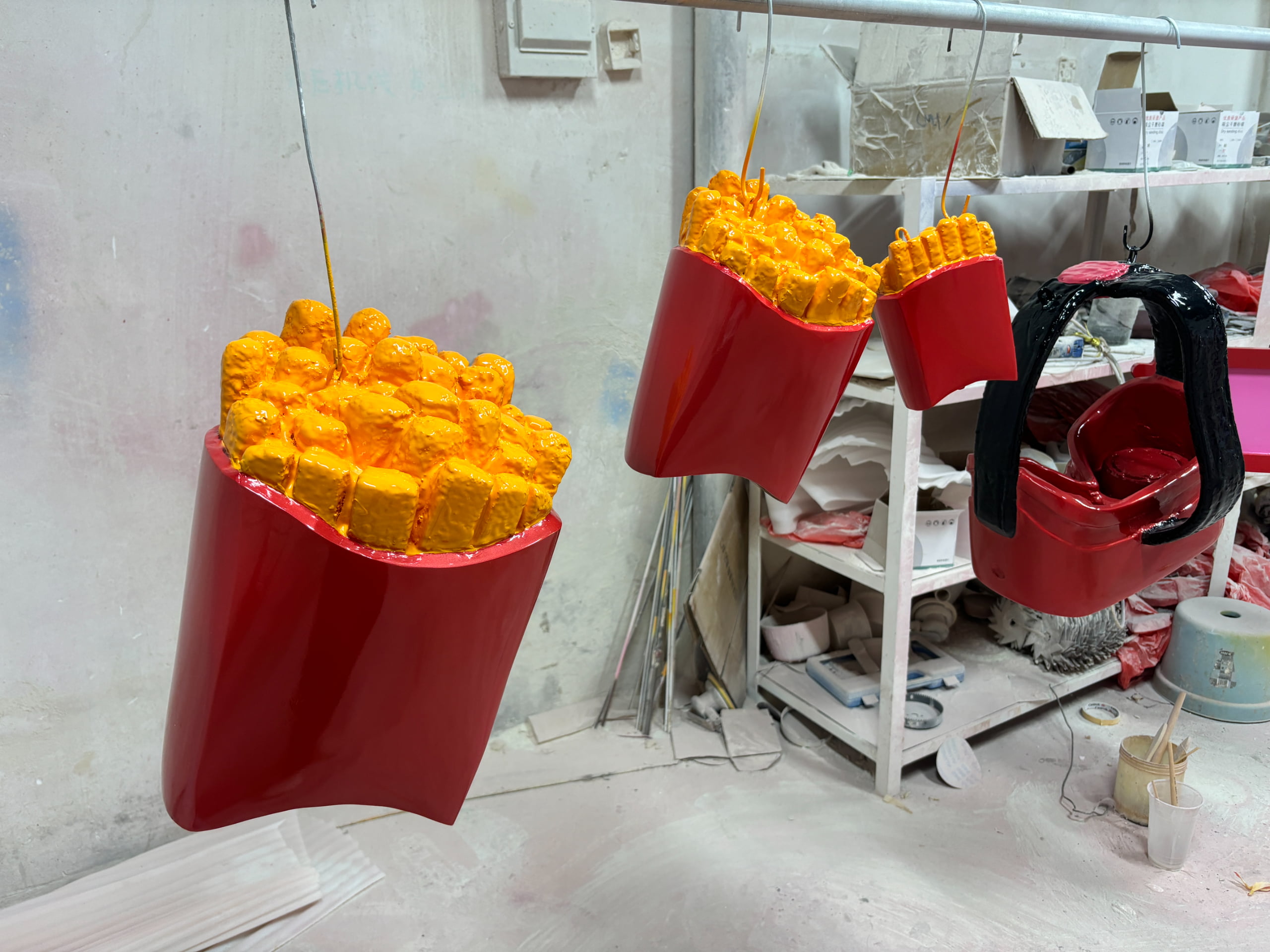
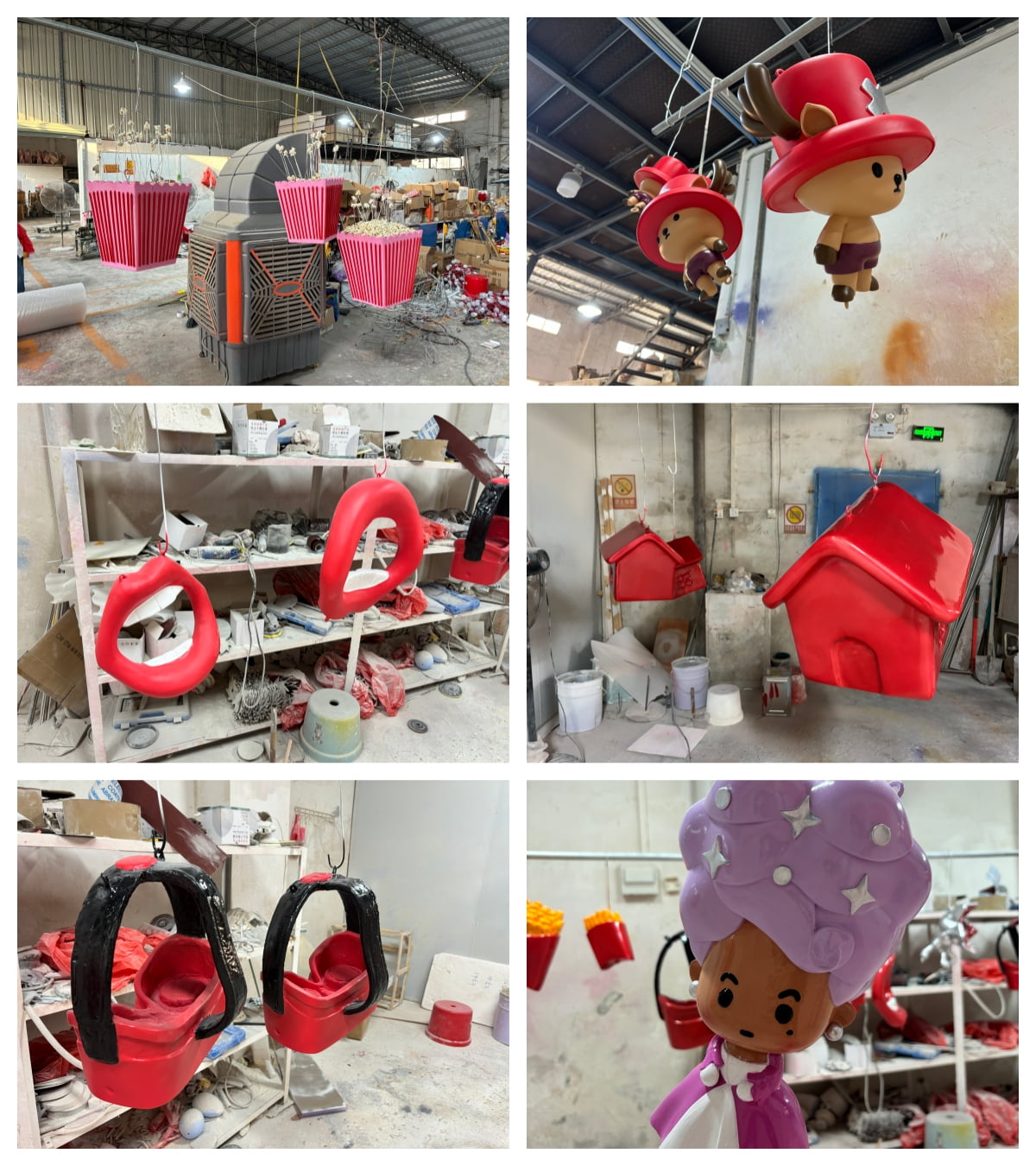
Large food props, such as oversized popcorn and fries, were made with foam cores and fiberglass coating to reduce weight while keeping the surface strong enough for finishing and installation.
IP character ornaments required more detail, so resin and fiberglass were used where sharper shapes, stronger surfaces, and better paint definition were needed.
For branded logo elements and flat visual graphics, acrylic and metal were used to keep the shapes clean, stable, and consistent with the design intent.
How do you design a 95-foot Christmas installation to fit through standard mall service corridors?
The biggest issue was not only making the props. It was making sure every module could fit through the mall’s service entrance, pass through the corridor, and still be assembled quickly during the overnight installation window. Samtop engineering team designed each component around the actual dimensions of the service corridor and elevator. Because installation could only happen overnight, every module was pre-labeled according to assembly sequence before it left the factory. If a module is too large, it will never pass through the mall entrance. That is why corridor size, elevator access and service-door dimensions must be treated as design constraints from the beginning.
How do you create large visual scale without adding unnecessary weight?
For oversized hanging props, we use foam cores with fiberglass reinforcement to reduce weight while keeping the surface rigid enough for sanding, painting and installation. Some oversized ornaments looked lightweight visually, but still required internal steel frames to stay stable once suspended at height. This approach allowed the props to look large from the shopper’s view without putting unnecessary load on the tree structure.
How do you keep brand color consistent across foam, fiberglass and acrylic?
Under the bright lighting of a shopping mall, even a small color difference between a foam ornament and a resin figure is immediately visible. Foam usually absorbs paint unevenly, while fiberglass reflects light more directly. Under strong retail lighting, two props using the same Pantone color can still appear visually different if the primer and surface finish are not adjusted separately.This helped the painting team adjust primer, coating thickness, and finish before mass production started.
How do you keep a large holiday installation on schedule when many materials are produced at the same time?
The mall opening date was fixed and could not move. With dozens of individual props made from different materials, running the project step by step was not realistic. We divided the project into modules and moved several production stages forward in parallel. While one group of ornaments was being painted, another group was already in structural testing. While detailed figures went through QC, other modules were being checked, numbered, and prepared according to the installation sequence.
How Samtop Fabricates Large Holiday Installations: 5 Production Stages
Whether the project is a single character ornament or a 120-component mall Christmas tree installation, Samtop follows the same five-stage production process:
Stage 1: Structural Prototype and Base Fabrication
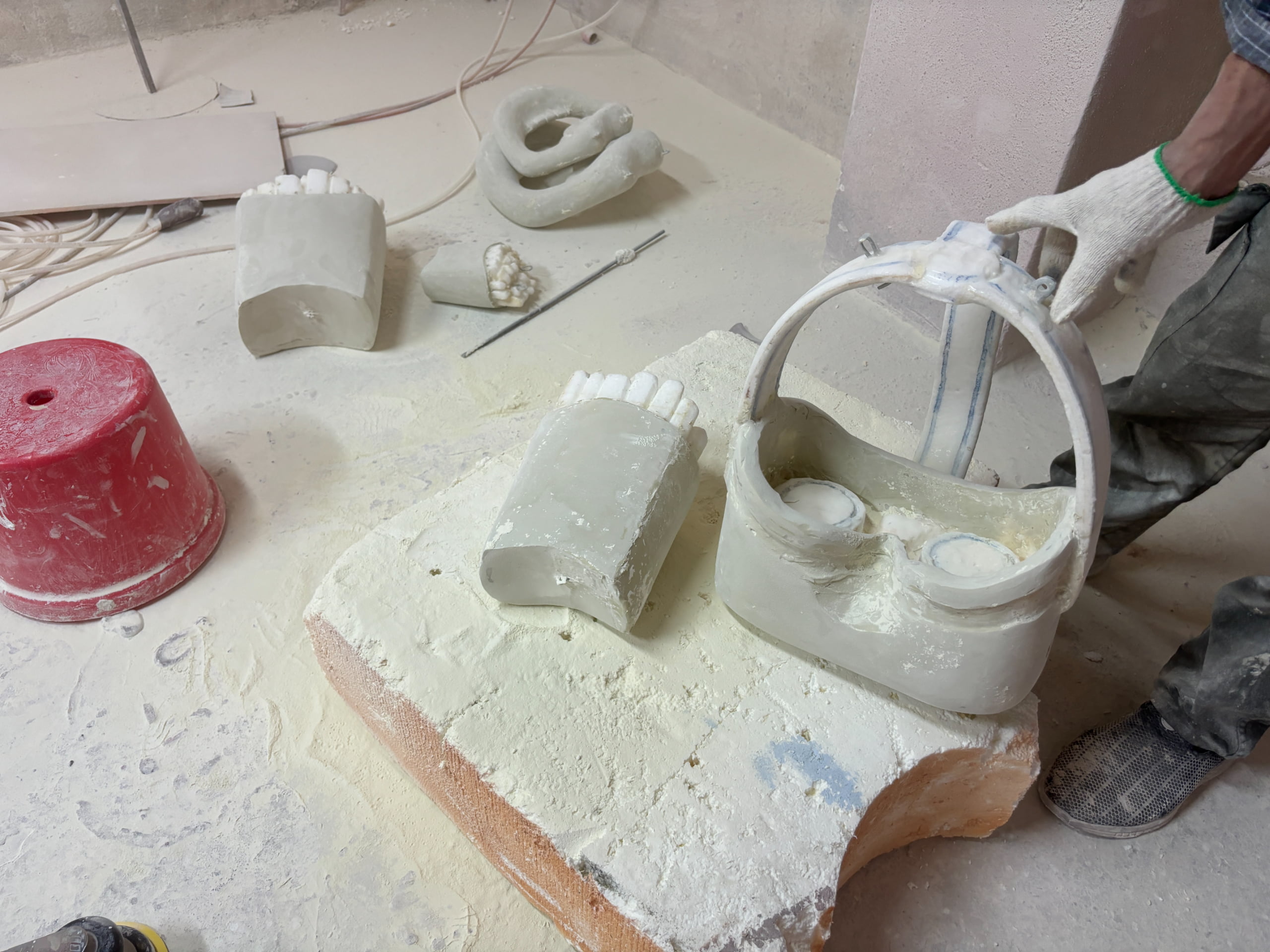
Every prop begins with 3D modeling to confirm proportions, structural integrity, and modular assembly logic. High-detail character figures move into resin or fiberglass molding; large volume props begin with precision foam sculpting.
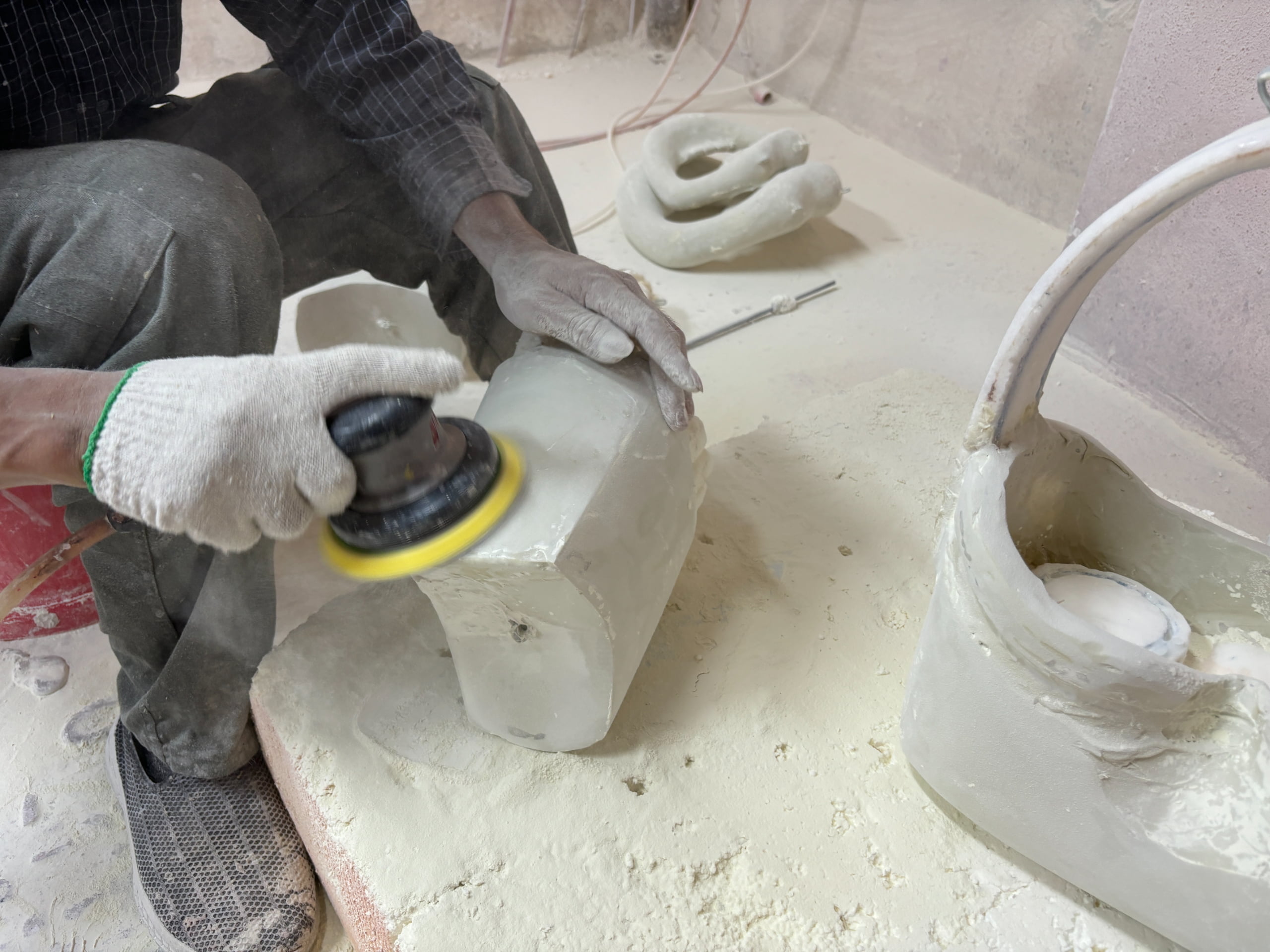
Stage 2: Reinforcement, Sanding and Surface Preparation
Raw forms are reinforced with fiberglass coatings where required, then hand-sanded to remove mold lines, seams and surface imperfections. Specialized primers are applied to create a stable surface across foam, fiberglass, resin and acrylic, so each material is ready for consistent finishing.
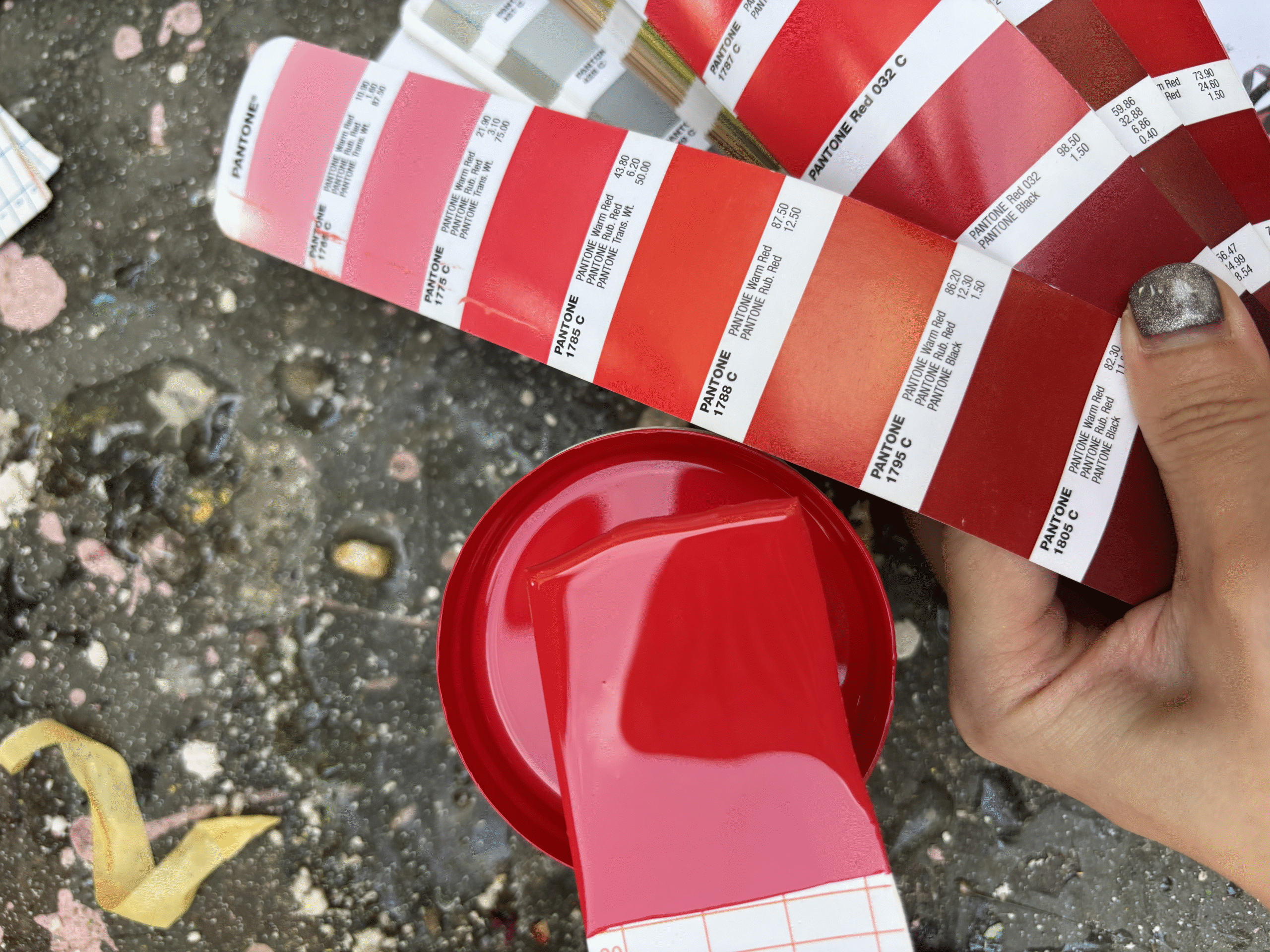
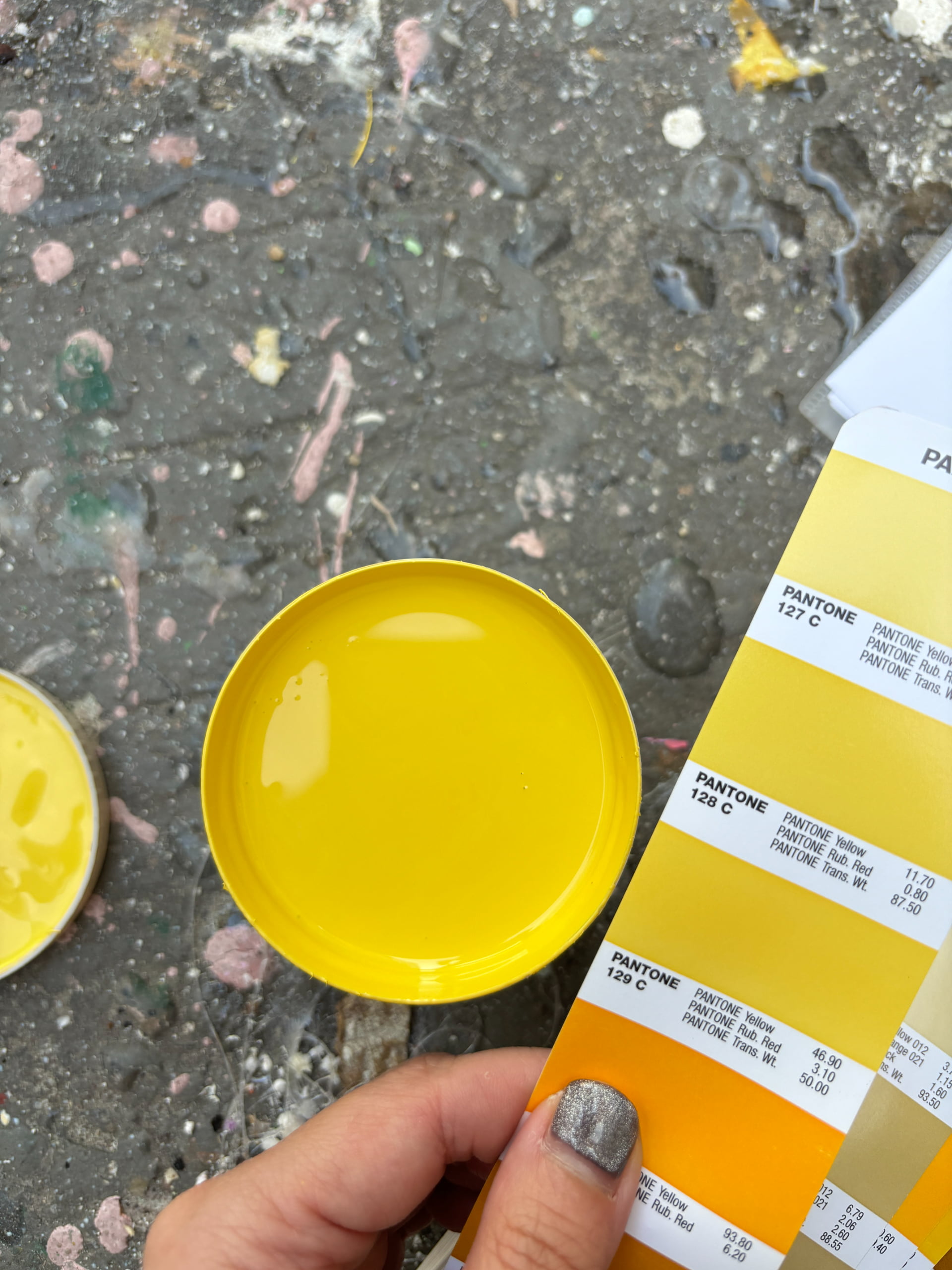
Stage 3: Pantone-Matched Painting and Detail Finishing
Once the surface is prepared, Pantone-matched base colors are applied in controlled batch painting conditions. For IP characters and branded elements, additional hand-painted layers are used for facial expressions, texture effects and shading. Each finished piece is checked against the approved color sample before it moves to QC.
Stage 4: Quality Control Inspection
A full 360-degree QC inspection verifies dimensional accuracy against the original 3D blueprint, confirms color consistency across all components, and stress-tests all hanging points and internal metal reinforcements. For suspended mall installations, no prop is approved until its weight, hanging point, and internal reinforcement have been checked and documented.
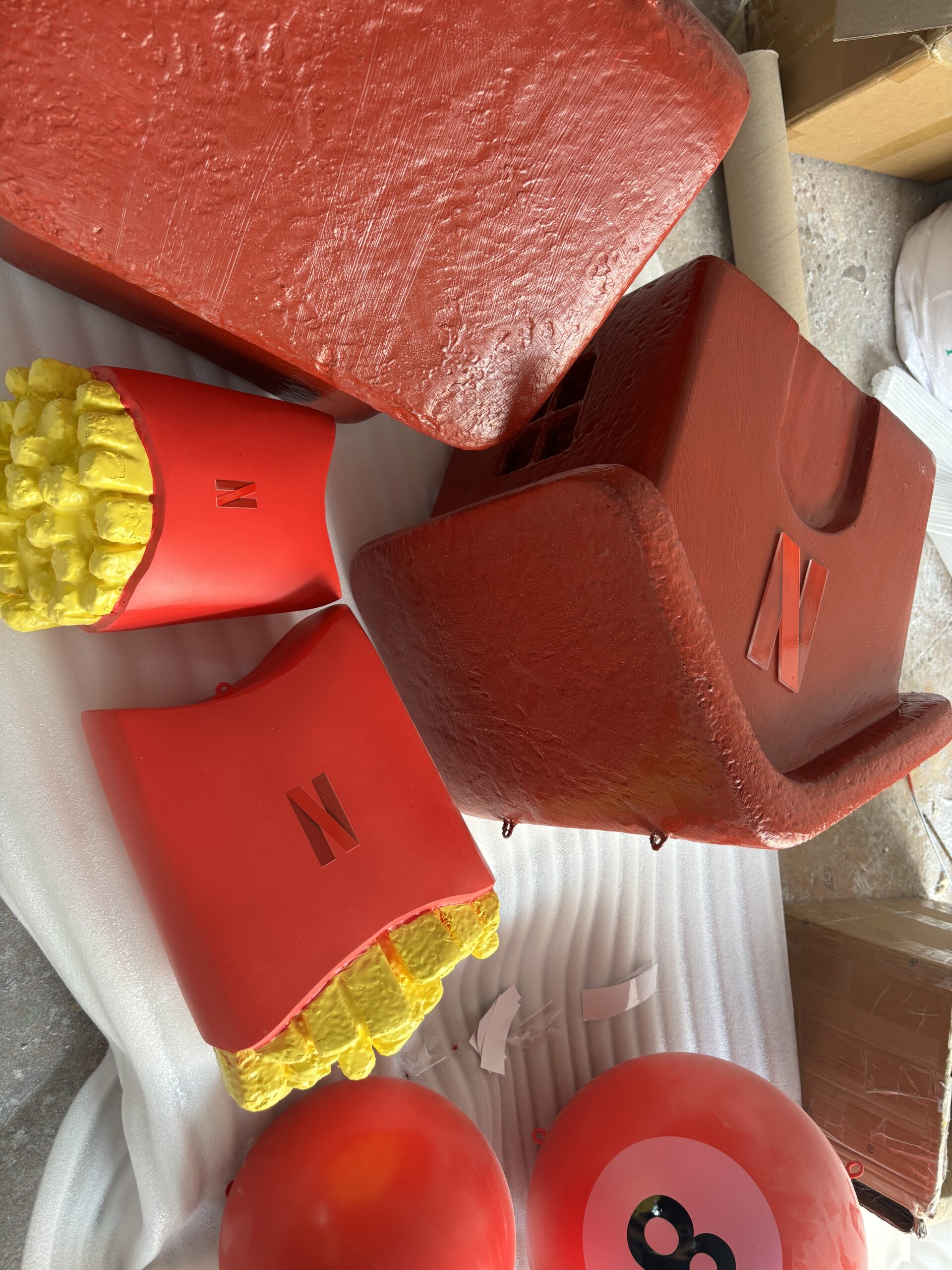
Stage 5: Final Assembly Mapping and Installation Preparation
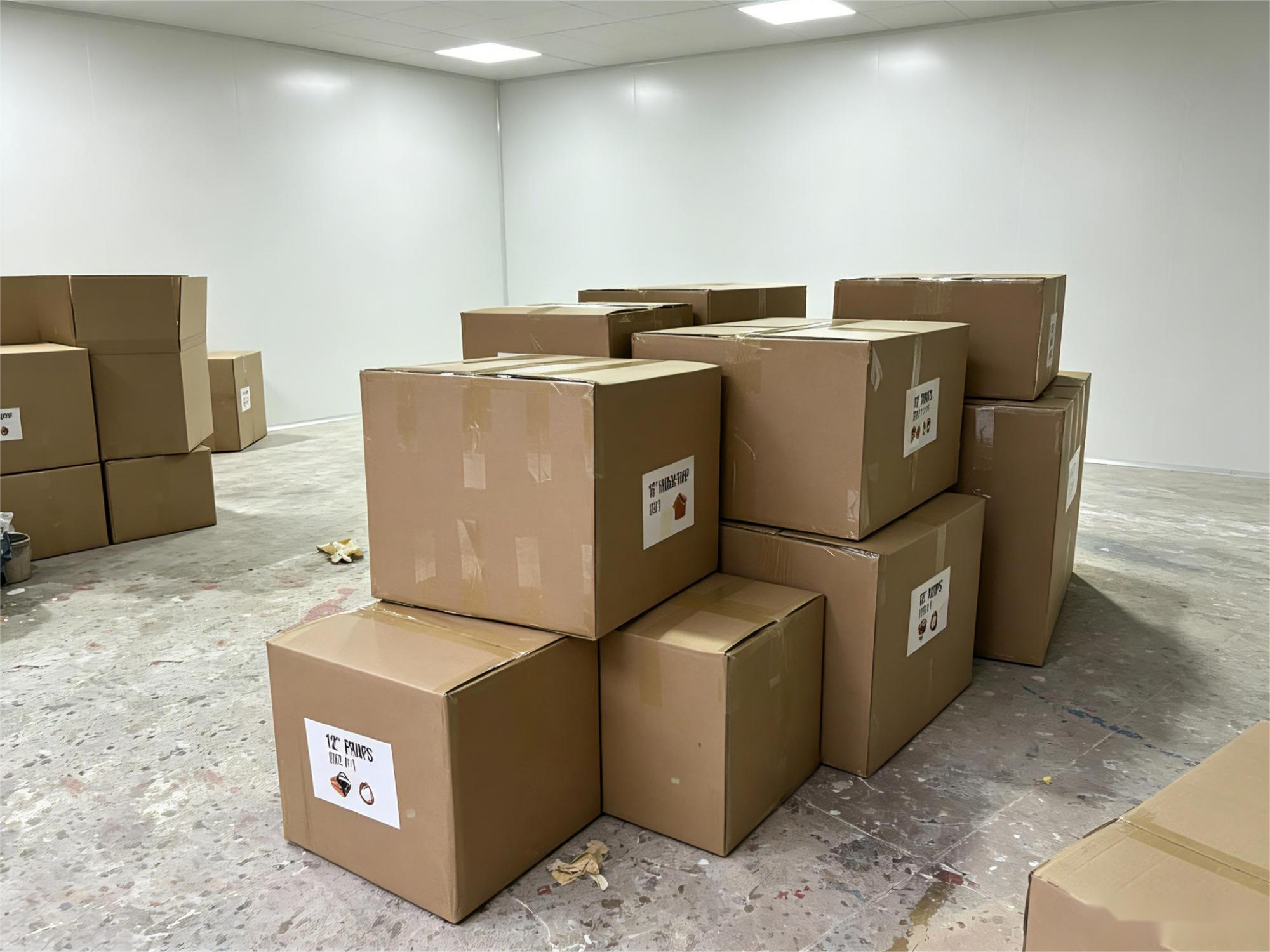
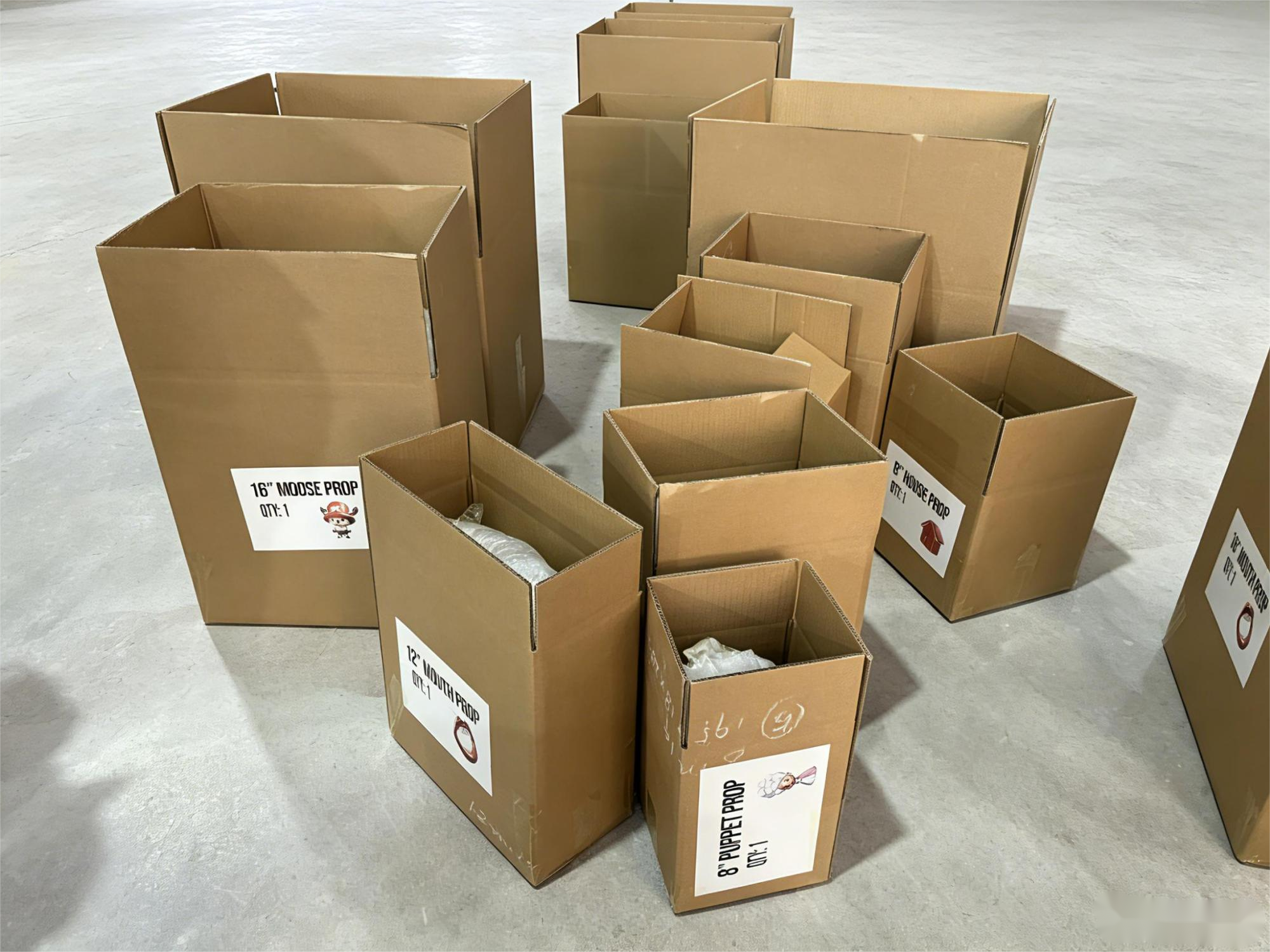
Final preparation is treated as part of the engineering process. Each component is checked against the master assembly map, marked by installation sequence, and reviewed for visible surface defects before handover.
For large mall installations, clear numbering, connection details, and assembly logic are critical. If the modules are not clearly labeled before shipping, the installation team can easily lose hours onsite trying to identify connection points and assembly order.
FAQ: FAQ: Materials and Fabrication for Large Holiday Installations
-
How do you get oversized props into a mall without damaging them or the building?
If a single piece is too large to pass through the service entrance, it has to be broken into smaller modules. We design with that constraint in mind from the start, so nothing arrives on site and then can't get in.
-
How do you keep a large holiday installation on schedule when production time is limited?
We divide the installation into modules and run engineering, sculpting, molding, painting, and QC in parallel where possible. This helps the team control the schedule without waiting for one full stage to finish before the next begins.
-
How do you make sure suspended mall props are safe after installation?
Each suspended prop should be checked for weight, hanging method, connection strength, and internal reinforcement before installation approval. A prop that looks stable on the factory floor can behave differently once suspended, so the mounting hardware and load-bearing structure must be reviewed carefully.
-
Can large holiday props be reused for the future seasons?
Many large holiday props can be reused if the structure, surface coating, and storage condition are planned correctly. Foam with fiberglass coating, fiberglass shells, and resin ornaments can usually be reused after minor touch-up, as long as the surface is protected from moisture, impact, and long-term pressure during storage.
Planning a Large Holiday Installation? Start with Materials and Engineering
If you are planning a mall Christmas display, oversized seasonal prop, or brand holiday installation, material selection should be discussed before production begins.
Samtop helps VM teams, creative agencies, and retail brands review structure, materials, surface finishing, and modular assembly before fabrication — so the final installation can look close to the original design and work in the real retail environment.
Planning a custom holiday installation or high-end retail display?
Contact Samtop Display: www.samtop.com