
Crafting Eye-Catching Retail Props with Foam and Fiberglass
By Yan Luo | Samtop Display
Website: www.samtop.com
Email: yan@samtop.com
Foam and fiberglass props are the backbone of eye-catching retail displays, exhibitions, and events. Lightweight yet durable, these materials allow brands to create custom sculptures—from giant candy canes to lifelike animal figures—that wow customers while remaining cost-effective and easy to install.
At Samtop, we specialize in crafting large-scale display props that combine artistic design with high-quality materials, ensuring your displays stand out and leave a memorable impact.

🌍 Why Use Foam and Fiberglass for Giant Props?
When it comes to creating giant retail props or exhibition displays, choosing the right materials is essential for achieving both aesthetics and functionality. Here’s why foam and fiberglass are the go-to materials:
- Lightweight yet Strong: Foam is lightweight, making it easy to handle and transport. Fiberglass is a durable material that adds strength without increasing weight, ensuring the prop holds its form for extended periods.
- Versatility in Design: Both materials can be easily shaped into complex forms, allowing for custom designs such as intricate patterns, organic shapes, and realistic textures.
- Cost-Effective: Compared to other heavy-duty materials like metal or wood, foam and fiberglass are cost-effective and ideal for creating large props without breaking the budget.
📊 Process Overview: Foam + Fiberglass Prop Creation
| Step | Process | Example Prop |
|---|---|---|
| 1 | Concept & Design | Candy Cane |
| 2 | Foam Core Sculpting | Oversized Ring |
| 3 | Fiberglass Reinforcement | Leopard Sculpture |
| 4 | Detailing & Painting | Giraffe Figure |
| 5 | Finishing & Assembly | Multiple Props |
| 6 | Transport & Installation | Candy Cane in Retail Window |
🧪 Step 1: Conceptualizing and Designing the Prop
Every giant prop begins with a concept. At this stage, the design team collaborates to turn ideas into 3D models or sketches. We discuss size, shape, textures, and brand relevance to ensure the final piece aligns with the vision of the project.
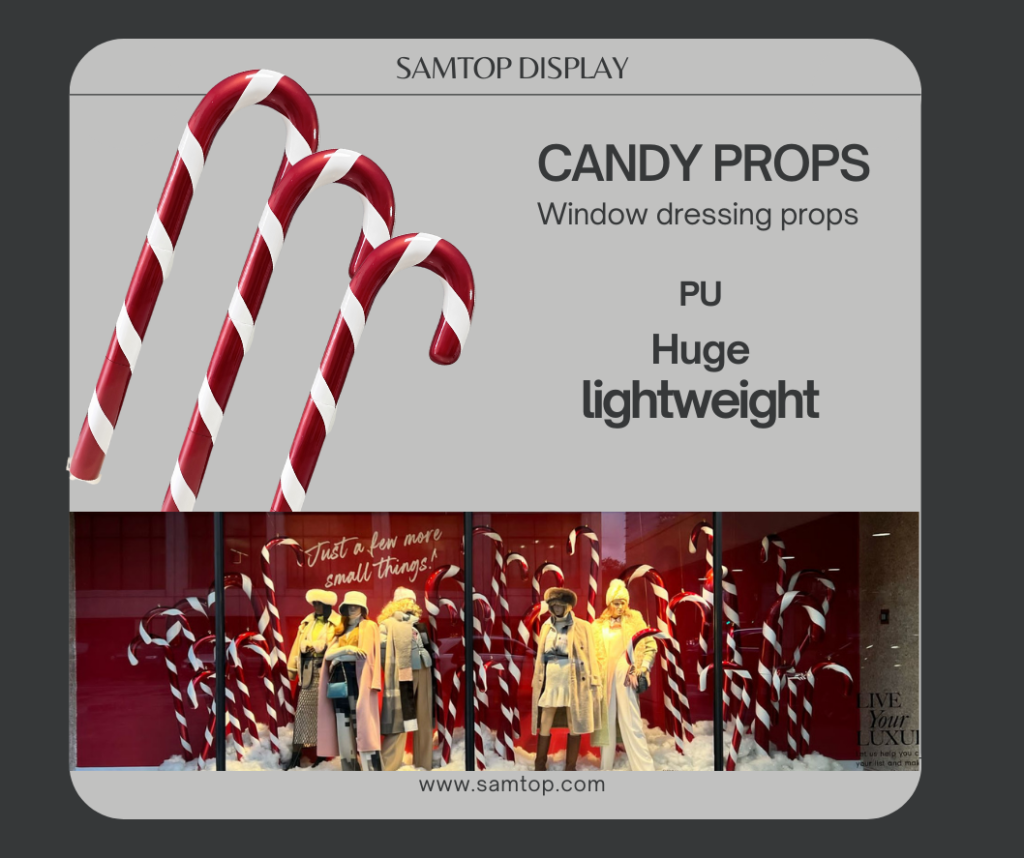
Example 1: Giant Candy Cane
- Concept: A huge candy cane to draw attention in a holiday retail display. It needs to be whimsical, with bold stripes in red and white to create a festive feel.
- Design Features: The curved structure and spiral detail on the cane will be emphasized for maximum visual impact.
🧪 Step 2: Building the Core Structure
The core structure is built using foam for the internal frame. We start by creating the basic shape of the prop using high-density foam blocks that are cut and sculpted to match the design.
Example 2: Oversized Ring
- Concept: A giant engagement ring designed for a high-end jewelry store. It needs to capture luxury and elegance, and the overall size should give the appearance of a real-sized ring magnified multiple times.
- Process: Foam is carved to create a smooth, circular base, followed by a foam core for the diamond setting in the center.
🧪 Step 3: Reinforcing the Foam with Fiberglass
Once the foam core is shaped, we apply a fiberglass layer to strengthen the prop. Fiberglass is a composite material consisting of a fine mesh of glass fibers that is resistant to cracking, lightweight, and durable. The fiberglass is applied in layers over the foam, and the material is then sanded down to create a smooth finish.
Example 3: Leopard Sculpture
- Concept: A leopard figure for a luxury fashion brand’s exhibition, requiring a realistic pose and fine details to evoke the brand's bold identity.
- Process: After the foam base is sculpted to form the leopard’s body, fiberglass is applied over the foam to give the sculpture strength. Detailed painting is added to replicate the spots and texture of a leopard’s fur.
🧪 Step 4: Detailing and Painting
Once the fiberglass layer is fully hardened, we begin detailing the prop. This involves sculpting fine textures such as fur, patterns, or surface details that make the prop look more realistic. We then paint the prop using high-quality paints that are designed to match the specific brand colors or design theme.
Example 4: Giraffe Figure
- Concept: A life-size giraffe as part of a zoo-themed display for a children’s clothing store. The giraffe should have realistic details like spots and long, slender legs.
- Process: After shaping the giraffe’s structure using foam, we apply a fiberglass layer for durability. Then, hand-painting is used to create the realistic coat of the giraffe with a combination of brown and cream colors, along with detailing for the spots.
🧪 Step 5: Finishing and Assembly
After painting, the prop undergoes a final inspection and assembly. For larger props, we ensure that all parts are securely attached and that the final structure is stable and safe for display. Any remaining issues like sharp edges or uneven paintwork are addressed during this final stage.