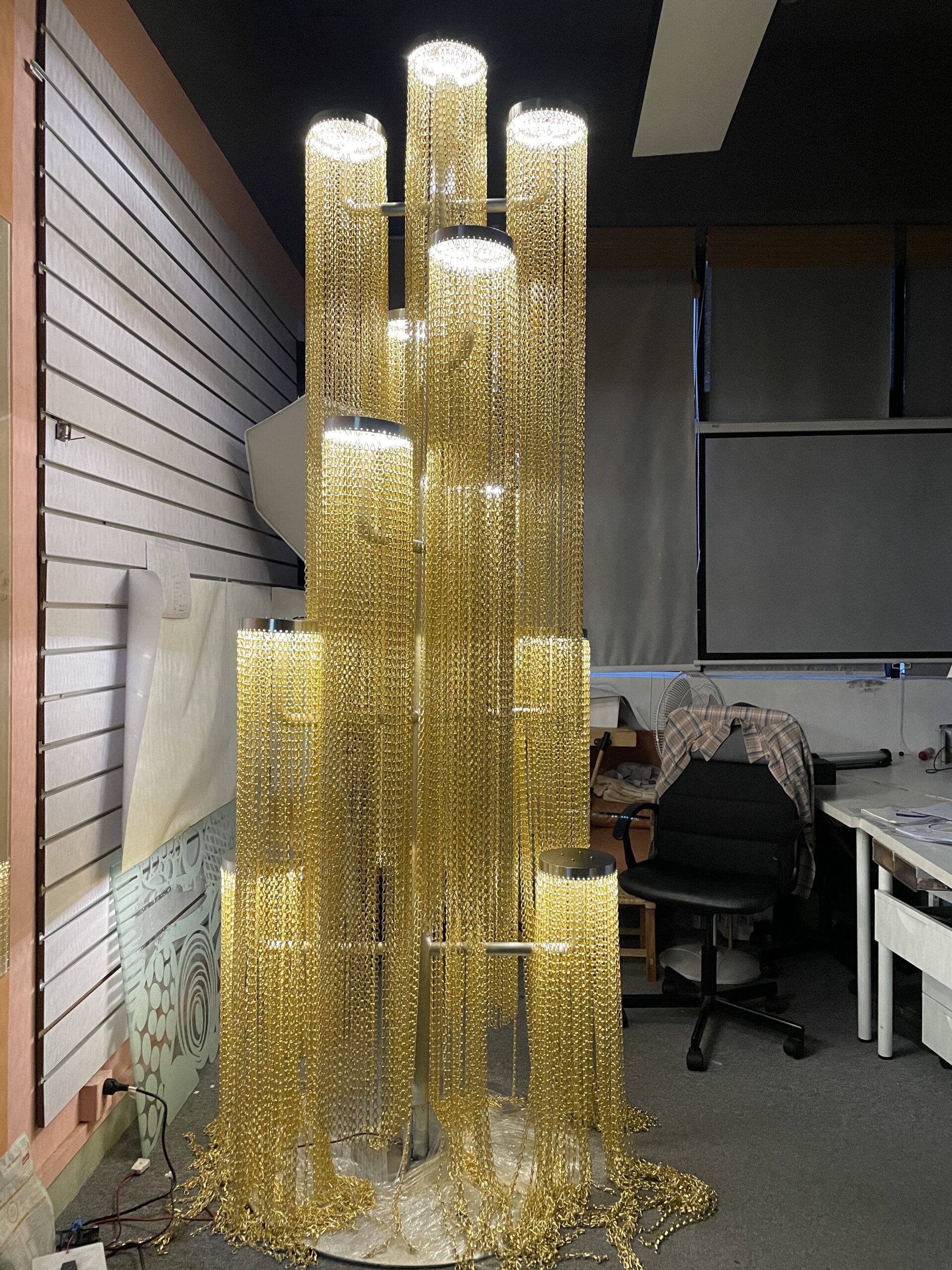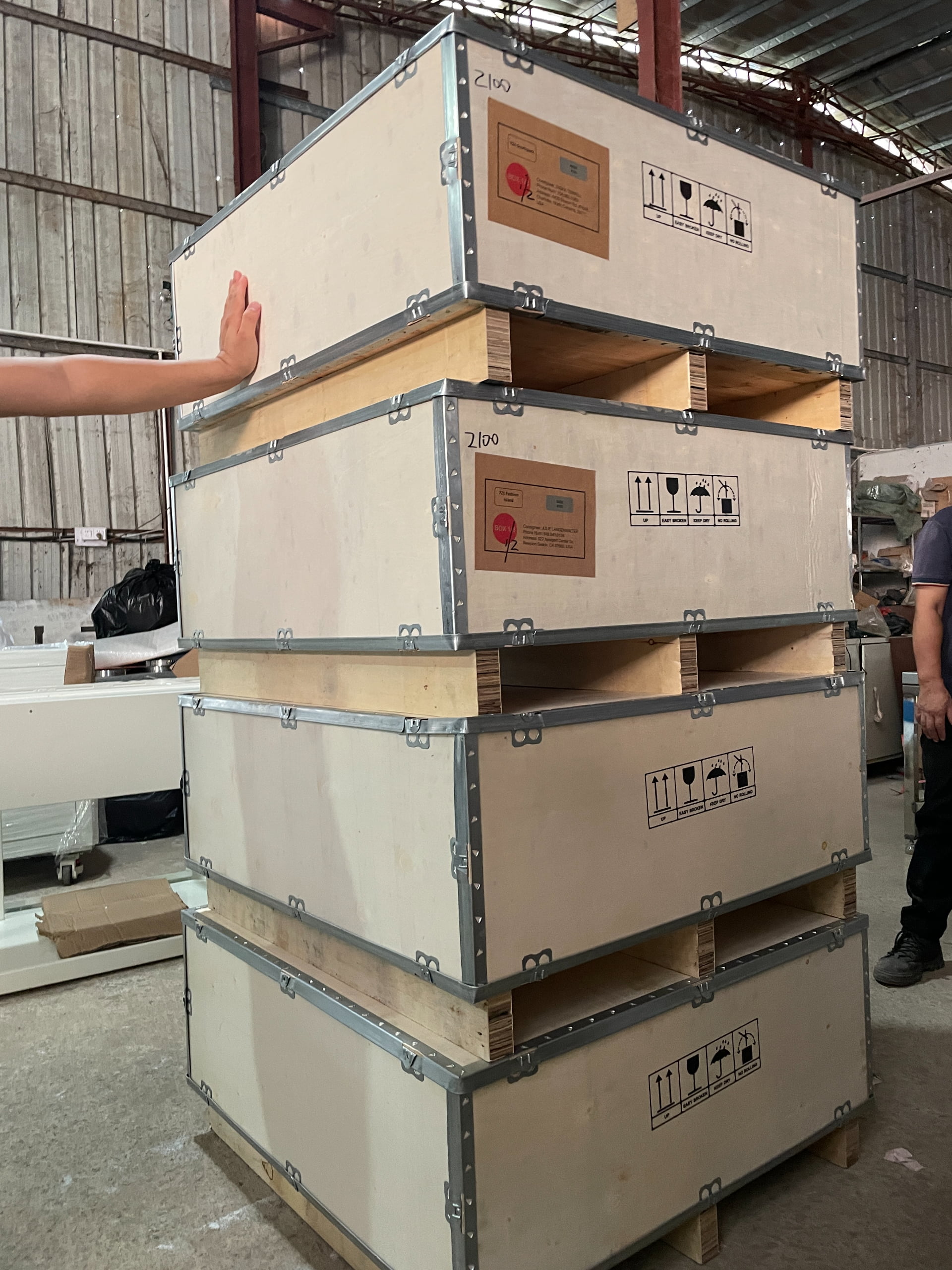

An illuminated Christmas tree prop may look simple in an approved rendering: a gold-toned metal structure, cascading decorative chains, and integrated lighting. But once the display has to fit a real retail space, ship internationally, and be assembled by a local team, the production questions become much more practical.
If the structure is fabricated as one large piece, the export crate may become oversized. If wiring is planned too late, connectors may fall across detachable joints or remain visible. If branch positions vary, LED locations and hanging chains move with them, changing the final silhouette.
For this project, we produced 30 illuminated Christmas tree props using a modular stainless-steel structure with integrated circular LED modules. The main structure and branches were designed to detach for transport, while the visible surfaces followed a brushed gold-toned appearance.
Each tree was assembled and tested in the factory before being dismantled for export packing and local setup. Structure, lighting, finish, assembly sequence, and packing therefore had to be considered as one connected production system.
This case study is written for brands, VM teams, creative agencies, retail design companies, sourcing teams, estimators, and project managers turning an approved seasonal display direction into a production-ready retail prop.
What Makes a Retail Christmas Tree Prop Different From a Standard Christmas Decoration?
A commercial Christmas tree prop has to do more than look decorative.
Its dimensions must work within the available window, entrance, or retail area. A tall display needs sufficient stability, and its shape must look correct from the customer’s actual viewing position.
Access is also important. A structure that cannot pass through a doorway, corridor, service elevator, loading area, or window opening creates a problem even if it looks perfect in the factory.
Seasonal programs have fixed launch dates, so production, testing, packing, shipping, and local setup all need to happen before the campaign opens.
Once the rendering is approved, the task is to translate that design into something that can be fabricated, illuminated, shipped, and reassembled reliably.
One Visual Object, Several Production Systems
The customer sees one Christmas tree.
The production team sees a structural system, lighting system, decorative system, surface-finish system, assembly system, and packing system.
These systems affect one another. A metal connection may block a cable route. A lighting position may influence how chains fall. A structure that is easy to weld as one piece may be difficult to ship.
That is why a custom holiday display prop should be treated as one integrated production project.
Project Overview: An Illuminated Stainless-Steel Christmas Tree Prop
This retail Christmas tree display used a modular stainless-steel frame with integrated circular LED modules and cascading metallic chains.
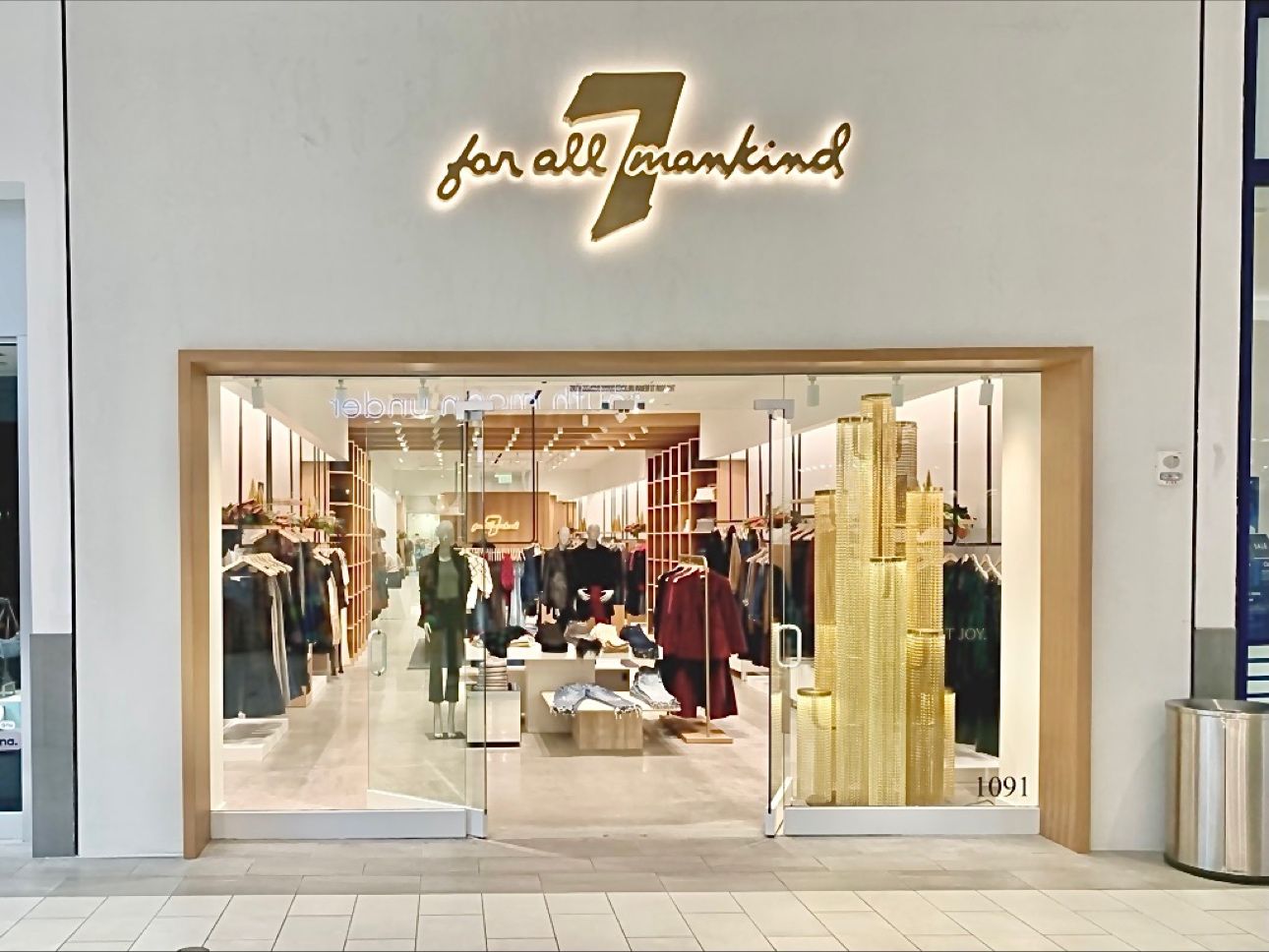
The production run included 30 units, so structural relationships, lighting positions, finish direction, and overall silhouette needed to remain consistent across the full batch.
The appearance was based on a brushed gold-toned finish, with multiple vertical sections arranged at different heights. The central structure and branches could be separated for shipping.
After factory trial assembly and lighting checks, the components were dismantled, protected, and prepared for export and local setup.
Engineering a Modular Stainless-Steel Christmas Tree Structure
Why the Tree Was Split Into Modules
Making the tree as one welded structure might simplify workshop operations, but it would create problems later.
A tall finished tree requires a large crate with unused space around the structure. Handling also becomes more difficult, increasing the risk of damage to finished metal, LED components, and decorative chains.
Store access creates another limitation. The display still has to reach its final position after arriving at the destination.
For this reason, the main structure was divided into sections, and the branches were designed as detachable modules. The complete tree could be trial-assembled in the factory and then separated into manageable components for transport.
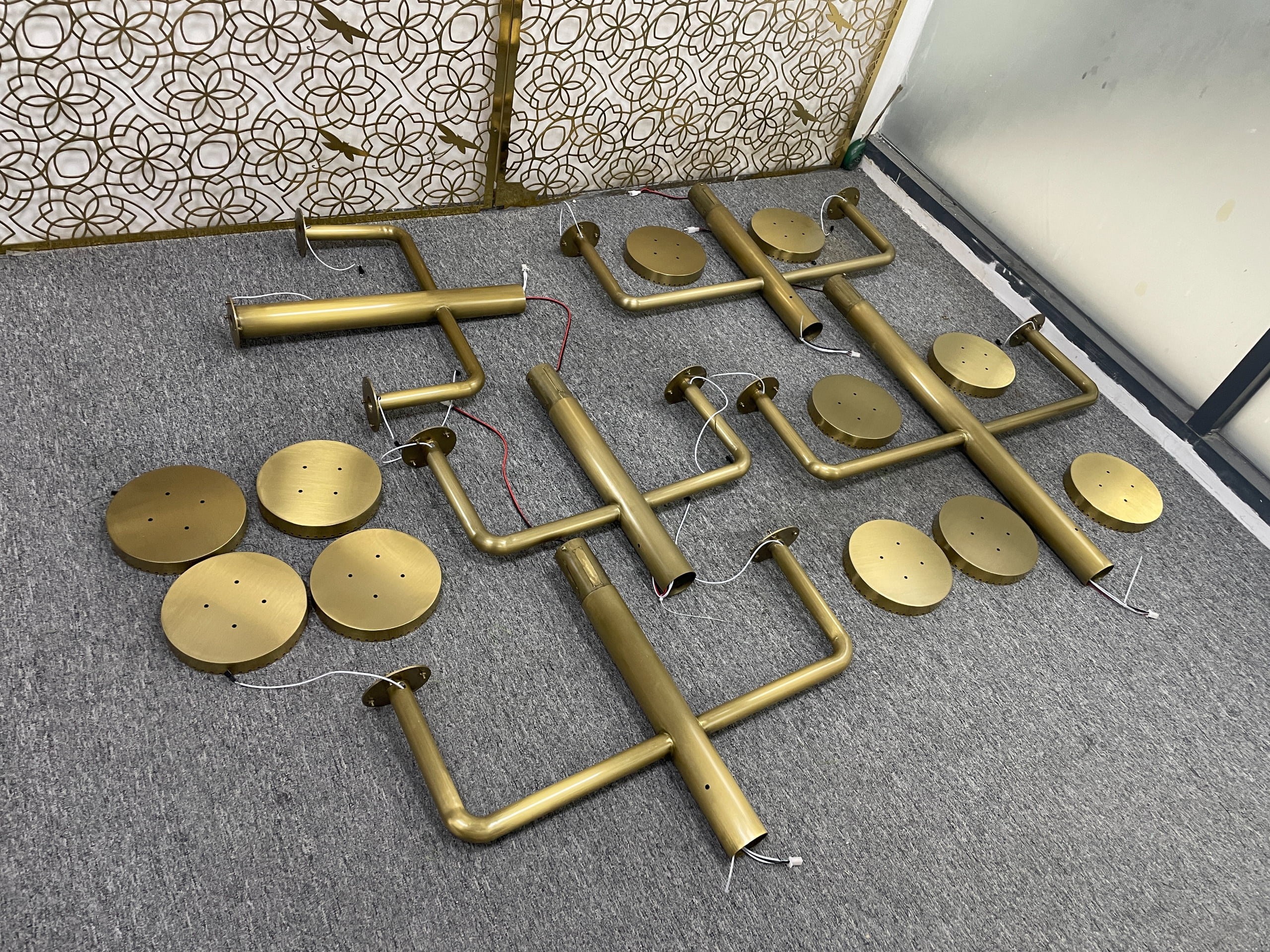
Modular construction requires more engineering at the beginning. Connection positions, assembly order, identification, and wiring need to be considered earlier. The advantage is that these problems can be solved during production instead of during installation.
Keeping Branch Position and Alignment Consistent
A branch can fit mechanically and still be wrong visually.
Each branch affects several other elements. Its height determines the LED height. The LED position affects where the chains begin to fall. The chain distribution affects the final silhouette.
branch alignment → LED alignment → chain distribution → final silhouette
With 30 units in production, branch height, angle, orientation, connection position, and LED location needed to maintain the same visual relationship across repeated production and assembly.
The parts therefore needed to do more than fit. They needed to return to the intended visual position every time the tree was assembled.
Integrating LED Lighting and Hidden Wiring
Planning the Wiring Before Metal Fabrication Is Finished
Lighting is easier to control when it is considered during structural development rather than added after the metalwork is complete.
If the wiring path is decided too late, cables may remain visible, connectors may end up in awkward positions, or wires may cross detachable joints.
In this project, the hollow stainless-steel tubes provided both structural support and a concealed path for wiring.
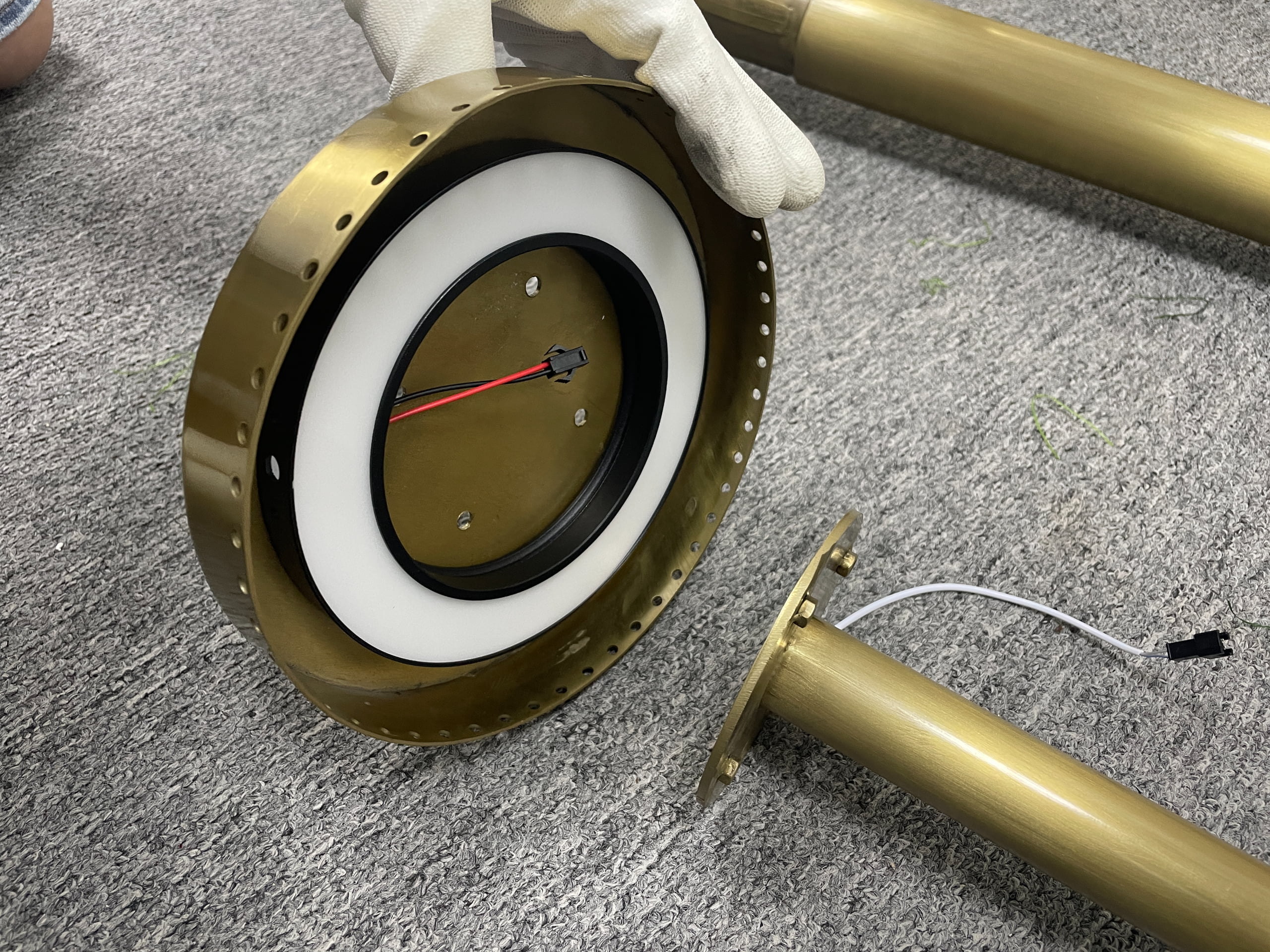
Because the tree was modular, the team also had to determine where electrical connections would separate during dismantling and whether those connectors would remain accessible during local assembly.
For illuminated retail props, wiring should be discussed before the metal structure is finalized.
Why Individual LED Testing Is Not Enough
Testing one LED module only proves that one LED works.
The complete display needs a second level of testing after assembly. This allows the team to check brightness consistency, light direction, darker areas, connector access, and the complete power route.
Surrounding materials also influence the result. Brushed metal reflects light differently depending on surface direction, while hanging metallic chains create additional highlights and shadows.
The final lighting effect should therefore be reviewed with the structure, LEDs, finish, and decorative chains working together.
Controlling the Brushed Gold Finish and Decorative Chains
Large metal display props are made from many separate components. The challenge is making those components read as one object after assembly.
With a brushed finish, surface direction matters. Different brushing directions can reflect the same lighting differently. Small variations in gloss, texture, or gold tone may become more visible once the complete tree is illuminated.
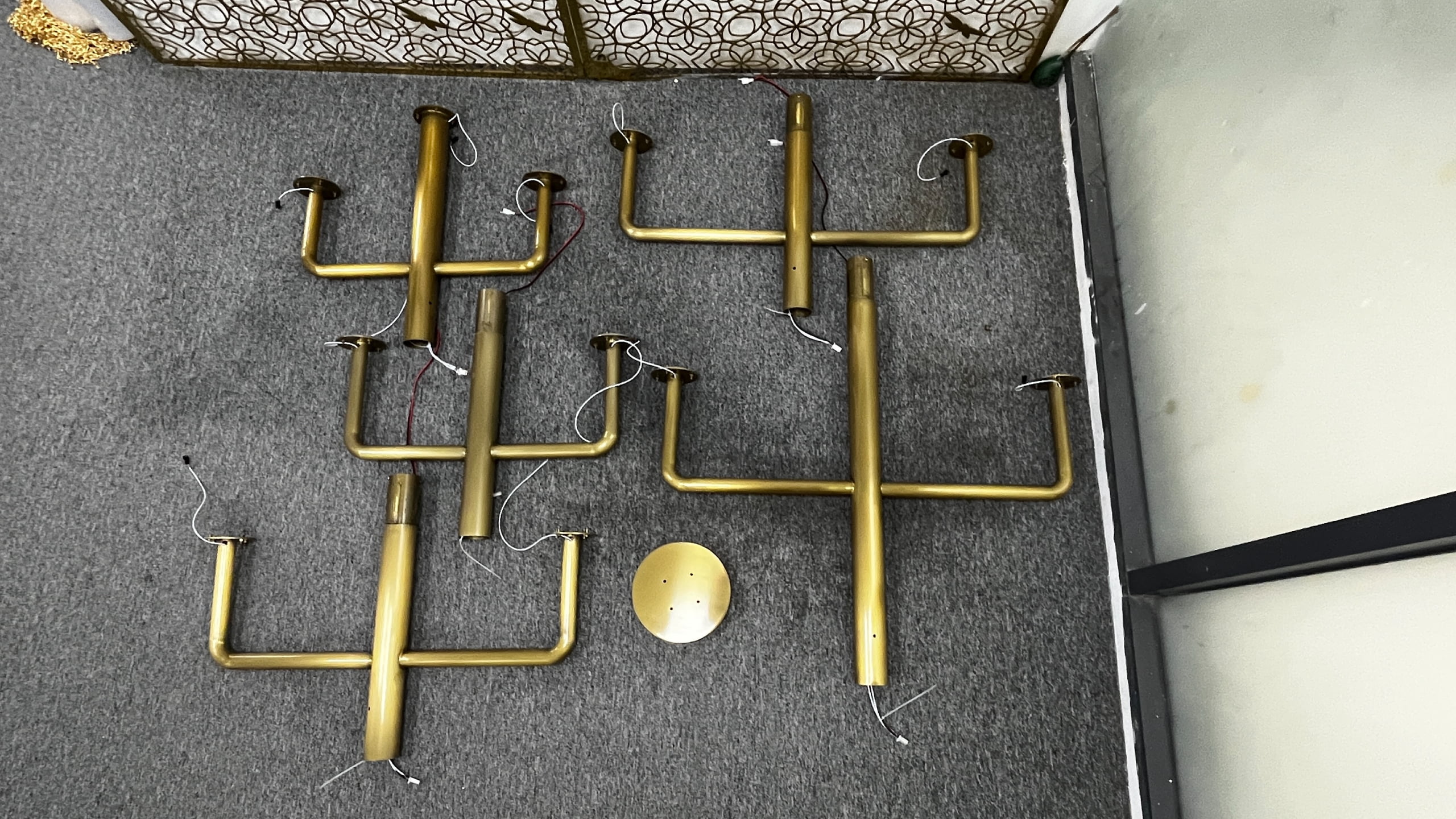
This is especially important around repeated elements such as branch tubes, LED housings, and vertical sections.