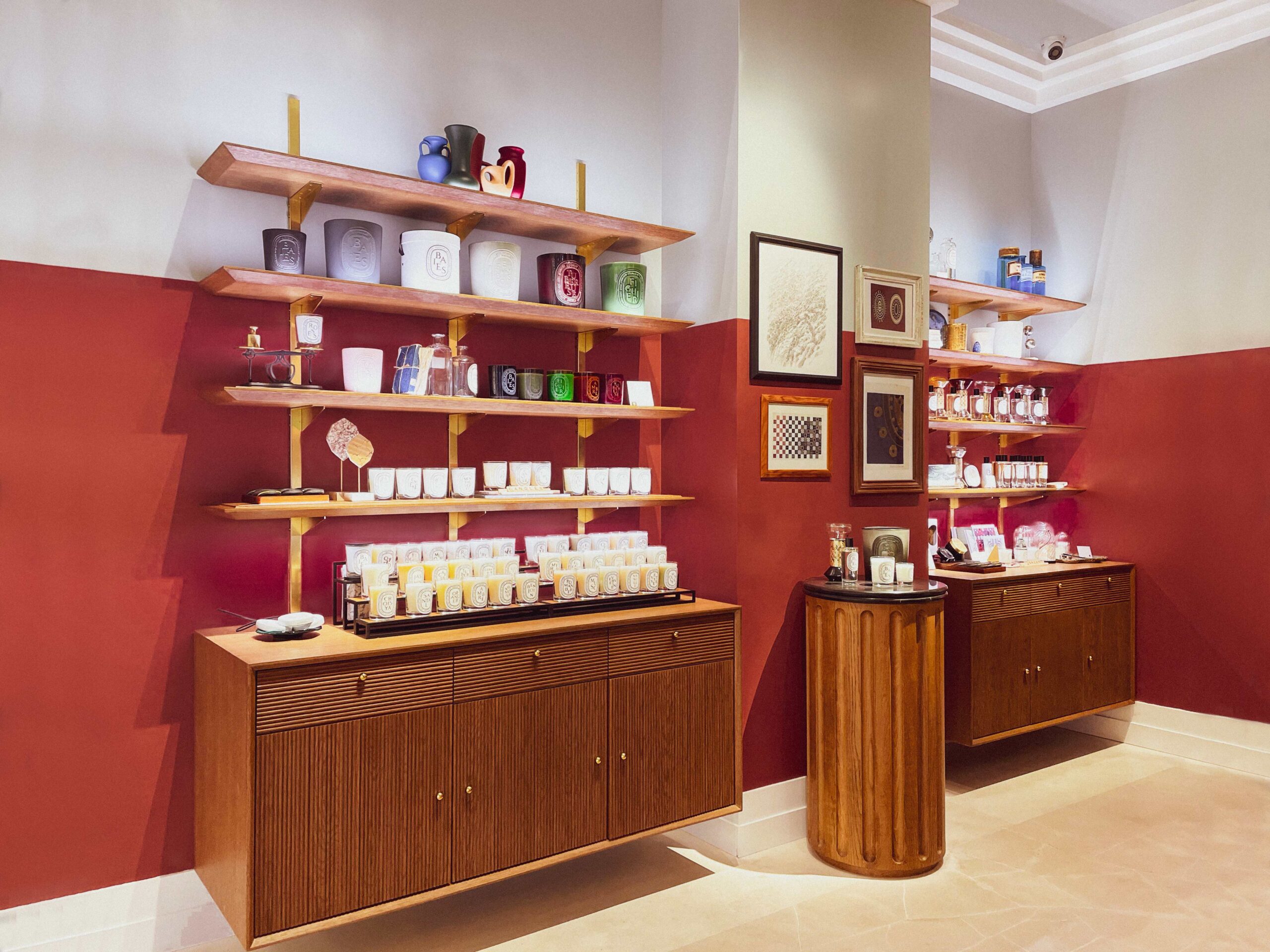

A fragrance display stand may look perfect in a 3D rendering—the proportions are elegant, the materials feel premium, and your brand or creative team has approved the concept.
But a rendering does not tell you what happens when a customer removes a heavy glass candle from one side. It does not show whether a slender metal arm will distort during welding, whether two brushed brass parts will match under boutique lighting, or whether your logo will remain crisp after machining and finishing.
If these details are discovered only after production starts, you may face repeated sampling, inconsistent finishes, unstable structures, or displays that look different from the approved design.
That is where manufacturing engineering matters.
At Samtop, the goal is not to redesign your approved concept. We help you turn it into a fragrance display stand that is stable, manufacturable, visually consistent, and repeatable for retail rollout.
This guide uses a real balance-scale fragrance display project to show the problems you may encounter—and how we solve them through engineering, metal fabrication, precision machining, finishing, prototyping, QC, and packaging.
What Is a Fragrance Display Stand?
A fragrance display stand, often also described as a perfume display stand in retail projects, is a custom fixture designed to showcase perfumes, scented candles, diffusers, and other fragrance products.
Unlike a standard shelf, your display may need to combine product presentation, brand storytelling, customer interaction, structural stability, and premium finishes in one compact fixture.
Common formats include:
| Display Type | Where You May Use It | Manufacturing Focus |
|---|---|---|
| Countertop Display | Perfume launches, candles, testers | Stability, footprint, fine details |
| Product Glorifier | Hero fragrance or flagship SKU | Premium finishes and branding |
| POS Display | Promotional campaigns | Durability and batch consistency |
| Floor Display | Larger product collections | Load capacity and modular structure |
| Window Display Prop | Seasonal campaigns | Scale and visual storytelling |
| Sculptural Display | Brand activations | Complex structures and mixed materials |
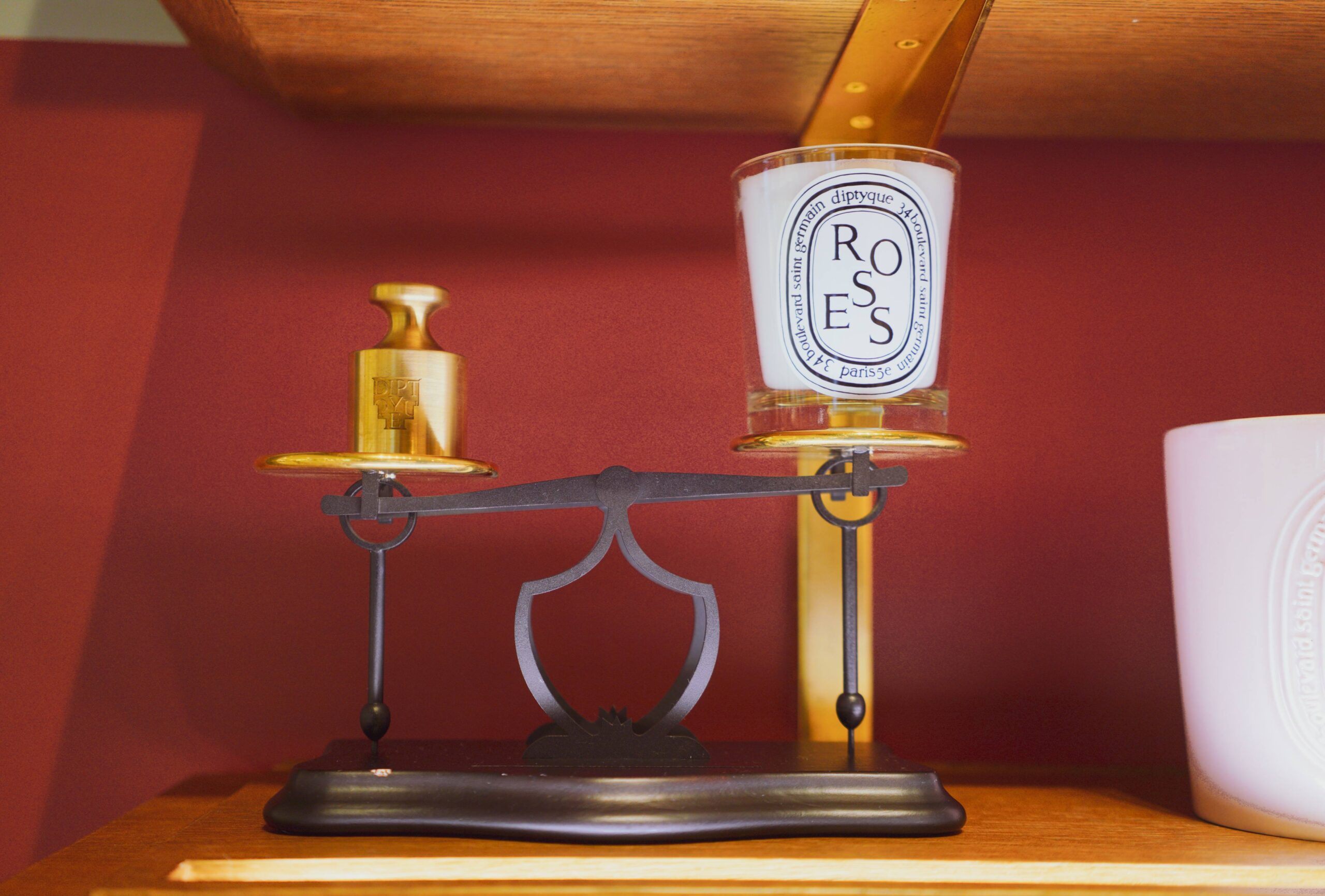
The balance-scale project below works as both a countertop display and product glorifier.
Case Study: A Balance-Scale Fragrance Display Stand
In this project, the approved creative concept used a classical balance scale to express balance and olfactory harmony while presenting luxury scented products.
Once we moved the approved concept into engineering and prototyping, several manufacturing challenges became clear.
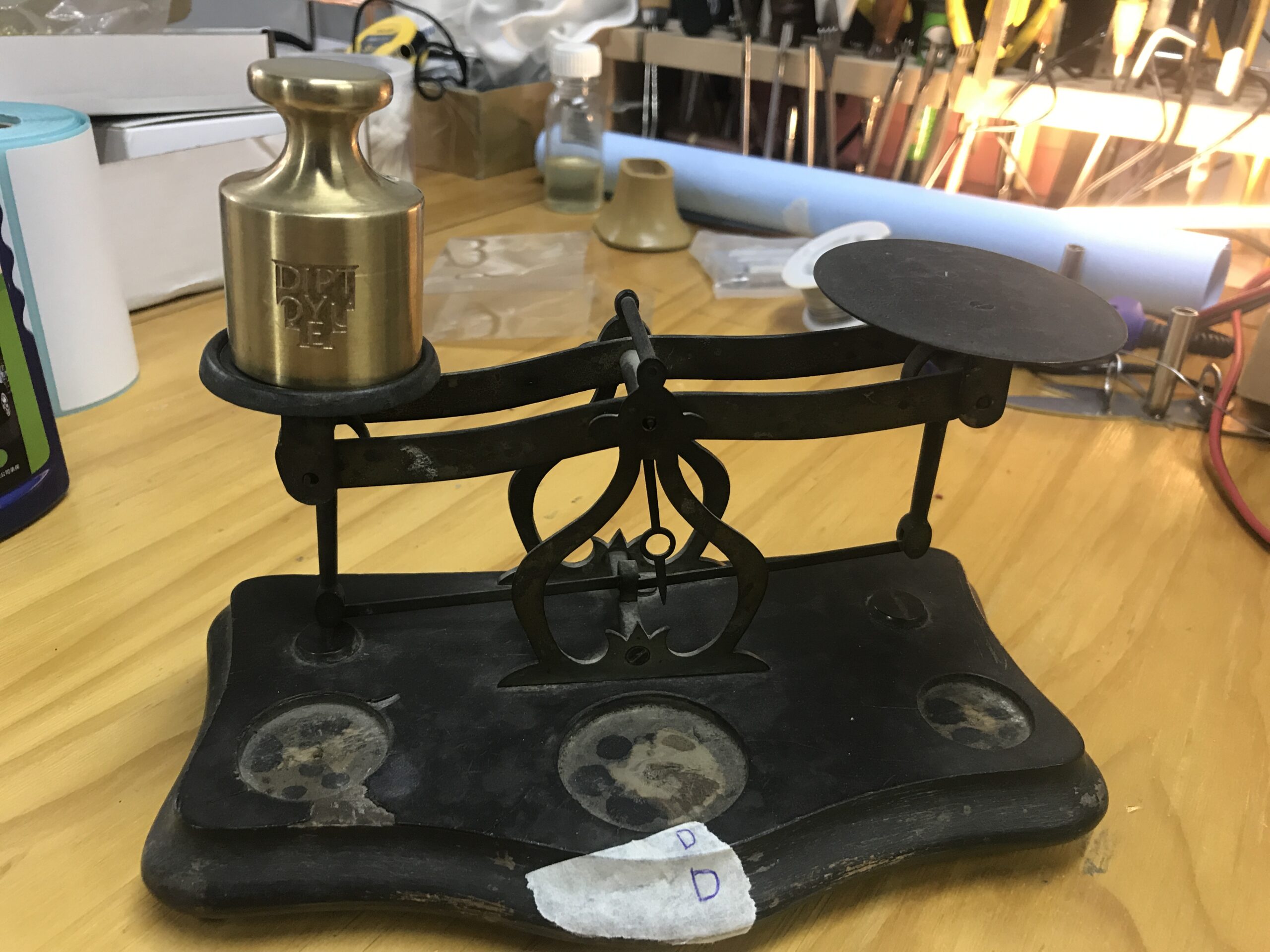
The fragrance display stand combined a matte black metal base and frame, slender support arms, brass-finished product trays, a fixed balance-scale structure, and custom machined brass weights with engraved branding.
Your customer sees one elegant object. Our production team sees a series of connected manufacturing questions:
- How do we maintain the intended display angle while keeping the structure stable?
- How do we keep thin metal parts visually light without making them weak?
- How do we match brushed brass finishes across different components?
- How do we protect brass surfaces from visible oxidation over time?
- How do we engrave a clean logo onto a curved metal surface?
- How do we reproduce the approved prototype consistently in production?
Here is how those problems are addressed.
1. How We Keep a Fragrance Display Stand Stable Without Making It Bulky
A balance-scale display may look mechanical, but in this project, the goal was not to create a functioning weighing scale.
The structure was intentionally fixed at a slight angle to create the approved visual composition. The custom brass weights were positioned lower, while the fragrance products were presented higher on the opposite trays.
This difference in height helps elevate the products visually and makes them the focal point of the display.
The engineering challenge was therefore not to create free movement, but to reproduce the intended angle consistently while keeping the slender structure rigid and stable.
Before production, we reviewed the base footprint, product weight, arm geometry, central support rigidity, tray position, connection points, and overall center of gravity.
The structure was then fixed and reinforced at key load-bearing areas so normal customer handling would not change the intended presentation.
For slender metal components, the answer is not simply “use thicker metal.”
In this project, the challenge was to keep the support arms visually slender without making the structure feel weak or unstable. We therefore focused reinforcement around load-bearing areas and connection points, using appropriate metal stock, controlled TIG welding, mechanical connections, and reinforced joints where needed.
This lets you preserve the visual proportions of the approved design while keeping the product elevated, stable, and visually prominent in daily retail use.
2. Luxury Finishes for a Fragrance Display Stand
Once your structure works, the next challenge is making it look premium.
Customers may never notice the engineering inside the fixture, but they immediately notice machining marks, inconsistent gold tones, rough logo details, oxidation, or poor black coatings.
On this balance-scale fragrance display stand, the custom brass weight became one of the most visually sensitive components because it sits close to the product and is clearly visible under retail lighting.
The part transitions from a cylindrical body into a curved neck and rounded top, which made the machining and finishing more demanding than a simple turned metal component.
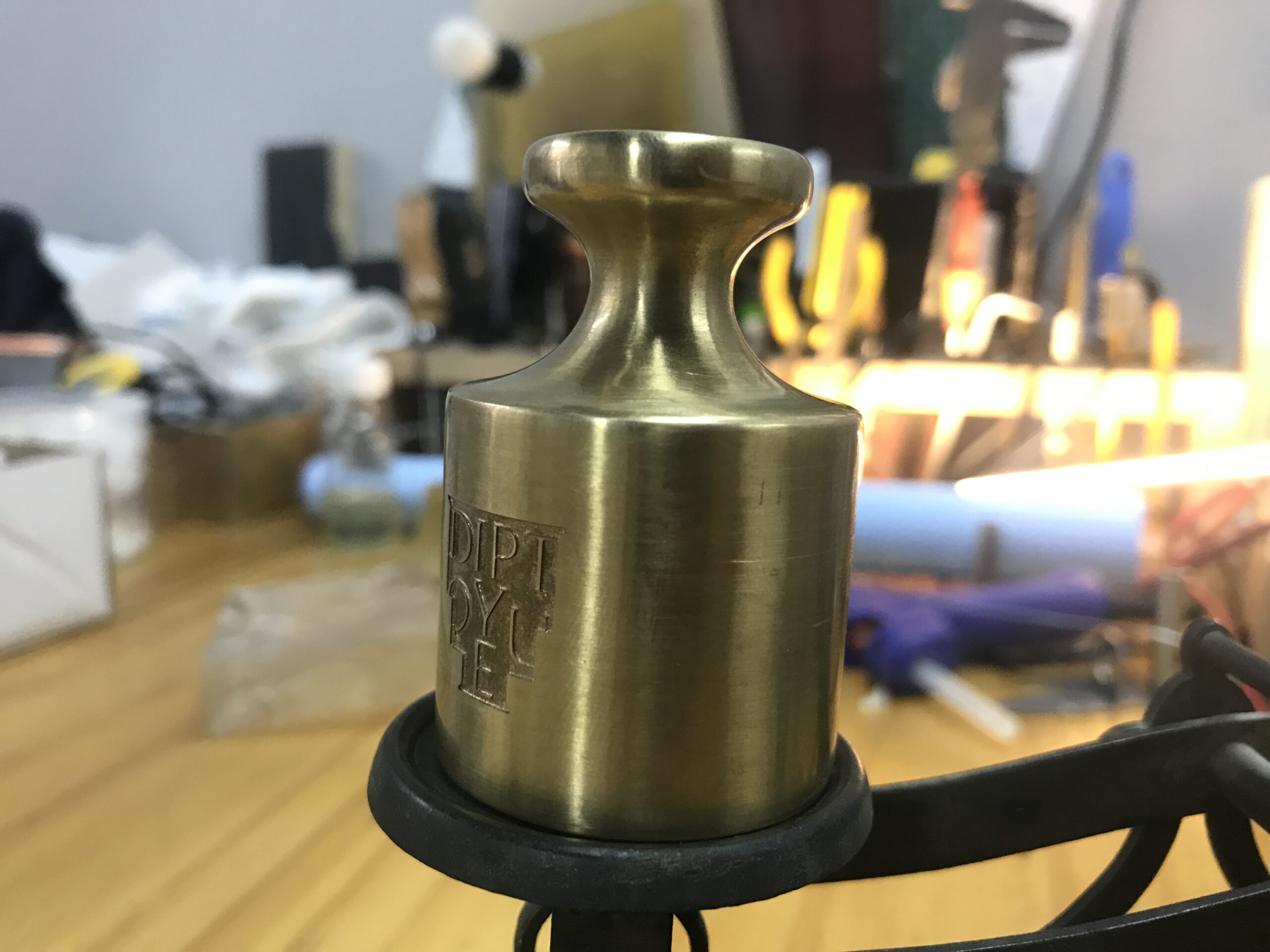
During prototype finishing, any visible tool marks or uneven transitions would have been especially noticeable on the curved brass surface, so the machining quality had to be controlled before brushing began.
Machining establishes the geometry. Sanding removes visible tool marks. Directional brushing creates the intended satin appearance. Cleaning prepares the surface for the final protective treatment, which helps slow oxidation and preserve the approved brass tone during retail use.
The goal is not only to make the correct shape—it is to make the surface look clean and consistent from multiple viewing angles.
Preventing Oxidation on Brushed Brass Components
Brass can naturally oxidize when exposed to air, humidity, fingerprints, and repeated handling.
In some decorative applications, this aged patina may be intentional. But on a luxury fragrance display, visible oxidation can change the approved color and weaken the consistency of the final presentation.
The comparison image shows the difference clearly. The protected brass sample retains a cleaner and more consistent brushed finish, while the untreated sample develops visible oxidation and greenish patina over time.
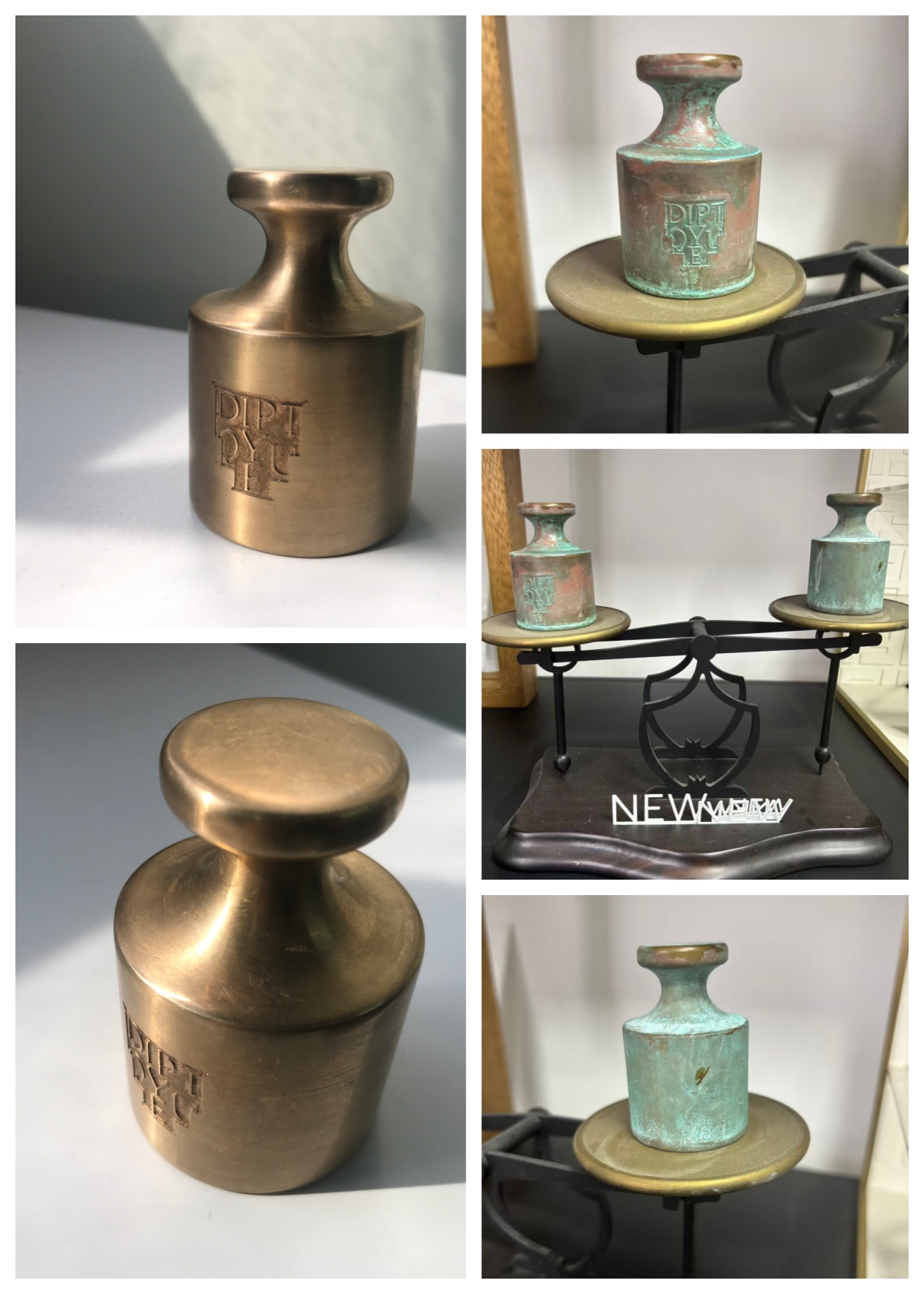
For this project, surface protection was therefore treated as part of the finishing specification, not as an afterthought.
After machining, sanding, directional brushing, and cleaning, the brass components received a protective finish to help slow oxidation and maintain the approved appearance during retail use.
This is especially important for displays installed in different retail environments, where humidity, handling frequency, and local conditions may vary.
Problem: “Gold Finish” Is Not a Complete Specification
If your fragrance display stand combines a brass weight, trays, and other metallic accents, asking the factory to make everything “gold” does not guarantee they will match.
Metal tone, gloss level, brushing grit, grain direction, surface texture, and protective treatment all affect how a component reflects light and how it changes over time.
For this project, we compared the brass weight, trays, and other metallic accents together as one finished assembly rather than approving each component separately.
We checked the brushing direction, tone, gloss, texture, and overall visual consistency against the approved finish reference because even small differences became more obvious once the black frame and brass components were assembled together.
For a luxury display, finish specifications should define more than color—they should also define texture, gloss, brushing direction, and the protective treatment required to maintain the approved appearance over time.
3. Getting the Logo Right on Curved Metal
Your logo may look perfect in an AI file, but curved metal creates another manufacturing challenge.
If engraving is too shallow, sanding and finishing can soften the letter edges. If it is too deep, recessed areas may collect polishing residue and look rough.