A custom metal display stands can look simple in a rendering: a slim gold frame, a polished handbag support, or a clean stainless steel structure.
The problems usually appear when that design reaches production.
A slim stand may wobble once the actual product is placed on it. A champagne-gold PVD surface may look consistent in the workshop but show variation under retail spotlights. A large metal frame can distort after welding. Even a small visible weld at a 90-degree corner can make an otherwise premium fixture feel unfinished.
For luxury brands, visual merchandising teams, creative agencies, and retail design companies, these are not minor manufacturing details. They affect appearance, stability, installation, durability, and how accurately the finished fixture represents the original design.
The solution is to consider structure, fabrication, and surface finish together before mass production begins.
This guide explains how custom metal display stands and related metal retail fixtures move from design to production—including engineering, stainless steel fabrication, welding, prototyping, brushed and mirror finishes, PVD coating, quality control, and packaging.
What Is a Custom Metal Display Stand?
A custom metal display stand is a made-to-order retail fixture developed for a specific product, brand, campaign, or store environment.
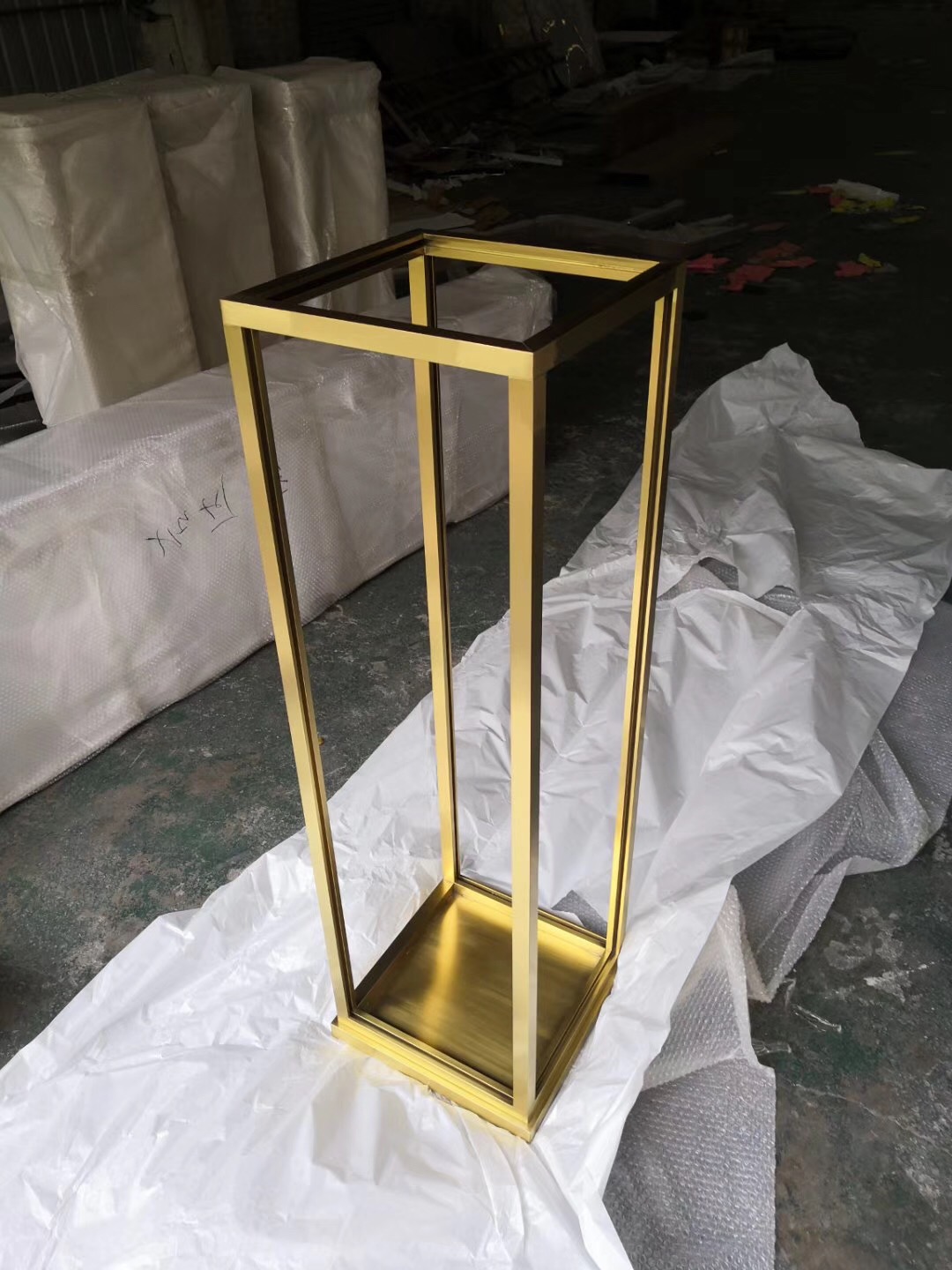
It is one category within the broader field of custom metal retail fixtures. Depending on the project, metal fabrication may also be used for handbag supports, jewelry and watch displays, perfume fixtures, garment racks, display tables, window frames, decorative screens, and visual merchandising props.
Stainless steel is widely used because it combines structural strength with a clean appearance and supports processes such as laser cutting, bending, TIG welding, grinding, brushing, mirror polishing, and PVD coating.
Other metals such as aluminum and brass can also be used depending on weight, appearance, structure, and budget.
For luxury retail, however, material selection is only the starting point. The real challenge is turning that material into a fixture that looks right, stands correctly, and can be produced consistently.
How Are Custom Metal Display Stands Manufactured?
The manufacturing process for custom metal display stands normally starts long before metal reaches the workshop.
For custom projects, the most important decisions are often made during engineering and prototyping, when changes are still relatively easy to make.
1. Design and Engineering Review
Most projects begin with a rendering, technical drawing, sketch, or mood board.
At this stage, the manufacturer reviews dimensions, product weight, structure, material, finish, center of gravity, assembly, installation, and packaging.
Different metal components also require different engineering priorities.
A small visible metal detail may be viewed from very close range, making weld position, corner finishing, and polishing particularly important. A larger garment rack, display table, or window display frame introduces additional considerations such as load capacity, frame alignment, welding deformation, and installation.
This is why engineering should follow the actual application rather than applying the same fabrication method to every metal part.
2. Technical Drawings
Once the concept is understood, shop drawings translate the design into production information.
They typically define:
- overall dimensions
- tube or sheet thickness
- fixing methods
- welding positions
- base construction
- surface finish
- detachable connections
- assembly details
This step is particularly important when working with creative and retail design agencies.
A rendering communicates what the fixture should look like, but it may not show how a slim frame will remain stable, where two sections should connect, or how a large structure will be packed and installed.
Resolving these details before fabrication reduces unnecessary changes later.
3. Material and Process Selection
Material should be selected according to both structural and visual requirements.
A slim handbag display stand, for example, may use stainless steel with a concealed weighted base and a PVD finish. A large garment rack may need thicker profiles and reinforced connections. A decorative metal screen may require precise laser cutting followed by flattening and careful edge finishing.
The final surface also affects earlier manufacturing decisions.
An 8K mirror finish is far less forgiving of grinding marks than a brushed surface. A champagne-gold PVD finish depends heavily on the polishing underneath.
So the question is not simply:
“Which metal should we use?”
It is also:
“What does this metal need to look like after every manufacturing process is complete?”
4. Prototype: Test the Fixture with the Real Product
Prototyping is where many problems that are invisible in CAD become obvious.
Consider a slim metal handbag stand.
The proportions may look balanced in the drawing, but after the actual handbag is placed on the upper support, the center of gravity changes and the sample may wobble slightly.
Making the visible base larger would be the obvious solution, but it could also change the designer's intended proportions.
A better approach may be to adjust the hidden base structure or internal weight distribution so the external appearance remains almost unchanged while stability improves.
This is exactly the type of issue a prototype should reveal.
The same principle applies to product fit, assembly, visual proportion, finish samples, and installation. Finding the problem at sample stage is far easier than discovering it after mass production.
5. Metal Fabrication: Welding Without Losing the Design
A typical metal fabrication sequence may include:
laser cutting → bending → welding → grinding → polishing → finishing → assembly
The sequence looks straightforward, but the quality is often decided in the details.
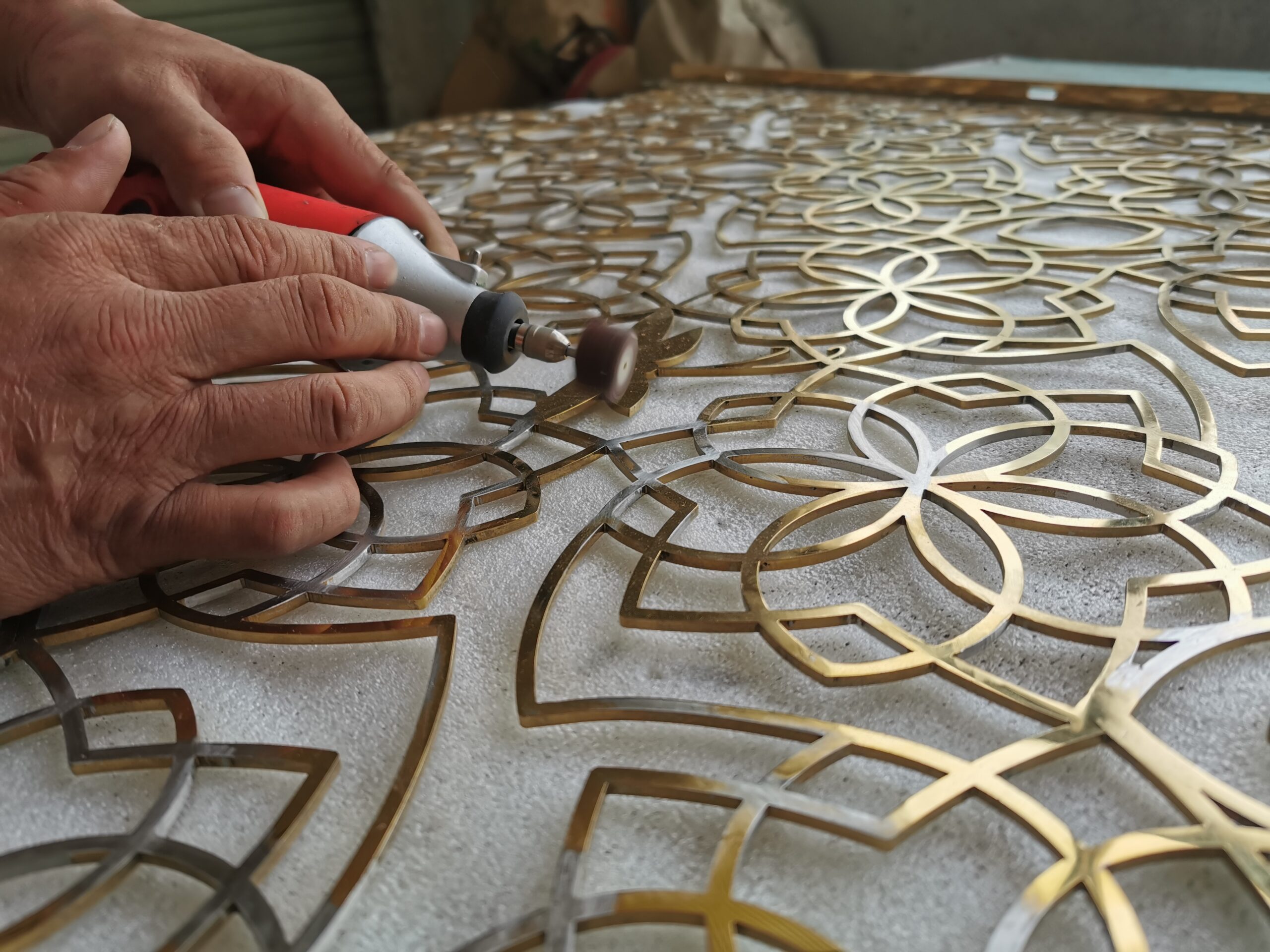
When a 90-Degree Corner Cannot Show a Weld
Consider a polished metal logo or decorative component with a 90-degree corner.
The joint may be structurally sound after welding, but the client may still reject it if the weld line remains visible under store lighting.
In this situation, the joint position, welding access, grinding allowance, polishing direction, and final viewing angle all need to be considered together.
For luxury visible metalwork:
Structurally acceptable does not always mean visually acceptable.
Controlling Welding Heat on Larger Metal Fixtures
Larger metal retail fixtures create a different problem.
When a long window frame, garment rack, or display structure is welded, accumulated heat can cause the frame to move out of square.
Trying to force the completed structure back into position is not always the best solution.
Depending on the design, the fabrication team may need to adjust the welding sequence, use suitable jigs, or change the connection structure to reduce heat accumulation and control alignment.
This is where metal fabrication becomes an engineering issue rather than simply a welding operation.
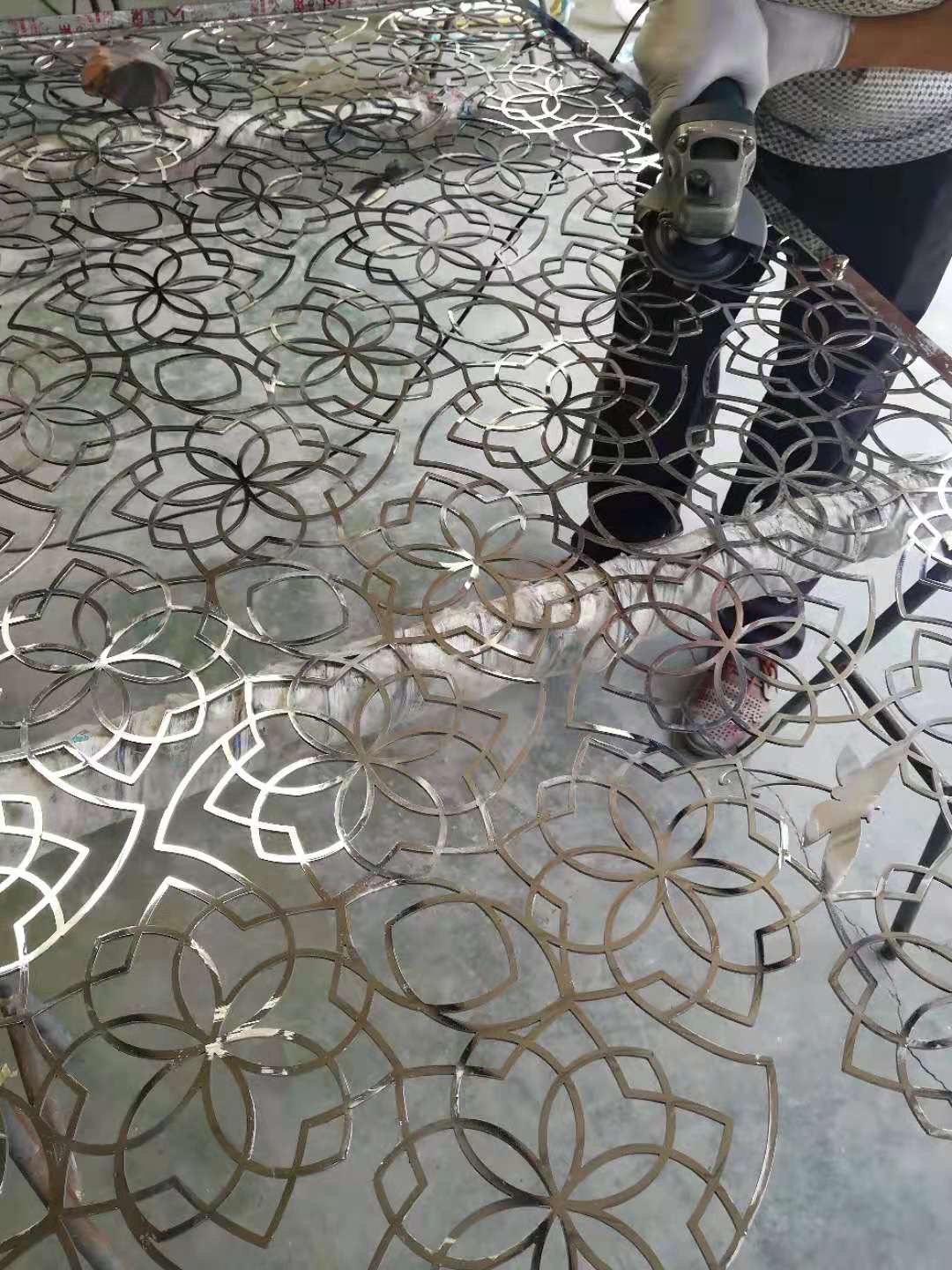
Surface Finishing: The More Reflective the Finish, the Less It Hides
For luxury retail displays, surface finishing is not just decoration. It directly affects how the fixture is perceived under store lighting.
Brushed Stainless Steel
Brushed stainless steel creates a directional grain and is widely used for garment racks, display tables, frames, and other premium retail fixtures.
The key issue is consistency.
If adjoining components have different grain directions or brushing density, they may appear to be different colors even when they are made from the same stainless steel.
For multi-part fixtures, brushing direction should therefore be controlled across the complete assembly.
4K and 8K Mirror Stainless Steel
Mirror-polished stainless steel is used when reflection becomes part of the visual design.
A 4K mirror finish provides a bright reflective appearance, while an 8K finish creates a stronger mirror-like surface.
The higher the reflection, however, the easier it becomes to see what is underneath.
Small waves around welded areas, grinding marks, dents, or scratches that are difficult to notice on a satin finish may become obvious on an 8K surface, particularly under directional lighting.
That means mirror finishing cannot simply be treated as the last polishing operation. Welding quality, substrate flatness, grinding, handling, inspection, and packaging all affect the final result.
Champagne Gold, Titanium Gold and PVD
Luxury retail projects frequently use champagne gold, titanium gold, rose gold, bronze, and black PVD finishes.
PVD produces a thin metallic coating over the prepared substrate. Because the coating is thin, it does not hide poor polishing underneath.
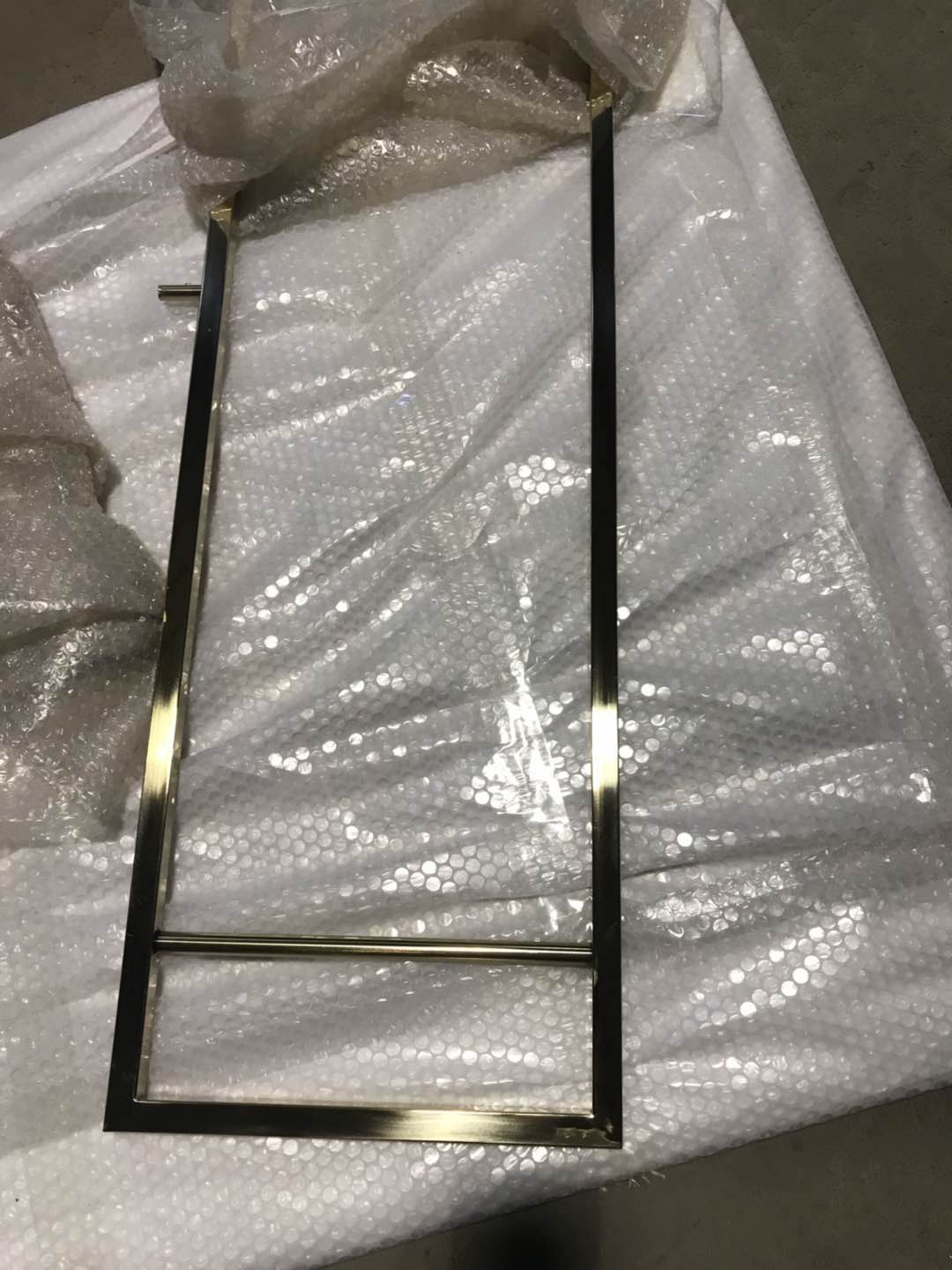
For example, a champagne-gold PVD component may appear consistent under normal workshop lighting but show a slight shade difference under stronger retail lighting.
The first reaction may be to adjust the PVD color. But if the underlying polishing is inconsistent, changing the coating alone may not solve the problem.
The substrate should be checked first and the pre-polishing standard controlled before coating.
This principle is also relevant to perfume tester displays, where PVD-coated stainless steel can be used to achieve a premium metallic appearance for components exposed to frequent customer interaction.
For critical luxury finishes, approving a physical sample before production is far more useful than relying only on a rendering or digital color reference.
Quality Control for Custom Metal Display Stands
Final inspection of custom metal display stands should go beyond checking dimensions against a drawing.
For polished and PVD metal components, QC should consider:
- weld and joint visibility
- polishing consistency
- brushing direction
- PVD color consistency
- mirror reflection
- scratches and dents
- stability and squareness
- hardware and assembly fit
The inspection method should also reflect the final retail environment.
A mirror surface that looks acceptable under diffuse factory lighting may behave differently under a strong spotlight. A joint that is almost invisible from the front may become obvious from the customer's normal viewing angle.
Large fixtures should also be assembled before shipment when practical to verify connections, alignment, and installation logic.
Packaging is part of the same quality process.
Mirror-polished and PVD surfaces can be damaged by movement during transport, so protective film, foam separation, corner protection, individual wrapping, reinforced cartons, or plywood crates should be selected according to the structure and finish.
An 8K mirror surface that leaves the factory perfectly but arrives scratched is still a failed display.
When Metalwork Had to Hide the Engineering
These manufacturing decisions rarely exist in isolation. In a real retail project, structure, finish, lighting, and installation may all need to work together.
One example is our illuminated metal dragonfly display project.
The design used slim polished metal dragonfly props positioned at different heights and angles. Visually, the structure needed to remain clean and delicate. Technically, the metal also had to work with the lighting system.
The slim support tube performed several functions: it positioned the dragonfly, provided structural support, and created a concealed route for the electrical cable.
During prototyping, the physical metal components were tested together with the LEDs to check reflection, hotspots, glare, shadow direction, and viewing angle. The LED position and support angle could then be refined before the structure was finalized.
The finished customer sees a polished decorative prop and controlled illumination.
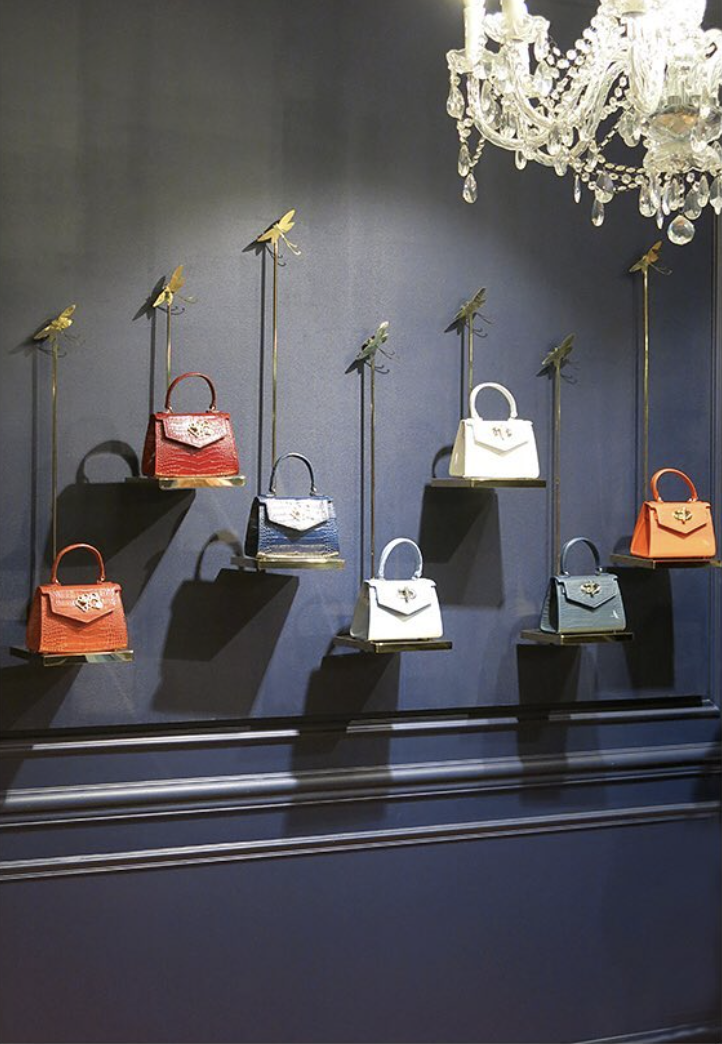
The wiring, structural support, and engineering decisions remain largely out of sight.
That is a useful example of what custom metal display manufacturing often involves: the visible metal is only one part of the solution.
FAQ About Custom Metal Display Stands
What metal is best for luxury retail display stands?
Stainless steel is one of the most widely used materials because it combines strength, corrosion resistance, precise fabrication, and compatibility with brushed, mirror-polished, and PVD finishes. Aluminum and brass may also be suitable depending on the required structure, weight, appearance, and budget.
What is the difference between 4K and 8K mirror stainless steel?
Both are reflective stainless steel finishes, but 8K provides a stronger mirror-like appearance. Because highly reflective surfaces reveal waves, scratches, and polishing defects more easily, substrate preparation and quality control become increasingly important.
Why can champagne-gold PVD look uneven?
PVD color can be influenced by substrate preparation, polishing consistency, coating conditions, component geometry, and lighting. For luxury projects, consistent pre-polishing and approval of a physical finish sample help reduce variation.
Is PVD better than paint for luxury retail displays?
For permanent retail fixtures requiring a metallic appearance, PVD generally offers a more durable and premium finish. Paint remains useful for temporary campaigns or projects requiring a broader range of custom colors.
Can metal retail fixtures be designed for flat-pack shipping?
Yes. Garment racks, display tables, frames, and other metal retail fixtures can often use concealed bolts, detachable sections, or modular connections to reduce shipping volume and simplify installation.
How long does custom metal display production take?
As a general reference, a prototype may require around two to three weeks, while mass production may take approximately four to six weeks after approval. Actual lead time depends on quantity, structure, surface finish, and material availability.
Need a Reliable Custom Metal Display Manufacturer?
A luxury metal display should do more than match the rendering. It needs to stay stable, achieve the approved finish, assemble correctly, survive transportation, and still look right under real retail lighting.
At Samtop Display, we help luxury brands, creative agencies, VM teams, and retail design companies turn concepts into production-ready custom metal displays and retail fixtures—from engineering and prototyping to metal fabrication, surface finishing, QC, packaging, and delivery.
Have a metal display project in development? Send us your design, rendering, or project requirements, and our team can help evaluate the manufacturing solution.
→ Visit www.samtop.com